
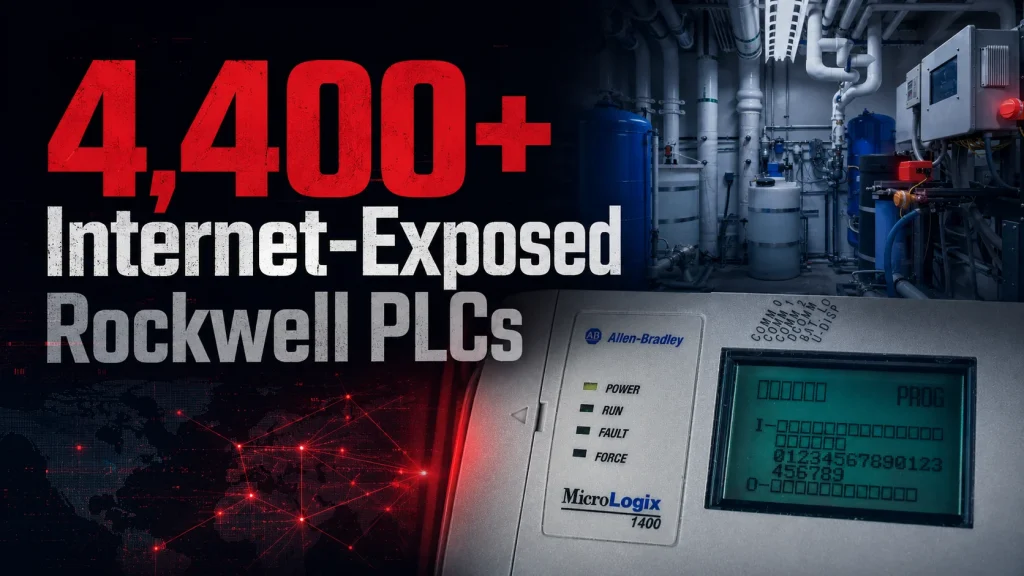
4,400+ Internet-Exposed Rockwell PLCs Expose Water Systems to Cyberattacks
The security of critical infrastructure, particularly water and wastewater systems, is paramount. Recent revelations from cybersecurity firm Forescout have cast a stark spotlight on a troubling vulnerability: over 4,400 internet-exposed Rockwell Automation/Allen-Bradley Programmable Logic Controllers (PLCs). This exposure leaves vital water facilities susceptible to cyberattacks, raising serious concerns for national security and public safety.
The Alarming Discovery: Exposed Rockwell PLCs
Forescout’s research identifies a significant number of internet-facing Rockwell Automation PLCs, specifically those exposing port 44818. This port is associated with the EtherNet/IP engineering protocol, a critical communication pathway for industrial control systems (ICS). The direct exposure of these PLCs to the public internet presents a direct conduit for potential attackers to gain unauthorized access and manipulate operational processes.
A staggering 65% of these vulnerable devices are located within the United States, highlighting a critical national security issue. The implications of compromised water treatment plants, pumping stations, or wastewater facilities could range from service disruptions and equipment damage to the potential for severe public health crises through altered chemical compositions or system shutdowns.
Understanding the EtherNet/IP Protocol and its Exposure
EtherNet/IP (Ethernet Industrial Protocol) is a widely adopted industrial network protocol that facilitates communication between various devices in an industrial control system. Its widespread use in critical infrastructure, including water systems, makes its exposure particularly dangerous. When port 44818 is left open and accessible from the public internet, it essentially creates a front door for malicious actors to interact with the PLC. This could allow for:
- Unauthorized Configuration Changes: Attackers could alter operational parameters, leading to incorrect chemical dosages, flow rates, or pressure levels.
- Malicious Code Injection: Custom code could be uploaded to the PLC, enabling persistent access or destructive actions.
- Denial of Service (DoS): Overloading the PLC with traffic could disrupt its operation, causing system shutdowns or malfunctions.
- Reconnaissance: Attackers could gather sensitive information about the network and operational processes, planning more sophisticated attacks.
The Growing Threat to Water Utilities
The U.S. water sector has seen a surge in cyberattacks, bringing renewed attention to the pervasive issue of internet-exposed industrial control systems. These incidents underscore the urgent need for robust cybersecurity measures in facilities that are often under-resourced and historically less focused on digital threats. The interconnectedness of modern industrial systems means that a single exposed PLC can become an entry point to an entire operational technology (OT) network.
While specific CVEs directly related to the open port 44818 configuration are often not assigned as it’s a misconfiguration rather than a software vulnerability, the underlying implications can be severe. However, vulnerabilities found in Rockwell Automation products could be exploited if an attacker gains access through such exposure. For instance, a relevant vulnerability like CVE-2023-3595 (related to improper access control in Rockwell Automation FactoryTalk View SE) could be exploited if an attacker has network access to the system, which is precisely what internet exposure provides.
Remediation Actions for Exposed Rockwell PLCs
Securing these critical systems requires immediate and decisive action. Water utilities and other organizations utilizing Rockwell Automation PLCs must prioritize the following remediation steps:
- Network Segmentation: Implement strict network segmentation to isolate OT networks from IT networks and the public internet. PLCs should never be directly accessible from the internet.
- Firewall Rules: Configure firewalls to block all unnecessary inbound and outbound traffic to and from industrial control systems. Specifically, block external access to port 44818 on Rockwell PLCs.
- VPN Implementation: For remote access requirements, mandate the use of secure Virtual Private Networks (VPNs) with multi-factor authentication (MFA).
- Vulnerability Assessments and Penetration Testing: Regularly conduct assessments to identify and address misconfigurations and vulnerabilities within the OT environment.
- Patch Management: Maintain an aggressive patch management program for all ICS hardware and software to address known vulnerabilities.
- Monitoring and Logging: Implement comprehensive monitoring and logging solutions for OT networks to detect anomalous activity and potential breaches in real-time.
- Employee Training: Educate personnel on cybersecurity best practices, including identifying phishing attempts and maintaining strong password hygiene.
Detection and Mitigation Tools
Several tools can assist in detecting exposed industrial control systems and enhancing their security posture:
| Tool Name | Purpose | Link |
|---|---|---|
| Shodan | Internet-facing device search engine for identifying exposed ICS/OT devices. | https://www.shodan.io/ |
| Forescout eyeSight | Network visibility and control platform for identifying and segmenting OT devices. | https://www.forescout.com/products/platform/eyesight/ |
| Nmap (Network Mapper) | Open-source utility for network discovery and security auditing, including port scanning. | https://nmap.org/ |
| Claroty Continuous Threat Detection | OT security platform for vulnerability management, threat detection, and incident response. | https://claroty.com/platform/continuous-threat-detection/ |
Protecting Critical Infrastructure is a Shared Responsibility
The revelation of over 4,400 internet-exposed Rockwell PLCs serving critical water systems is a potent reminder of the ongoing challenges in securing operational technology. These findings necessitate immediate action from utility operators, government agencies, and cybersecurity professionals alike. Prioritizing robust cybersecurity measures, adhering to best practices like network segmentation, and continuously monitoring for threats are essential steps to safeguard our most vital infrastructure against increasingly sophisticated cyber threats.




