
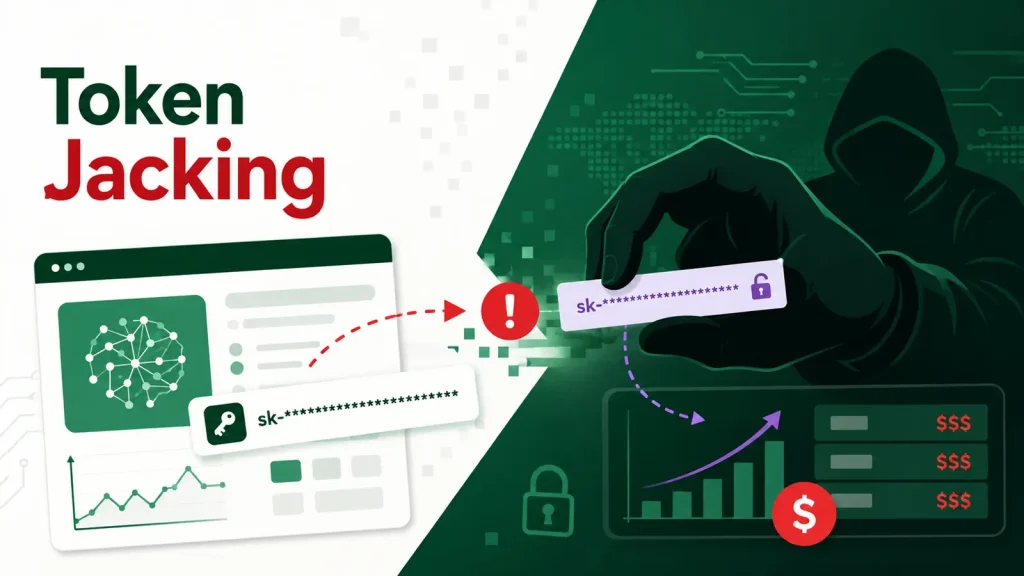
AI Token Jacking Lets Hackers Steal API Keys and Rack Up Nearly $1 Million in Charges
The burgeoning landscape of Artificial Intelligence brings unprecedented innovation, but also introduces novel avenues for cyber exploitation. A particularly insidious threat, dubbed AI Token Jacking, is rapidly gaining traction among malicious actors. This sophisticated attack vector allows intruders to pilfer API keys and exploit expensive AI model services on an unsuspecting victim’s account, often leading to colossal, unexpected charges that can quickly reach nearly $1 million. For IT professionals, security analysts, and developers, understanding and mitigating this threat is no longer optional – it’s imperative.
Understanding AI Token Jacking: The New Frontier of Credential Theft
AI Token Jacking represents a significant shift in criminal focus towards AI credentials. At its core, this attack involves the unauthorized acquisition and misuse of API keys or tokens that grant access to AI services. Imagine granting someone the keys to your cloud computing resources, only to discover they’ve been running computationally intensive tasks, racking up a massive bill on your dime. That’s precisely the outcome of a successful AI token jacking incident.
The motivation behind these attacks is clear: financial gain. With the increasing reliance on powerful, often pay-per-use AI models for tasks ranging from data analysis to content generation, the potential for abuse is substantial. Attackers are not interested in the AI model itself, but rather in leveraging its computational power or services without incurring their own costs, effectively turning victims into unwitting financiers for their illicit activities.
How Attackers Compromise AI Credentials
The alarming aspect of AI token jacking is its multifaceted approach to credential theft. There isn’t a single, silver-bullet method attackers employ; instead, they leverage a combination of well-established and emerging techniques:
- Phishing Campaigns: Still a cornerstone of cybercrime, phishing emails or messages designed to trick developers into revealing their API keys or login credentials for AI platforms remain highly effective. These can be highly targeted, using social engineering to appear legitimate.
- Information-Stealing Malware: Malicious software, often delivered via drive-by downloads, compromised websites, or infected attachments, can silently exfiltrate API keys, configuration files, and session tokens stored on a developer’s machine.
- Supply Chain Attacks: Compromising a third-party library, plugin, or development tool used by AI developers can lead to widespread credential theft. If a dependency is injected with malicious code, it could be designed to siphon off API keys during compilation or runtime.
- Vulnerable Infrastructure: Misconfigured cloud environments, exposed API endpoints, or unpatched systems can provide attackers with direct access to sensitive credentials.
- Insider Threats: While less common, disgruntled employees or malicious insiders with access to API keys can exploit this access for personal gain or to cause harm.
The Devastating Impact: Financial Ruin and Operational Disruption
The immediate and most tangible consequence of AI token jacking is the exorbitant financial cost. As highlighted by recent incidents, victims can face bills approaching nearly $1 million for services they never authorized. This isn’t just about direct monetary loss; it also includes:
- Service Disruption: Over-utilization of AI services by attackers can lead to rate limits, service degradation, or even account suspension for legitimate users.
- Reputational Damage: If compromised API keys are used for malicious purposes, such as generating spam or executing other cyberattacks, the victim organization’s reputation can suffer.
- Data Exfiltration Risk: While the primary goal is often service consumption, compromised API keys could also potentially be used to access or exfiltrate sensitive data processed by AI models.
Remediation Actions: Fortifying Your AI Defenses
Protecting against AI token jacking requires a multi-layered security strategy. Proactive measures and robust incident response are crucial:
- Implement Strong Access Controls:
- Principle of Least Privilege: Grant API keys only the minimum necessary permissions required for their function.
- Multi-Factor Authentication (MFA): Enforce MFA for all accounts accessing AI platforms and key management systems.
- Rotate API Keys Regularly: Periodically refresh API keys to minimize the window of opportunity for compromised keys.
- Secure API Key Storage: Never hardcode API keys directly into code. Use secure secrets management solutions or environment variables.
- Enhance Endpoint Security:
- Advanced Endpoint Detection and Response (EDR): Deploy EDR solutions to detect and prevent information-stealing malware.
- Regular Patching: Ensure all operating systems, applications, and development tools are kept up-to-date with the latest security patches.
- Network and Cloud Security:
- Network Segmentation: Isolate development environments and systems handling API keys from less secure networks.
- Cloud Security Posture Management (CSPM): Continuously monitor cloud configurations for misconfigurations that could expose API keys.
- API Gateway Security: Utilize API gateways with robust authentication, authorization, and rate-limiting capabilities.
- Developer Education and Awareness:
- Phishing Training: Regularly train developers to recognize and report phishing attempts.
- Secure Coding Practices: Educate developers on secure coding principles, especially regarding credential handling.
- Monitoring and Alerting:
- API Usage Monitoring: Implement robust logging and monitoring for AI API usage patterns. Set up alerts for anomalous activity, such as sudden spikes in usage or access from unusual geographic locations.
- Cost Monitoring: Configure budget alerts within cloud providers to be notified of unexpected cost increases.
Tools for Detection and Mitigation
Leveraging the right tools can significantly bolster your defense against AI token jacking. Here are some essential categories and examples:
| Tool Category | Purpose | Example Tools / Approaches |
|---|---|---|
| Secrets Management | Securely store, manage, and distribute API keys and other sensitive credentials. | HashiCorp Vault, AWS Secrets Manager, Azure Key Vault, Google Secret Manager |
| Cloud Security Posture Management (CSPM) | Continuously monitor cloud environments for misconfigurations and compliance issues. | Wiz, Orca Security, Lacework, AWS Security Hub, Azure Security Center |
| Endpoint Detection and Response (EDR) | Detect and respond to advanced threats, including malware designed to steal credentials. | CrowdStrike Falcon, SentinelOne Singularity, Microsoft Defender for Endpoint |
| API Security Gateways | Protect APIs from various attacks, enforce access control, and provide traffic management. | Kong Gateway, Apigee, AWS API Gateway, Azure API Management |
| Static Application Security Testing (SAST) | Analyze source code to identify potential security vulnerabilities, including hardcoded credentials. | SonarQube, Checkmarx, Fortify Static Code Analyzer |
Key Takeaways: Staying Ahead of AI Credential Theft
AI token jacking represents a critical evolution in the threat landscape, targeting the valuable credentials that underpin modern AI infrastructure. The potential for rapid financial devastation necessitates immediate and comprehensive action. Organizations must prioritize robust credential management, strengthen endpoint and cloud security, and foster a culture of security awareness among their development teams. Continuous monitoring of API usage and cloud spending is not just good practice but a vital early warning system against this emerging threat. By adopting a proactive and layered security approach, businesses can protect their AI investments and prevent becoming the next victim of a six-figure AI bill.




