
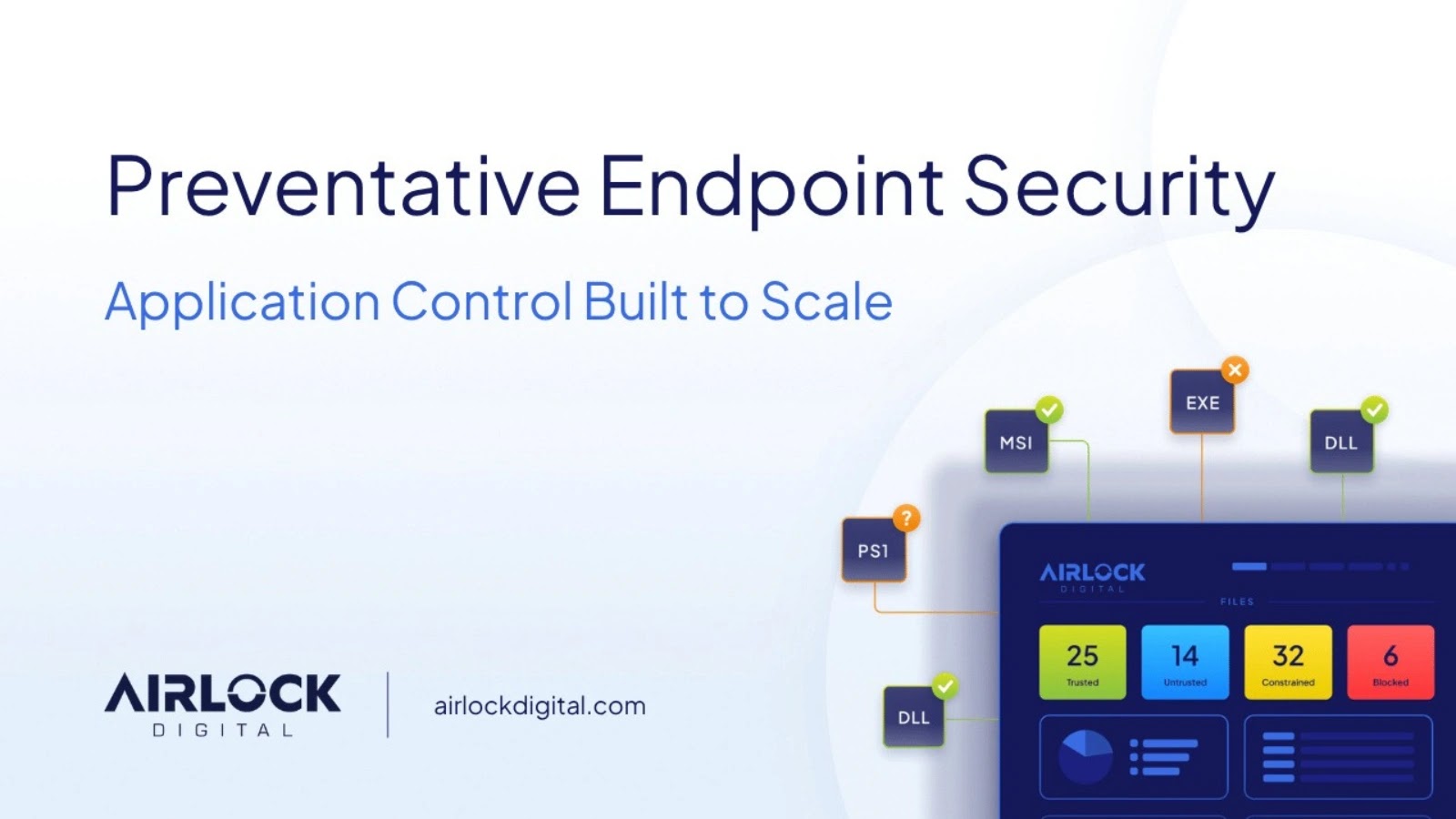
Airlock Digital Unveils Agentic AI Control & Governance to Extend Preventative Endpoint Security
The rapid proliferation of Artificial Intelligence (AI) agents within enterprise environments presents both unprecedented opportunities and novel security challenges. As these intelligent systems gain more autonomy and access to critical endpoints, the need for robust control and governance mechanisms becomes paramount. Unmanaged AI agents, even if trusted, can introduce significant risk vectors if their actions are not properly monitored and constrained. This necessitates a proactive approach to extend preventative endpoint security, a challenge Airlock Digital is directly addressing.
Airlock Digital’s Agentic AI Control & Governance: A New Frontier in Endpoint Security
On August 4th, 2026, in Atlanta, GA, CyberNewswire reported a significant announcement from Airlock Digital: the unveiling of their new Agentic AI Control & Governance solution. This development is set to enhance Airlock Digital’s existing preventative endpoint security offerings by providing deep visibility into the behavior of trusted AI agents and establishing clear governance over their operational boundaries on endpoints.
Understanding Agentic AI and its Security Implications
Agentic AI refers to AI systems designed to act autonomously, making decisions and executing tasks without constant human intervention. These agents can range from sophisticated chatbots managing customer interactions to automated systems orchestrating complex IT operations. While they promise increased efficiency and automation, their inherent autonomy also means they can potentially:
- Access sensitive data without explicit human oversight.
- Execute commands or scripts that could inadvertently compromise system integrity.
- Become a vector for sophisticated attacks if compromised themselves.
Traditional endpoint security often focuses on preventing malicious executables or known threats. However, a trusted AI agent, even if legitimate, can still pose a risk if its actions fall outside defined organizational policies or if it is exploited. This is where the concept of “governance over what trusted agents are allowed to do on endpoints” becomes critical.
Key Features of Airlock Digital’s Solution
Airlock Digital’s Agentic AI Control & Governance solution appears designed to bridge this gap by providing granular control and visibility. While specific features will likely be detailed further by Airlock Digital, based on the announcement, we can infer the following core capabilities:
- Behavioral Monitoring for AI Agents: Real-time observation of AI agent activities to detect deviations from established norms or policies.
- Policy Enforcement for Trusted Agents: Defining and enforcing strict rules about what specific AI agents are permitted to access, modify, or execute on an endpoint. This moves beyond simple whitelisting to behavioral whitelisting for AI.
- Extended Preventative Security: Integrating AI agent control directly into existing preventative security frameworks, ensuring a unified security posture.
- Visibility into AI Operations: Providing security teams with clear insights into the actions and interactions of AI agents across the network.
The Importance of Proactive AI Governance
The rise of generative AI and autonomous agents necessitates a shift from reactive threat detection to proactive governance and control. Organisations can no longer solely rely on signature-based detection or even heuristic analysis for AI agents, as their legitimate functions can be highly dynamic. Instead, defining the permissible actions and monitoring adherence to those definitions is crucial. Failure to implement robust AI governance can lead to:
- Data breaches due to uncontrolled data access by AI.
- System misconfigurations or damage from erroneous AI actions.
- Compliance violations if AI agents handle sensitive information without proper safeguards.
- Difficulty in auditing AI system behavior, leading to accountability gaps.
Consider a scenario where an AI agent designed to automate software updates inadvertently attempts to modify a critical system file outside its designated scope. Without Agentic AI Control & Governance, this could lead to system instability or even compromise, whereas with such controls, the action would be blocked or flagged immediately. This proactive stance significantly reduces the attack surface and potential for AI-induced incidents.
Summary: Securing the Autonomous Future
Airlock Digital’s announcement of Agentic AI Control & Governance marks a critical evolution in endpoint security. As AI agents become integral to enterprise operations, managing their behavior, ensuring their trustworthiness, and governing their actions are no longer optional but essential security mandates. This solution promises to extend preventative security capabilities, providing organizations with the tools to safely and effectively integrate autonomous AI into their environments while mitigating inherent risks. The future of cybersecurity will increasingly involve not just protecting against malicious actors, but also intelligently governing the actions of trusted, yet powerful, autonomous systems.




