
Anthropic’s Restricted Claude Mythos Moves Toward Public Release via Claude Code and Security
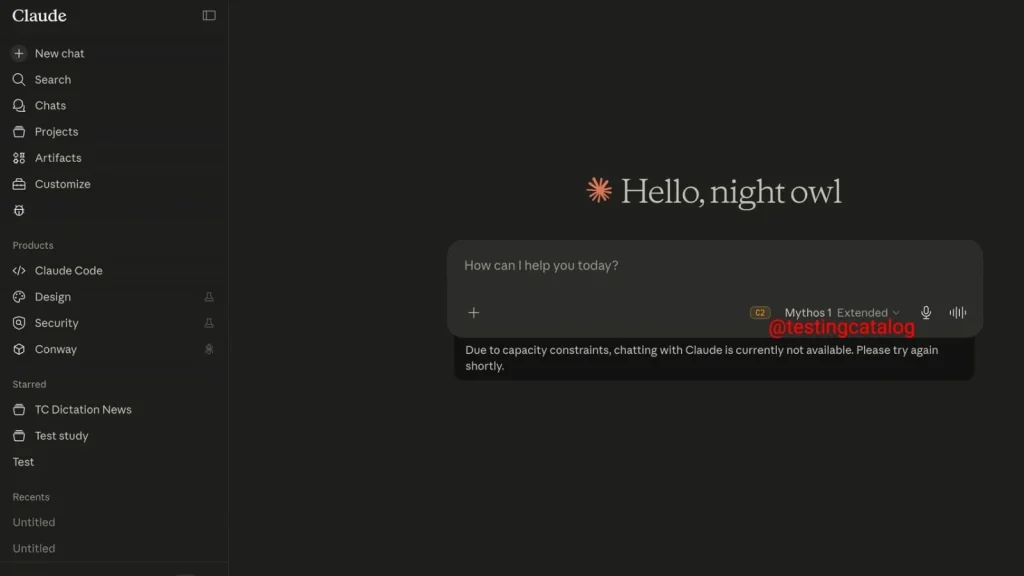
Anthropic, a prominent player in the AI landscape, appears to be making strategic moves with its most powerful and previously restricted AI model, Claude Mythos. Recent signals indicate a looming public release, rebranded as Mythos 1 (specifically, claude-mythos-1-preview), and integrated into key enterprise-focused offerings: Claude Code and a revamped Claude Security dashboard.
This development signifies a pivotal moment for enterprises considering advanced AI integration for code generation, security analysis, and other complex tasks. The transition from a tightly controlled, internal research model to a commercially viable product underscores Anthropic’s commitment to making cutting-edge AI accessible and actionable for businesses.
The Evolution of Claude Mythos: From Research to Commercial Release
Claude Mythos first emerged on the radar in late March, shrouded in a degree of mystery due to its restricted access. It was understood to be Anthropic’s most advanced AI, capable of handling highly nuanced tasks and demonstrating superior reasoning capabilities compared to its predecessors. The initial limitation to research and select partnerships fostered an aura of exclusivity, highlighting its experimental and powerful nature.
The current shift to a public release under the moniker Mythos 1, specifically referenced as claude-mythos-1-preview, marks a significant step. This suggests Anthropic has refined the model, enhancing its stability, performance, and perhaps most importantly, its safety guardrails, to meet the demands of enterprise deployment. The “preview” tag also implies a phased rollout, allowing early adopters to integrate and provide feedback before a full general availability.
Strategic Integration: Claude Code and Claude Security
The decision to integrate Mythos 1 directly into Claude Code and a modernized Claude Security dashboard is particularly noteworthy for professionals in IT and cybersecurity. This integration points to Anthropic’s strategic focus on specific, high-value enterprise use cases.
- Claude Code Integration: For developers and software engineering teams, Mythos 1 within Claude Code promises enhanced capabilities in areas such as:
- Advanced code generation and completion, potentially handling more complex logical structures and esoteric libraries.
- Intelligent debugging assistance, identifying subtle errors and suggesting optimal fixes.
- Automated code refactoring and optimization, improving performance and maintainability.
- Translation between programming languages with higher fidelity.
This could significantly boost developer productivity and code quality, especially for intricate systems.
- Revamped Claude Security Dashboard: For cybersecurity analysts and security operations centers (SOCs), the integration into a new Claude Security dashboard is a game-changer. Mythos 1’s superior analytical power could transform threat detection, vulnerability analysis, and incident response. Potential applications include:
- More sophisticated anomaly detection in log data, identifying advanced persistent threats (APTs) that might evade simpler rules-based systems.
- Automated vulnerability assessment, pinpointing weaknesses in codebases, configurations, and network architectures with greater accuracy.
- Intelligent incident correlation and root cause analysis, reducing mean time to detection (MTTD) and mean time to respond (MTTR).
- Assisted security policy generation and compliance checking.
This could elevate the effectiveness of cybersecurity teams, enabling them to proactively defend against evolving threats.
Implications for Enterprise AI Adoption
The public release of Anthropic’s most potent AI, geared towards enterprise solutions, intensifies the already robust competition in the AI market. Organizations considering large language models (LLMs) for critical infrastructure tasks will now have another powerful option to evaluate. Key implications include:
- Increased Competition and Innovation: Anthropic’s move will likely spur further innovation from competitors in developing even more capable and specialized AI models for enterprise segments.
- Elevated AI Capabilities for Businesses: Companies can expect more powerful tools for automation, analysis, and generation, potentially leading to significant efficiencies and new business opportunities.
- Focus on AI Safety and Ethics: Given Anthropic’s strong emphasis on constitutional AI and safety, the public release of Mythos 1 will undoubtedly be scrutinized for its ethical implications and robustness against misuse, particularly in sensitive security contexts.
- Data Governance and Security Concerns: As with all powerful AI models, enterprises will need to carefully consider data privacy, intellectual property, and the security implications of feeding proprietary information into these systems.
Remediation Actions for Enterprises (Preparing for Advanced AI Deployment)
While Claude Mythos 1 directly isn’t a vulnerability, its public release mandates a proactive approach to safe and effective AI integration. Enterprises should consider the following:
- Establish Robust AI Governance Frameworks: Develop clear policies for AI procurement, deployment, usage, and oversight. This includes data handling, privacy, explainability, and bias mitigation.
- Conduct Thorough Vendor Assessments: Evaluate Anthropic (and other AI vendors) not just on model capability, but also on their commitment to security, data protection, and ethical AI development.
- Implement Data Segregation and Access Controls: Ensure that sensitive data fed into AI models is appropriately anonymized, permissioned, and secured. Leverage techniques like differential privacy where applicable.
- Prioritize Skill Development: Invest in training for existing IT, security, and development teams to understand AI’s capabilities, limitations, and best practices for secure integration and monitoring.
- Continuous Monitoring and Auditing: Treat AI models as critical infrastructure. Implement continuous monitoring of AI outputs, performance, and resource usage. Regularly audit AI systems for fairness, accuracy, and adherence to policies.
- Develop Incident Response Plans for AI: Prepare for scenarios where AI systems might malfunction, generate biased outputs, or be exploited.
Conclusion
Anthropic’s evident move to bring its formidable Claude Mythos, now Mythos 1 (claude-mythos-1-preview), to a broader commercial audience through Claude Code and a specialized Claude Security dashboard marks a significant development. This shift promises to equip enterprises with exceptionally powerful AI capabilities, particularly in software development and cybersecurity. While this advancement brings immense potential, it also underscores the critical need for robust AI governance, security protocols, and ethical considerations to effectively and safely harness the power of these advanced models.




