
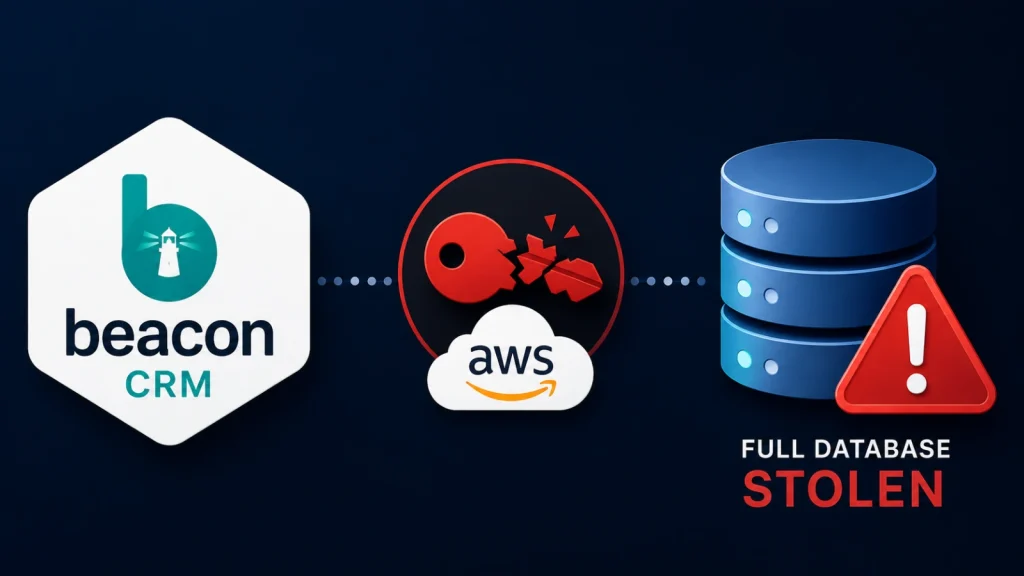
Beacon CRM Confirms Full Database Theft After AWS Access Key Breach
Beacon CRM Data Breach: A Deep Dive into the AWS Access Key Compromise
The digital trust placed in cloud services was shaken recently with the revelation that Beacon CRM, a platform vital to over a thousand UK charities and non-profit organizations, suffered a complete database theft. This incident, confirmed by Beacon’s Chief Technology Officer David Simpson on August 12, 2026, escalates previous concerns and highlights the critical importance of robust cloud security practices, particularly concerning AWS access key management.
The Breach Unveiled: AWS Access Key Compromise
The core of the Beacon CRM data breach lies in the compromise of an AWS access key. While specific details regarding how the key was stolen remain undisclosed, the consequences are stark. A threat actor leveraged this compromised credential to gain unauthorized access to Beacon’s Amazon Web Services (AWS) environment. This access facilitated the complete copying and exfiltration of their customer database, a treasure trove of sensitive information belonging to charities and their beneficiaries.
This incident serves as a grim reminder that even with the inherent security of cloud providers like AWS, the responsibility for securing access credentials ultimately rests with the user. Misconfigured permissions, weak key management practices, or accidental exposure can render even the most sophisticated cloud infrastructure vulnerable.
Impact and Implications for Non-Profit Organizations
The theft of Beacon CRM’s entire database has far-reaching implications, especially for the UK charities and non-profit organizations that rely on its services. Customer Relationship Management (CRM) systems like Beacon store a wealth of personal and financial data, donor information, and sensitive operational details. The exfiltration of such a comprehensive dataset poses significant risks, including:
- Identity Theft and Fraud: Personal details of donors and beneficiaries could be exploited for fraudulent activities.
- Reputational Damage: For both Beacon CRM and its client organizations, the breach erodes trust and can impact future fundraising and engagement efforts.
- Regulatory Fines: Organizations handling personal data are subject to stringent regulations like GDPR. Data breaches can lead to substantial penalties.
- Operational Disruption: Remediation efforts and potential legal actions can divert resources and attention from core charitable missions.
Understanding AWS Access Keys and Their Security
AWS access keys, comprising an access key ID and a secret access key, are fundamental for programmatic access to AWS services. They act as login credentials for interacting with AWS APIs, CLI, SDKs, and other development tools. The security of these keys is paramount, as their compromise can grant an attacker the same level of access as the legitimate user.
Common vectors for AWS access key compromise include:
- Hardcoding keys in publicly accessible code repositories (e.g., GitHub).
- Storing keys in insecure locations on local machines.
- Inadequate rotation policies leading to long-lived, potentially forgotten keys.
- Phishing attacks targeting developers or administrators.
- Compromised build systems or CI/CD pipelines.
Remediation Actions and Best Practices for Cloud Security
While the Beacon CRM breach is a somber event, it underscores the need for proactive security measures. Organizations leveraging cloud platforms, especially AWS, must prioritize robust access management and data protection strategies.
Immediate Remediation
- Rotate Compromised Credentials Immediately: Any suspected compromised AWS access keys or other credentials must be revoked and replaced without delay.
- Audit Access Logs: Thoroughly review AWS CloudTrail logs and other relevant logs to identify the extent of unauthorized access and data exfiltration.
- Notify Affected Parties: Transparently inform all impacted customers and relevant regulatory bodies, adhering to data breach notification requirements.
Proactive Security Enhancements
- Principle of Least Privilege: Grant only the minimum necessary permissions to users and applications. Avoid using root user credentials for daily operations.
- Multi-Factor Authentication (MFA): Enforce MFA for all AWS accounts, especially root and administrative users.
- Regular Access Key Rotation: Implement automated processes for rotating access keys frequently.
- Secrets Management: Utilize dedicated secrets management services like AWS Secrets Manager or HashiCorp Vault to store and manage sensitive credentials securely.
- Infrastructure as Code (IaC) Security: Integrate security checks into IaC pipelines to prevent hardcoded credentials or misconfigurations from reaching production.
- Monitoring and Alerting: Implement robust monitoring for suspicious activity in AWS environments, including unusual API calls or data transfer patterns.
- Security Awareness Training: Educate staff on phishing awareness, secure coding practices, and the importance of protecting access credentials.
- Vulnerability Management: Regularly scan for vulnerabilities in applications and infrastructure. While not a direct cause in this specific instance, a broader vulnerability management program is crucial.
Relevant Tools for AWS Security
Here are some essential tools to enhance AWS security posture:
| Tool Name | Purpose | Link |
|---|---|---|
| AWS CloudTrail | Logging API calls and tracking user activity for auditing and security analysis. | https://aws.amazon.com/cloudtrail/ |
| AWS Identity and Access Management (IAM) | Managing users, groups, roles, and their access to AWS resources. | https://aws.amazon.com/iam/ |
| AWS Secrets Manager | Securely storing, managing, and rotating database credentials, API keys, and other secrets. | https://aws.amazon.com/secrets-manager/ |
| AWS Security Hub | Comprehensive view of high-priority security alerts and compliance status across AWS accounts. | https://aws.amazon.com/security-hub/ |
| Prowler | Open-source tool for AWS security assessment, auditing, hardening, and incident response. | https://github.com/prowler-cloud/prowler |
Conclusion: Strengthening Defenses Against Cloud Data Theft
The Beacon CRM data breach serves as a stark reminder of the persistent and evolving threats in the cloud environment. The complete theft of a customer database via a compromised AWS access key underscores that while cloud providers secure the “cloud,” customers are responsible for security “in” the cloud. Implementing strong access controls, multi-factor authentication, regular credential rotation, and continuous monitoring are no longer optional but essential safeguards against sophisticated threat actors. Organizations must continuously evaluate and strengthen their cloud security posture to protect sensitive data and maintain the trust of their stakeholders.




