
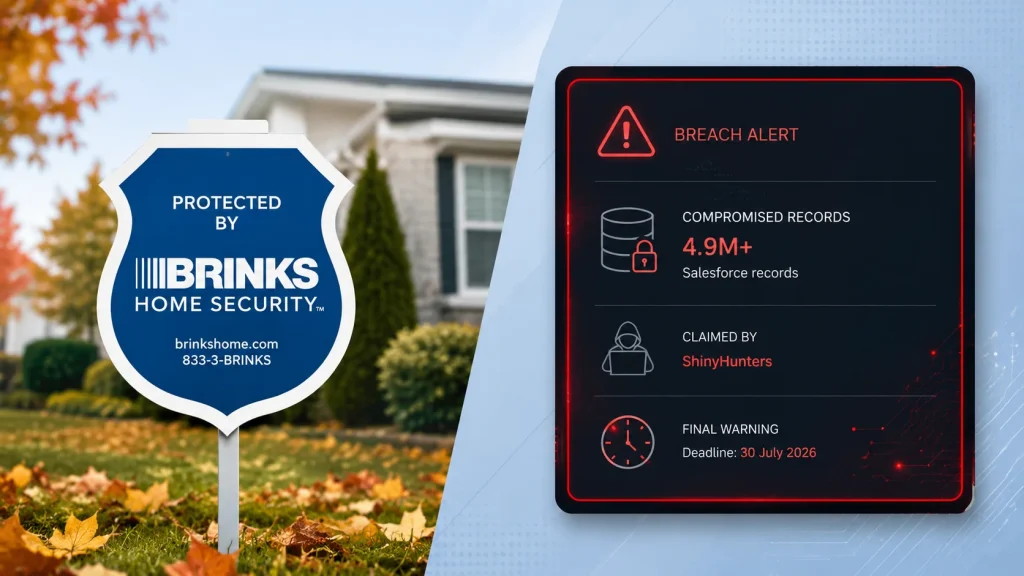
Brinks Home Confirms Data Breach Following ShinyHunters Claim
Brinks Home Confirms Data Breach Following ShinyHunters Claim: A Deep Dive for Security Professionals
In a significant development for the cybersecurity landscape, Brinks Home, a prominent residential security provider across North America, has officially acknowledged a data breach. This confirmation arrives in the wake of claims made by the notorious ShinyHunters extortion group, who alleged the theft of nearly five million records from Brinks Home’s Salesforce environment. This incident underscores the persistent and evolving threats organizations face, even those entrusted with the security of millions of homes.
The ShinyHunters Modus Operandi and Brinks Home’s Confirmation
ShinyHunters, a well-known cybercriminal collective, gained notoriety for breaching high-profile companies and subsequently listing stolen data on their leak sites. Their strategy often involves exfiltrating sensitive information and leveraging it for extortion, threatening to publicly release the data if their demands are not met. In this instance, ShinyHunters publicly listed “BH Security, LLC (brinkshome.com)” on their leak site, claiming possession of a substantial trove of data.
Brinks Home’s confirmation validates these claims, signaling a successful intrusion into their IT systems. While the full scope of the compromised data is still under investigation, the initial reports suggest a breach impacting their Salesforce environment, a critical platform often housing customer data, sales records, and other proprietary information. The alleged volume of nearly five million records indicates a significant exposure, raising concerns about the potential impact on affected individuals.
Understanding the Implications of a Salesforce Environment Breach
A breach within a Salesforce environment is particularly concerning due to the nature of the data typically stored within such platforms. Salesforce is widely used for customer relationship management (CRM), encompassing a vast array of personal and potentially sensitive information, including:
- Customer names and contact details (addresses, phone numbers, email addresses)
- Account information
- Service history
- Potentially, other personally identifiable information (PII) depending on how Brinks Home utilizes the platform.
The exfiltration of such data can lead to various forms of cybercrime, including identity theft, targeted phishing campaigns, and other fraudulent activities. For Brinks Home, this incident could result in significant reputational damage, regulatory fines, and a substantial financial burden associated with incident response, remediation, and potential litigation.
The Evolving Threat Landscape: Ransomware, Extortion, and Data Breaches
The Brinks Home incident serves as a stark reminder of the current cybersecurity climate. Threat actors like ShinyHunters are increasingly sophisticated, employing a combination of techniques ranging from exploiting vulnerabilities to social engineering. Their primary motivations often revolve around financial gain, either through direct ransomware attacks or by extorting companies over stolen data.
Organizations must adopt a proactive and multi-layered approach to security, recognizing that traditional perimeter defenses are often insufficient against determined adversaries. This includes robust endpoint protection, continuous vulnerability management, employee training, and comprehensive incident response plans.
Remediation Actions and Best Practices for Organizations
While Brinks Home is undoubtedly engaged in extensive remediation efforts, this incident offers valuable lessons for all organizations. Here are key remediation actions and best practices to bolster cybersecurity posture:
- Incident Response Plan Activation: Immediately activate and follow a well-defined incident response plan. This includes isolating compromised systems, conducting forensic analysis, and notifying affected parties as required by regulations.
- Vulnerability Management and Patching: Regularly scan for and patch vulnerabilities across all systems, particularly those exposed to the internet. This includes third-party applications and cloud environments like Salesforce.
- Strong Access Controls and Multi-Factor Authentication (MFA): Implement the principle of least privilege, ensuring users only have access to resources essential for their roles. Mandate MFA for all user accounts, especially for access to critical systems and cloud platforms.
- Employee Security Awareness Training: Continuously train employees on identifying and reporting phishing attempts, social engineering tactics, and other common cyber threats.
- Data Encryption: Encrypt sensitive data at rest and in transit to minimize the impact of a breach if data is exfiltrated.
- Regular Backups and Disaster Recovery: Implement robust backup strategies and test disaster recovery plans to ensure business continuity in the event of a successful attack.
- Security Audits and Penetration Testing: Conduct regular security audits and penetration tests to identify weaknesses in your defenses before malicious actors do.
- Third-Party Vendor Risk Management: Thoroughly vet the security practices of all third-party vendors, especially those managing critical data or systems like CRM platforms.
Key Takeaways for a Secure Future
The Brinks Home data breach, claimed by ShinyHunters, underscores the relentless nature of cyber threats. Organizations, regardless of size or industry, must prioritize cybersecurity as a core business function. This involves investing in robust security infrastructure, fostering a strong security culture, and maintaining an agile and adaptable defense strategy. Proactive measures, continuous monitoring, and a well-rehearsed incident response plan are no longer optional but essential for navigating the complex and often unforgiving digital landscape.




