
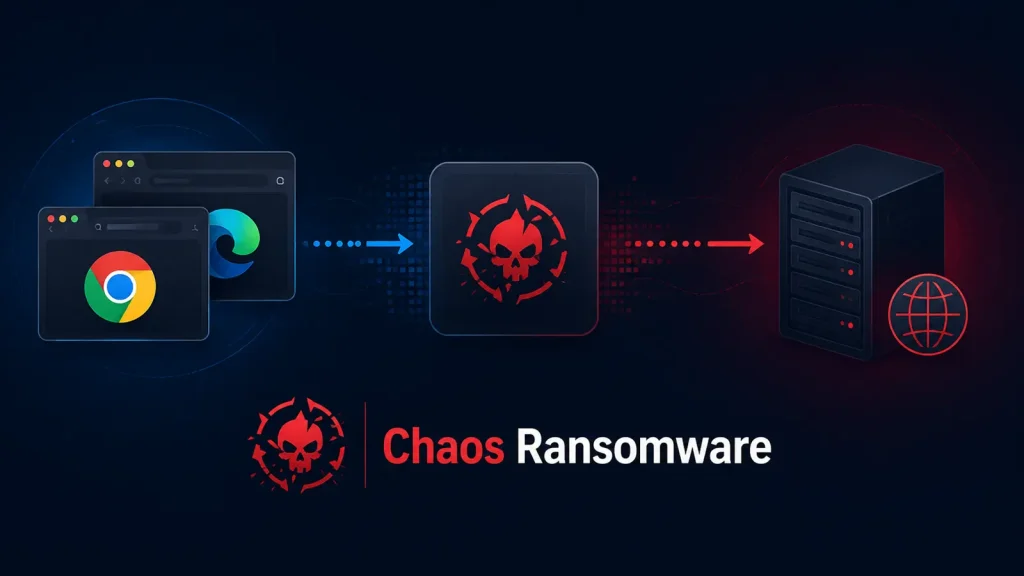
Chaos Ransomware Turns Your Chrome and Edge Web Browser Into an Invisible Malware Command Channel
The landscape of cyber threats is constantly evolving, with attackers devising increasingly sophisticated methods to evade detection. A recent and particularly insidious development comes from the Chaos ransomware group, which has pioneered a novel technique to conduct its malicious activities right under the noses of IT professionals: by turning everyday web browsers like Chrome and Microsoft Edge into invisible command channels.
This innovative approach marks a significant shift in how ransomware operators hide their tracks, transforming widely trusted applications into tools for covert communication and data exfiltration. As cybersecurity analysts, understanding these new tactics is paramount to developing effective defensive strategies.
Chaos Ransomware: A New Level of Evasion
Chaos ransomware has always been a significant threat, but its latest iteration introduces a critical element of stealth. The group’s msaRAT remote-access tool is at the heart of this new evasion technique. Instead of relying on traditional, easily identifiable command and control (C2) infrastructure, msaRAT leverages the very browsers employees use daily to conduct their work.
This method allows the ransomware to receive commands, exfiltrate sensitive data, and maintain persistence on compromised systems without raising immediate red flags. The traffic generated by these malicious activities blends seamlessly with legitimate web browsing, making it incredibly difficult for standard network monitoring tools to detect anomalies.
Browser as a Covert Channel: How it Works
The core innovation lies in msaRAT’s ability to repurpose Chrome and Edge for its nefarious purposes. This isn’t about exploiting a specific browser vulnerability like CVE-2023-4863, which involved a heap buffer overflow in WebP. Instead, it’s about the post-compromise utilization of a trusted application. Once a system is infected, msaRAT essentially hijacks the browser’s functionality to establish a covert channel. Here’s a breakdown of the likely mechanism:
- Legitimate Traffic Mimicry: Malicious data is encapsulated within seemingly normal web requests or responses, blending with benign browser activity.
- Standard Ports and Protocols: By using common HTTP/S traffic over standard ports (80/443), the msaRAT bypasses many firewall restrictions and deep packet inspection rules designed to flag unusual connections.
- Reduced Attacker Footprint: The attacker no longer needs to maintain dedicated, easily traceable C2 servers. The browser itself acts as an intermediary, complicating attribution and defensive efforts.
This technique draws parallels with the stealth concerns raised by fake Chrome update malware campaigns, though the application differs. While fake updates use the browser as the initial infection vector, Chaos ransomware uses it after compromise to maintain control and exfiltrate data.
Implications for Cybersecurity Defenses
The shift to browser-based C2 channels presents significant challenges for traditional cybersecurity defenses:
- Network Traffic Analysis: Differentiating between legitimate web traffic and malicious C2 communications becomes exceedingly complex.
- Endpoint Detection and Response (EDR): EDR solutions need to be sophisticated enough to detect anomalous behavior within trusted browser processes, not just suspicious external connections.
- Threat Hunting: Security teams must adapt their threat hunting strategies to look for subtle indicators of compromise (IOCs) within browser activity logs and process behaviors.
Remediation Actions for Browser-Based C2 Channels
Combating this sophisticated threat requires a multi-layered approach focusing on both prevention and detection. Here are actionable steps organizations can take:
- Enhanced Endpoint Monitoring: Implement advanced EDR solutions with behavioral analysis capabilities to detect unusual process activity, even within trusted applications like Chrome and Edge.
- DNS and Web Traffic Filtering: Employ robust DNS filtering and web proxy services to block connections to known malicious domains and categorize suspicious web activity.
- Network Segmentation: Segment your network to limit the lateral movement of ransomware if an endpoint is compromised.
- Application Whitelisting: Strictly control which applications can run on your endpoints. This can prevent unauthorized executables from initiating browser processes for malicious purposes.
- User Awareness Training: Continuously educate employees about phishing, suspicious links, and the importance of reporting unusual system behavior.
- Regular Software Updates: Ensure all operating systems, applications, and web browsers are kept up-to-date with the latest security patches to mitigate known vulnerabilities. While this tactic isn’t about specific browser vulnerabilities, general good hygiene remains critical.
- Implement Zero Trust Principles: Verify every access request and connection, regardless of origin, assuming no user or device is inherently trustworthy.
Relevant Tools for Detection and Mitigation
| Tool Name | Purpose | Link |
|---|---|---|
| CrowdStrike Falcon Insight | Advanced EDR and threat intelligence | https://www.crowdstrike.com/products/endpoint-security/falcon-insight/ |
| Microsoft Defender for Endpoint | Comprehensive endpoint security platform | https://www.microsoft.com/en-us/security/business/endpoint-security/microsoft-defender-endpoint |
| Palo Alto Networks Cortex XDR | Extended Detection and Response | https://www.paloaltonetworks.com/cortex/cortex-xdr |
| Suricata | Network Intrusion Detection System (NIDS) | https://suricata.io/ |
| Zscaler Internet Access (ZIA) | Cloud-native security for web and network traffic | https://www.zscaler.com/products/zscaler-internet-access |
Conclusion
The Chaos ransomware group’s utilization of Chrome and Microsoft Edge as covert command channels underscores the importance of adaptive cybersecurity strategies. This technique shifts the battleground from easily identifiable malicious traffic to the subtle anomalies within everyday application behavior. Organizations must move beyond signature-based detection and invest in advanced EDR, robust network monitoring, and comprehensive threat intelligence. Vigilance, continuous education, and a proactive approach to security are essential to defending against these increasingly stealthy and sophisticated attacks.




