
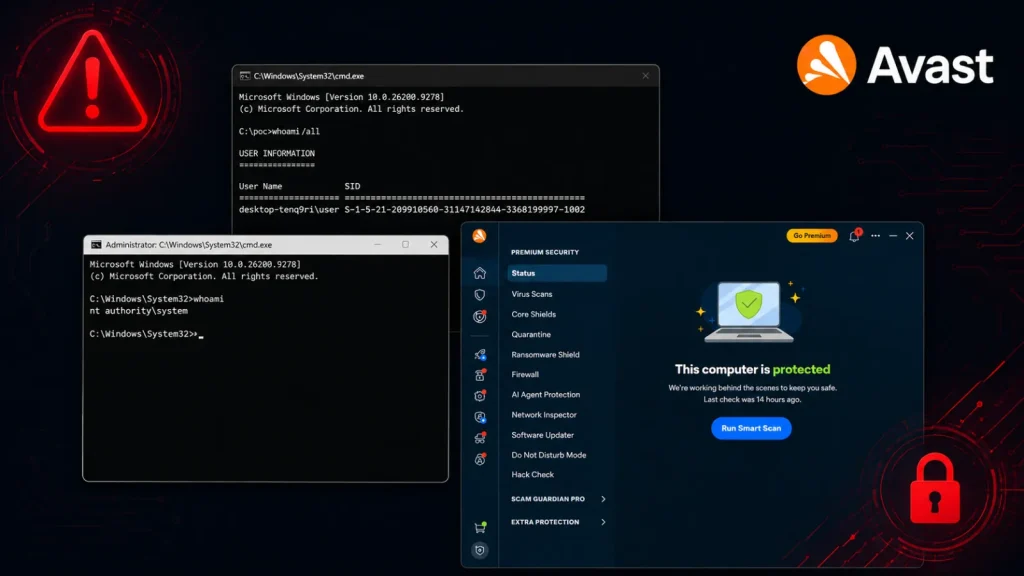
Chaotic Eclipse Claims Avast Antivirus 0-Day Vulnerability – PoC Released
The digital defense landscape is constantly shifting, and even established security solutions can harbor hidden weaknesses. A recent claim by cybersecurity researcher Chaotic Eclipse has sent ripples through the industry, alleging the discovery of a zero-day privilege escalation vulnerability within Avast Antivirus. This revelation, accompanied by a public Proof-of-Concept (PoC) called PrettyPrague, underscores the continuous need for vigilance and robust security practices, even with trusted software.
Unpacking the Avast Antivirus 0-Day Claim
The core of the claim centers on a privilege escalation vulnerability reportedly found in Avast Antivirus. Privilege escalation is a serious type of security flaw that allows an attacker with limited access to a system to gain higher-level permissions, potentially leading to full system control. The researcher, operating under the GitHub handle MSNightmare, asserts that this particular vulnerability can be exploited on systems running fully patched Avast Antivirus installations on updated Windows 11 25H2 environments. This detail is particularly concerning, as it suggests that standard patching procedures might not be sufficient to mitigate the risk.
The public release of PrettyPrague, the Proof-of-Concept repository, further solidifies the researcher’s claim. While the exact technical details of the vulnerability are still emerging, a PoC typically demonstrates the feasibility of exploiting a flaw, providing concrete evidence of its existence. Such disclosures often act as a catalyst, prompting vendors to swiftly investigate and develop patches.
Understanding Zero-Day Vulnerabilities
A “zero-day” vulnerability refers to a security flaw that is unknown to the software vendor (in this case, Avast) and for which no official patch or fix has been released. This makes them particularly dangerous, as attackers can exploit these weaknesses before defenders have a chance to implement countermeasures. The term “0-day” signifies that developers have “zero days” to fix the problem before it’s potentially exploited in the wild.
The implications of an Avast Antivirus zero-day are significant. As a widely used endpoint security solution, a successful exploit could compromise a vast number of systems, granting attackers unauthorized access to sensitive data, deploying malware, or disrupting operations. The privilege escalation aspect means an attacker could move from a low-privilege user to an administrative one, effectively taking over the affected machine.
Remediation Actions and Best Practices
While Avast investigates and works on an official patch for this alleged zero-day, organizations and individual users can take several proactive steps to minimize their risk:
- Monitor Official Avast Communications: Keep a close watch on Avast’s official security advisories and announcements for updates regarding this vulnerability. They will release a patch as soon as it’s available.
- Implement Least Privilege: Ensure all users and applications operate with the absolute minimum necessary permissions. This can limit the impact of a successful privilege escalation exploit.
- Regularly Update Operating Systems: While the researcher claims the vulnerability affects fully updated Windows 11 25H2, maintaining the latest OS patches is crucial for general security and to protect against other known vulnerabilities.
- Network Segmentation: Implement network segmentation to isolate critical systems. This can contain the spread of an attack even if a workstation is compromised.
- Endpoint Detection and Response (EDR): Leverage EDR solutions for advanced threat detection and response capabilities. EDR can help identify anomalous activities that might indicate an ongoing exploitation attempt.
- User Awareness Training: Educate users about phishing, social engineering, and safe browsing practices, as initial access often begins through these vectors.
Relevant Tools for Detection and Mitigation
In the face of potential zero-day threats, having the right tools for detection, scanning, and mitigation is essential:
| Tool Name | Purpose | Link |
|---|---|---|
| Endpoint Detection and Response (EDR) Solutions | Real-time monitoring, threat detection, and response across endpoints. | Gartner EPP/EDR Guide |
| Vulnerability Scanners (e.g., Nessus, OpenVAS) | Identify known vulnerabilities in systems and applications. | Nessus |
| Network Intrusion Detection/Prevention Systems (NIDS/NIPS) | Monitor network traffic for malicious activity and prevent attacks. | Snort |
| Security Information and Event Management (SIEM) | Centralized logging and analysis of security events for threat detection. | Splunk Enterprise Security |
Looking Ahead: The Importance of Disclosure and Response
The public disclosure of this alleged zero-day by Chaotic Eclipse, while potentially increasing immediate risk, also serves a critical function. It forces vendors to acknowledge and address vulnerabilities, ultimately enhancing the security posture of their products. This responsible disclosure process, often a delicate balance between public awareness and attacker advantage, highlights the collaborative effort required within the cybersecurity community.
As the situation unfolds, the cybersecurity community will closely monitor Avast’s response and any official confirmation of the vulnerability. This event underscores that even leading antivirus solutions require continuous scrutiny and that a multi-layered approach to security remains paramount.




