
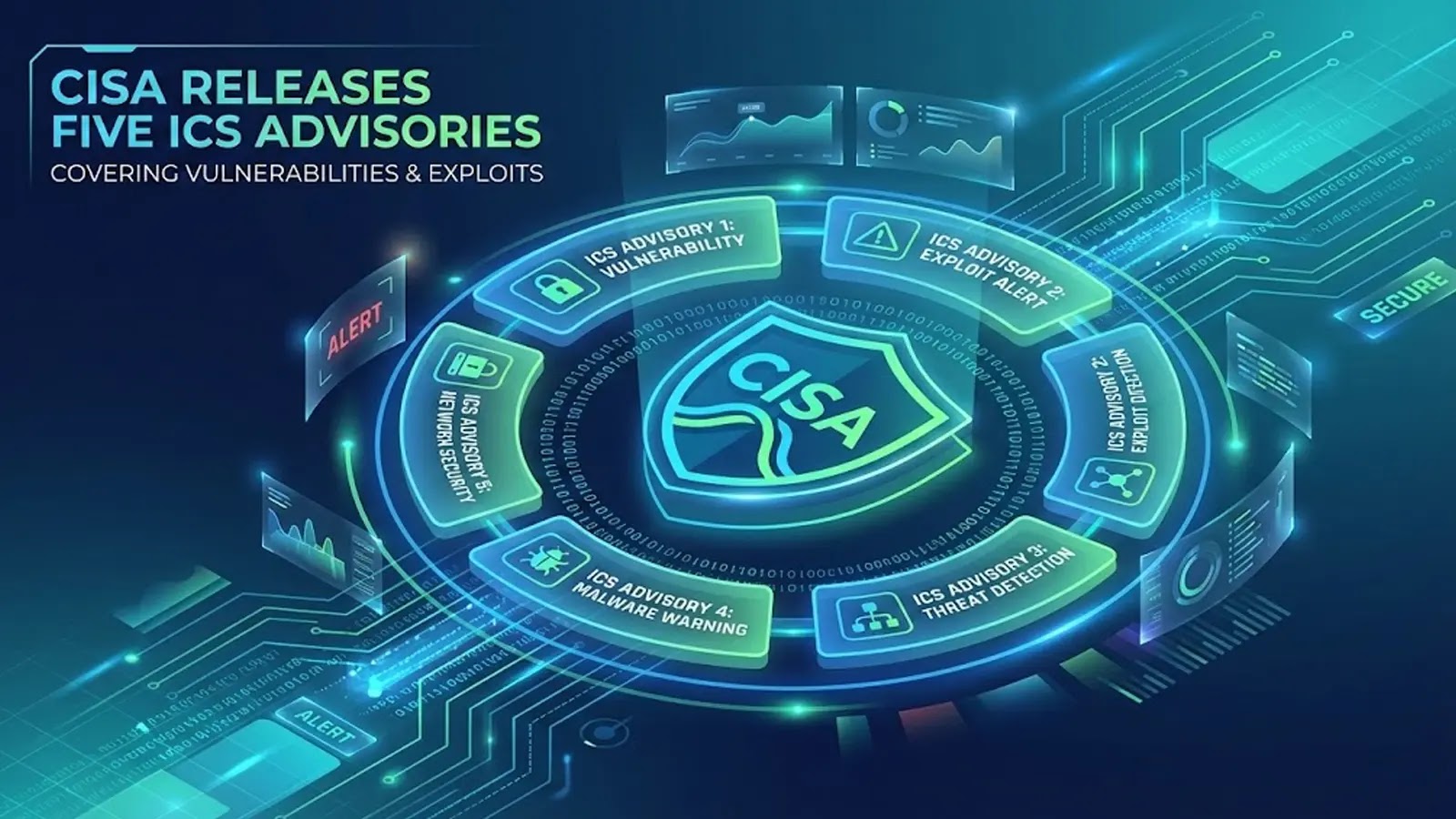
CISA Releases Five ICS Advisories Covering Vulnerabilities, and Exploits Surrounding ICS
CISA Sounds the Alarm: Five Critical ICS Advisories Demand Immediate Attention
The Cybersecurity and Infrastructure Security Agency (CISA) has once again shone a spotlight on the critical vulnerabilities plaguing Industrial Control Systems (ICS). On December 2, 2025, CISA released five crucial advisories, underscoring significant security threats across industrial environments worldwide. This timely release highlights the escalating concerns surrounding targeted exploits in sectors ranging from manufacturing and power generation to vital medical device operations. For organizations reliant on ICS, understanding and acting upon these warnings is paramount.
The Growing Threat Landscape for Industrial Control Systems
Industrial Control Systems are the backbone of modern critical infrastructure. From managing power grids to orchestrating factory automation, their uninterrupted operation is vital. However, their increasing interconnectedness also exposes them to sophisticated cyberattacks. These CISA advisories serve as a stark reminder of the persistent and evolving threats targeting ICS, often aimed at disrupting operations, stealing intellectual property, or even causing physical damage.
Deep Dive into the Advisories: A Critical Overview
While specific CVEs and affected vendors were not detailed in the provided source, the announcement itself signals a broader concern about common vulnerability types and active exploitation. Typically, CISA’s ICS advisories address issues such as:
- Remote Code Execution (RCE): Allowing attackers to run arbitrary code on affected systems, leading to complete compromise.
- Authentication Bypass: Enabling unauthorized access to critical systems and data.
- Denial of Service (DoS): Disrupting the availability and functionality of ICS components.
- Information Disclosure: Exposing sensitive operational data or intellectual property.
- Improper Input Validation: Leading to various attacks, including SQL injection or buffer overflows.
The emphasis on “active exploits” suggests that adversaries are already leveraging these vulnerabilities in real-world attacks, accelerating the urgency for defensive measures.
Understanding the Impact on Critical Sectors
The advisories specifically mention impacts on manufacturing, power generation, and medical device operations. This breadth highlights the systemic risk posed by ICS vulnerabilities:
- Manufacturing: Disruptions can halt production lines, damage equipment, and lead to significant financial losses.
- Power Generation: Exploits in this sector could result in widespread power outages, impacting millions and critical services.
- Medical Device Operations: Compromised medical devices or hospital systems can directly endanger patient safety and privacy.
The interconnected nature of these environments means a vulnerability in one component could have cascading effects across an entire operational technology (OT) network.
Remediation Actions: Fortifying Your ICS Defenses
Given the critical nature of these advisories, organizations must undertake immediate and strategic remediation actions. While specific patches and mitigation might vary based on the detailed advisories (once fully disclosed), general best practices for ICS security remain paramount:
- Patch Management: Proactively identify and apply security patches and updates from vendors as soon as they become available. Maintain an up-to-date inventory of all ICS devices and their firmware versions.
- Network Segmentation: Implement strong network segmentation between IT and OT networks, and within OT networks themselves. This limits the lateral movement of attackers.
- Access Control: Enforce the principle of least privilege. Implement multi-factor authentication (MFA) for all remote access and administrative interfaces. Regularly review and revoke unnecessary access.
- Vulnerability Assessments & Penetration Testing: Conduct regular assessments specific to OT environments to identify weaknesses before attackers do.
- Incident Response Planning: Develop and regularly test an incident response plan tailored for ICS environments. This includes clear communication protocols and recovery procedures.
- Employee Training: Educate personnel on social engineering tactics and cybersecurity best practices, as human error often remains a significant entry point for attackers.
- Monitoring and Detection: Deploy specialized ICS/OT cybersecurity solutions for continuous monitoring to detect anomalous behavior and potential intrusions.
Essential Tools for ICS Security and Remediation
Effective ICS security relies on a robust toolkit for detection, analysis, and mitigation. Here are some categories of tools that can assist organizations in addressing vulnerabilities:
| Tool Category | Purpose | Examples |
|---|---|---|
| Vulnerability Scanners (OT-specific) | Identify known vulnerabilities in ICS/SCADA devices without disrupting operations. | Tenable.ot, Claroty, Nozomi Networks |
| Network Monitoring/IDS (OT-aware) | Detect anomalous traffic patterns and potential intrusions on OT networks. | Nozomi Networks Guardian, Claroty Continuous Threat Detection, Dragos Platform |
| Patch Management Systems | Automate and manage the deployment of security patches for ICS components. | Specialized vendor tools, e.g., Rockwell Automation’s FactoryTalk AssetCentre |
| Asset Inventory & Configuration Management | Provide a comprehensive view of all connected ICS assets and their configurations. | Tenable.ot, Claroty, Indegy (now part of Tenable) |
Staying Ahead of the Curve
The release of these five ICS advisories by CISA is a critical reminder that cybersecurity is not a static defense but an ongoing, proactive engagement. Organizations operating within critical infrastructure sectors must internalize these warnings, swiftly assess their exposure, and implement robust mitigation strategies. Regular engagement with CISA advisories and industry threat intelligence is essential to maintaining a resilient operational environment against ever-evolving cyber threats.




