
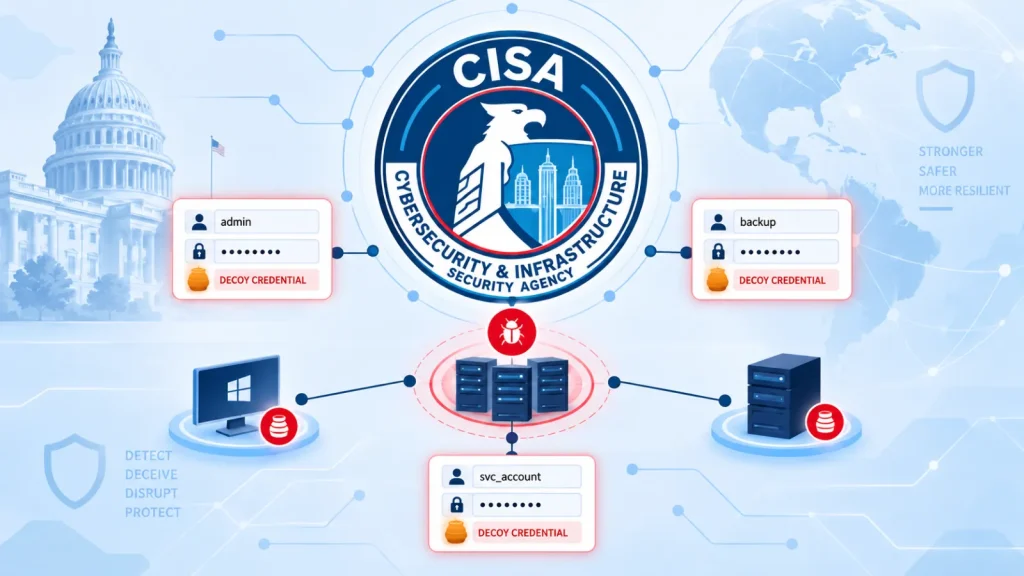
CISA Wants Defenders to Deploy Fake Credentials and Systems to Catch Hackers
The landscape of cyber threats is continuously shifting. Attackers are becoming more sophisticated, frequently sidestepping traditional malware-centric approaches in favor of subtler, more insidious tactics that abuse legitimate system functionalities. In response to this evolving threat, the Cybersecurity and Infrastructure Security Agency (CISA) has issued a compelling new directive for organizations: deploy cyber decoys.
On September 16, 2026, CISA published its guidance titled “Using Cyber Decoys to Strengthen Detection and Response,” advocating for the strategic placement of fake credentials, systems, files, and data assets within an environment. The goal? To expose attackers who have already breached initial defenses.
The Evolving Threat: Beyond Malware
For years, cybersecurity strategies predominantly focused on preventing initial breaches and detecting known malware signatures. Firewalls, antivirus software, and intrusion detection systems were the primary lines of defense. However, modern adversaries have adapted. Many advanced persistent threats (APTs) and sophisticated criminal organizations now favor “living off the land” techniques. This involves using legitimate tools and built-in operating system features (like PowerShell, WMIC, or even native remote access utilities) to move laterally, elevate privileges, and exfiltrate data, often without dropping any traditional malware.
This shift makes detection incredibly challenging. An attacker using valid credentials, even if stolen, to access a file share or execute a command through a legitimate administrative tool can blend seamlessly into normal network traffic, making it difficult for security analysts to distinguish malicious activity from benign operations.
The Deception Strategy: How Cyber Decoys Work
CISA’s guidance champions a proactive deception strategy. The core idea is to create attractive, yet entirely fake, targets that lure attackers away from real assets and into monitored traps. These decoys can take several forms:
- Fake Credentials: Bogus usernames and passwords embedded in configuration files, system memory, or even publicly accessible code repositories. If an attacker compromises a system and attempts to use these fake credentials, it immediately triggers an alert.
- Decoy Systems: Virtual machines or isolated network segments designed to mimic critical production servers (e.g., domain controllers, database servers). These systems contain no real sensitive data but are configured to be appealing targets for an attacker attempting lateral movement. Any interaction with these systems indicates malicious activity.
- Lure Files and Data: Documents, spreadsheets, or databases containing dummy data, often named to appear highly sensitive (e.g., “HR Payroll Data Q4 2026,” “Confidential Acquisition Plans”). These files are strategically placed and monitored for access.
- “Canary” Tokens: Embedded links, DNS requests, or API calls within fake documents or configurations that, when activated by an attacker, send an alert to the security team without the attacker’s knowledge.
When an attacker interacts with any of these decoys, it’s a strong indicator of compromise (IOC) because legitimate users should have no reason to touch them. This allows defenders to quickly identify active threats and initiate a response, often much earlier in the kill chain than traditional detection methods.
Benefits of Implementing Cyber Decoys
Deploying cyber decoys offers several significant advantages:
- Early Detection: Catches attackers before they reach critical assets or exfiltrate sensitive data.
- Reduced Dwell Time: Decreases the time an attacker can remain undetected within the network.
- Attacker Attribution and Behavior Analysis: Provides valuable intelligence on an attacker’s tactics, techniques, and procedures (TTPs), helping refine defensive strategies.
- Validation of Security Controls: Can highlight blind spots in existing monitoring or access control mechanisms.
- Distraction and Diversion: Diverts attackers’ attention and resources to fake targets, buying time for defensive action.
Remediation Actions and Implementation Considerations
While the concept of cyber decoys is powerful, successful implementation requires careful planning and execution.
- Strategic Placement: Decoys must be placed where an attacker is likely to encounter them during their reconnaissance, lateral movement, or privilege escalation phases. This requires a deep understanding of your own network and common attacker TTPs.
- Authenticity: Decoys must appear legitimate enough to fool an attacker. This includes realistic naming conventions, directory structures, and even simulated network traffic for decoy systems.
- Monitoring and Alerting: Robust monitoring and alerting mechanisms are crucial. Any interaction with a decoy should trigger an immediate, high-priority alert to the security operations center (SOC).
- False Positive Management: Clearly differentiate between legitimate assets and decoys to prevent internal users or automated systems from triggering false positives.
- Integration with Incident Response: Alerts from decoys must be seamlessly integrated into existing incident response workflows to ensure a swift and effective reaction.
- Maintenance: Decoys are not “set and forget.” They need to be updated, rotated, and their effectiveness evaluated regularly to remain convincing and relevant.
- Legal and Ethical Considerations: Ensure that the deployment of decoys complies with all relevant legal and ethical guidelines, especially concerning data privacy and surveillance.
The Future of Proactive Defense
CISA’s endorsement of cyber decoys signifies a crucial shift in defensive strategy. It acknowledges that perimeter defenses alone are insufficient in the face of persistent and adaptive adversaries. By embracing deception, organizations can turn the tables on attackers, transforming their internal environments into active defense zones designed to detect and respond to threats more effectively. This proactive approach, coupled with strong foundational security practices, will be instrumental in safeguarding critical infrastructure and sensitive data in the years to come.




