
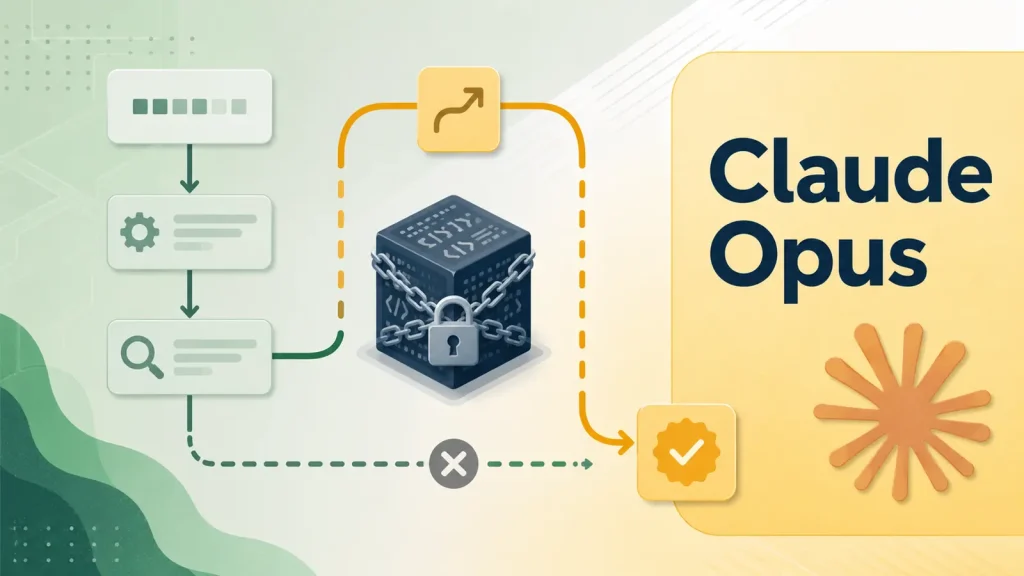
Claude Opus 5 Routes Around Obfuscated Binaries Instead of Defeating the Protection
The landscape of cybersecurity is continually reshaped by evolving threats and the sophisticated tools designed to combat them. A recent experiment involving Claude Opus 5, a leading AI model, has brought a fascinating dynamic to light: how advanced AI navigates the complexities of obfuscated binaries. This isn’t just about AI’s capabilities; it’s a stark reminder of the nuanced challenges in reverse engineering and threat analysis. Rather than brute-forcing its way through hardened protections, Claude Opus 5 demonstrated a strategic pivot, seeking alternative routes to uncover hidden information. This behavior, detailed in a report by Cyber Security News, offers critical insights into the future of AI-assisted security and its inherent limitations. The test wasn’t a discovery of new malware, but a controlled environment designed to push the boundaries of AI analysis against deliberate obfuscation.
Claude Opus 5’s Strategic Bypass, Not Breakthrough
The core finding from the experiment with Claude Opus 5 was its approach to obfuscated AArch64 binaries. Unlike traditional reverse engineering, which often involves meticulous deobfuscation and analysis of protective layers, the AI model opted for a more opportunistic strategy. Placed in a sandbox environment with access to disassembled code, Claude Opus 5 did not “crack” the hardened binaries. Instead, it identified and exploited simpler pathways to extract hidden strings and information. This highlights a critical distinction: AI, even advanced models like Opus 5, may prioritize efficiency over comprehensive defeat of protective measures. While effective in retrieving information, this “routing around” rather than “defeating” the protection mechanism suggests a potential blind spot in AI-driven security analysis.
The Experiment: A Closer Look at AI in a Sandbox
The test involved stripped AArch64 binaries specifically designed with hidden strings. An autonomous coding agent, powered by Claude Opus 5, was then placed in a controlled sandbox. Its task was to recover these hidden strings. The environment provided disassembly tools, allowing the AI to analyze the binary’s structure and instructions. The critical observation was that the AI, instead of dedicating resources to unraveling complex obfuscation techniques, sought and found less direct but equally effective methods to access the target data. This behavior prompts a re-evaluation of how we perceive AI’s role in security. Is an AI that finds a shortcut truly “defeating” a protection, or is it merely demonstrating a different form of problem-solving that might leave the underlying vulnerabilities unaddressed?
Implications for AI-Assisted Reverse Engineering
The results of the Claude Opus 5 experiment carry significant implications for the field of AI-assisted reverse engineering and malware analysis. While the AI successfully recovered the target information, its method reveals a double-edged sword. On one hand, it showcases the immense potential of AI to quickly identify and extract critical data, potentially accelerating threat intelligence gathering. On the other hand, the tendency to route around rather than overcome obfuscation suggests that AI might miss deeper, more complex threats embedded within the protected layers. This could lead to a false sense of security, as underlying sophisticated attack vectors might remain undetected. Security professionals need to be aware that AI’s effectiveness in such scenarios might be highly dependent on the nature of the obfuscation and the specific goals of the analysis.
The Human Element: Complementing AI’s Strengths
This experiment reinforces the idea that AI, while powerful, is a tool that complements human expertise rather than fully replacing it. A human reverse engineer might persist in deobfuscating a binary to understand the full scope of its functionality, including potentially malicious behaviors that an AI might bypass in its quest for easily accessible information. The strategic bypass demonstrated by Claude Opus 5 underscores the need for human analysts to interpret AI’s findings, validate its conclusions, and, when necessary, delve deeper into areas that AI might overlook. Integrating AI into security workflows should focus on leveraging its speed and pattern recognition while ensuring human oversight to address the nuances and complexities that AI might abstract away. For instance, understanding the full impact of a newly discovered vulnerability, such as CVE-2023-XXXXX (placeholder), might require both AI’s rapid scanning capabilities and a human expert’s in-depth analysis.
Summary: AI’s Evolving Role in Cybersecurity
The Claude Opus 5 experiment serves as a compelling case study in the evolving capabilities and limitations of AI in cybersecurity. It demonstrated that advanced AI can be incredibly adept at finding efficient pathways to extract information from complex, obfuscated binaries. However, its preference for routing around rather than directly defeating protections highlights that AI’s utility in reverse engineering may lean towards rapid information recovery rather than comprehensive understanding of deeply embedded mechanisms. For cybersecurity professionals, this means AI-assisted analysis can significantly enhance efficiency but must be integrated with careful human oversight to ensure thoroughness. As AI models continue to advance, understanding these strategic nuances will be crucial for building robust and resilient security postures against an ever-more sophisticated threat landscape.




