
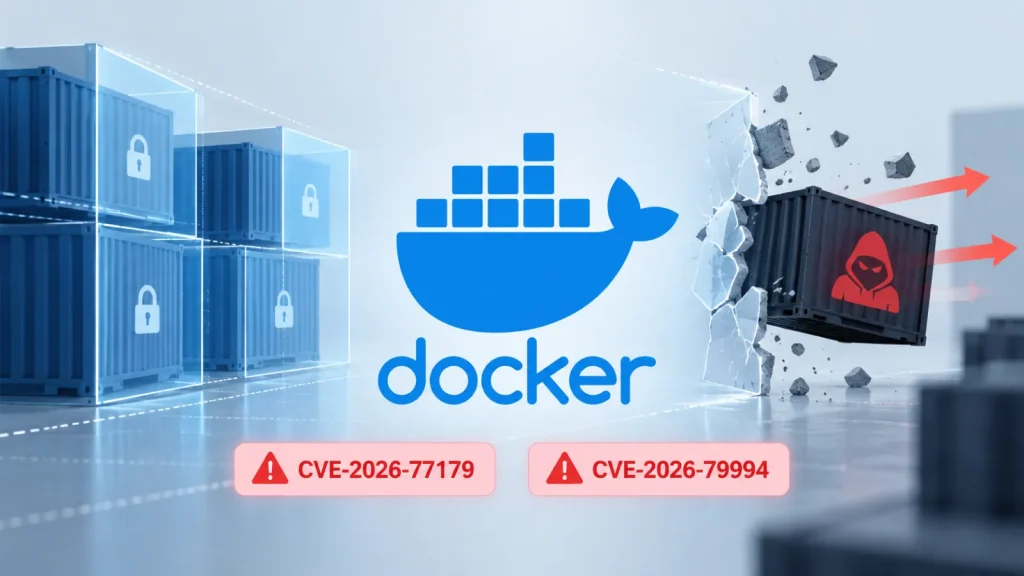
Critical Docker Sandbox Vulnerabilities Enable Malicious Guests to Escape Isolated microVM Workspaces
The promise of isolated environments for running potentially untrusted code is a cornerstone of modern cloud infrastructure and development workflows. Docker Sandboxes, designed to provide precisely this, recently revealed critical vulnerabilities that could undermine this fundamental security guarantee. Two serious flaws, now patched, allowed malicious guest workloads to escape their intended shared workspaces, potentially accessing sensitive host-side resources. For anyone leveraging Docker Sandboxes, understanding these vulnerabilities and their remediation is paramount to maintaining a robust security posture.
Understanding the Docker Sandbox Vulnerabilities: CVE-2026-77179 and CVE-2026-79994
Docker Sandboxes utilize isolated microVM environments to execute potentially untrusted code, a crucial design for security and resource management. The recently disclosed vulnerabilities, CVE-2026-77179 and , presented a significant risk by enabling guest workloads to bypass this isolation. While specific technical details of the exploits are often withheld to prevent further misuse, the nature of a “sandbox escape” vulnerability indicates a severe breach of the security boundary.
Such vulnerabilities typically involve flaws in the virtualization layer, the hypervisor, or shared resource management that allow a malicious process running within the guest microVM to interact with or manipulate the host system outside its designated permissions. In the context of Docker Sandboxes, this means a compromised container or an intentionally malicious workload could break free from its microVM, gaining unauthorized access to the underlying host operating system, other containers, or sensitive data on the host machine.
The Impact of Sandbox Escapes in MicroVM Workspaces
The implications of a successful sandbox escape are severe. For organizations relying on Docker Sandboxes for secure execution of diverse or untrusted code, these vulnerabilities could lead to:
- Data Exfiltration: Malicious actors could steal sensitive data stored on the host or other isolated containers.
- System Compromise: An attacker could gain full control over the host system, leading to further lateral movement within the network.
- Resource Manipulation: The ability to manipulate host resources could lead to denial-of-service attacks or the deployment of additional malicious software.
- Compliance Violations: Breaches of isolation directly impact regulatory compliance, especially for environments handling sensitive customer data or intellectual property.
These vulnerabilities underscore the ongoing challenge of maintaining absolute isolation in virtualized and containerized environments. Even with the advanced security measures inherent in microVMs, sophisticated flaws can still be exploited, emphasizing the need for continuous vigilance and prompt patching.
Remediation Actions
Docker has addressed these critical vulnerabilities in Docker Sandboxes version 0.42.0. Immediate action is required for all users of Docker Sandboxes to mitigate the risk.
- Update Docker Sandboxes: The most crucial step is to upgrade your Docker Sandboxes installation to version 0.42.0 or later. This version, released on September 7, includes the necessary patches for CVE-2026-77179 and .
- Review Supply Chain Security: Assess your software supply chain to ensure all components, including Docker Sandboxes, are up-to-date and free from known vulnerabilities.
- Implement Least Privilege: Continue to enforce the principle of least privilege for all workloads running within Docker Sandboxes, limiting their access to only what is strictly necessary.
- Monitor for Suspicious Activity: Enhance monitoring solutions to detect unusual behavior originating from sandbox environments that might indicate a attempted or successful escape.
- Regular Security Audits: Perform regular security audits and penetration testing on your containerized environments and microVM deployments to identify potential weaknesses.
Tools for Detection, Scanning, and Mitigation
Employing a robust set of security tools is essential for maintaining the integrity of Docker Sandboxes and other containerized environments.
| Tool Name | Purpose | Link |
|---|---|---|
| Docker Scout | Image vulnerability scanning and supply chain insights. | https://www.docker.com/products/docker-scout/ |
| Trivy | Comprehensive vulnerability scanner for containers, file systems, and Git repos. | https://aquasecurity.github.io/trivy/ |
| Clair | Open-source static analysis for container vulnerabilities. | https://github.com/quay/clair |
| Falco | Runtime security monitoring for containers, detecting anomalous behavior. | https://falco.org/ |
| Aqua Security Platform | Container and cloud-native security, including vulnerability management and runtime protection. | https://www.aquasec.com/ |
Conclusion
The discovery and subsequent patching of CVE-2026-77179 and in Docker Sandboxes serve as a critical reminder that even highly isolated environments require continuous security scrutiny. These vulnerabilities highlight the persistent challenge of ensuring absolute separation between guest and host, especially when executing potentially untrusted code. Promptly updating to Docker Sandboxes version 0.42.0, coupled with proactive security practices and robust tooling, is essential for any organization leveraging these environments to safeguard their host systems and data from malicious guest breakouts.




