
Critical Flaws in Anthropic, Google, and OpenAI’s Coding Agents Enable RCE and Supply Chain Attacks
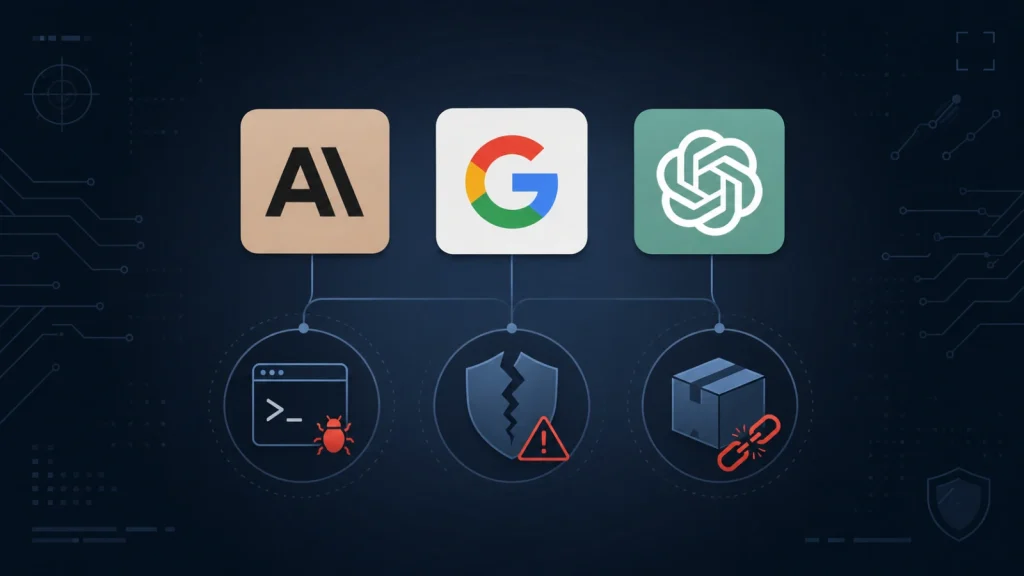
The promise of AI-powered coding agents is immense: accelerating development, automating mundane tasks, and boosting efficiency. Yet, a recent discovery by Novee security researcher Elad Meged casts a significant shadow on this technological frontier. Critical flaws have been uncovered in the default configurations of leading AI coding agents from Anthropic, Google, and OpenAI, enabling attackers to achieve remote code execution (RCE), steal API credentials, and compromise software supply chains. This alarming vulnerability pattern, identified without requiring any privileged access, exposes a fundamental security oversight that demands immediate attention from developers and organizations relying on these tools.
The Pervasive Vulnerability: A Shared Design Flaw
Elad Meged’s research, detailed by Cybersecurity News, reveals a concerning truth: a repeatable vulnerability pattern exists across multiple prominent AI coding agents. This isn’t an isolated incident affecting a single product; it’s a systemic issue embedded in how these powerful AI tools interact with their environment and handle user input. The core of the problem lies in the agents’ default configurations, which, when exploited, open pathways to severe security breaches.
The researcher tested these agents on their respective public repositories, meaning the vulnerabilities are present in the very environments where these tools are showcased and widely accessed. This implies a significant attack surface, as attackers do not need to circumvent complex security measures or obtain elevated permissions to leverage these flaws.
Understanding the Impact: RCE, Credential Theft, and Supply Chain Compromise
The potential consequences of these vulnerabilities are far-reaching and severe:
- Remote Code Execution (RCE): This is arguably the most critical outcome. RCE allows an attacker to execute arbitrary code on the affected system, gaining full control over the environment where the AI agent operates. This could lead to data exfiltration, system sabotage, or the establishment of persistent backdoors.
- API Credential Theft: AI coding agents often interact with various APIs, including those for source control, cloud services, and internal systems. Exploiting these flaws can enable attackers to steal these sensitive API credentials, granting them unauthorized access to a multitude of connected services and data.
- Software Supply Chain Attacks: By compromising the AI agent, an attacker can inject malicious code into generated or modified code. This poisoned code can then propagate through the software development lifecycle, leading to widespread supply chain attacks where legitimate software updates or dependencies deliver malware to end-users and organizations.
The absence of any requirement for privileged access makes these attacks particularly insidious. A simple, crafted input to the AI agent could be enough to trigger these critical vulnerabilities, turning a helpful development tool into a dangerous attack vector.
Remediation Actions: Securing Your AI Coding Agents
Organizations and developers utilizing AI coding agents from Anthropic, Google, and OpenAI must take immediate action to mitigate these risks. While specific patches will likely be issued by the vendors, proactive measures are crucial:
- Vendor Patches and Updates: Regularly monitor and apply all security patches and updates released by Anthropic, Google, and OpenAI for their respective coding agents. This is the most direct way to address known vulnerabilities.
- Input Validation and Sanitization: Implement robust input validation and sanitization mechanisms for all data fed into AI coding agents. Assume all user input is malicious until proven otherwise. This includes natural language prompts, code snippets, and configuration parameters.
- Least Privilege Principle: Configure AI coding agents and their underlying environments with the principle of least privilege. Limit the permissions and access rights granted to the agent to only what is strictly necessary for its intended function. Avoid running agents with administrative privileges.
- Network Segmentation: Isolate AI coding agents within segmented network environments. This can help contain potential breaches and prevent attackers from moving laterally across your network if an agent is compromised.
- Monitoring and Alerting: Implement comprehensive logging and monitoring of AI coding agent activities. Establish alerts for anomalous behavior, unauthorized access attempts, or unusual resource utilization.
- Dependency Scanning: Regularly scan all dependencies and libraries used by your AI coding agents for known vulnerabilities. Tools like Dependabot or Snyk can automate this process.
- Security Code Review: Conduct thorough security code reviews of any code generated or modified by AI agents, especially for critical applications. Do not blindly trust AI-generated code.
Relevant Tools for Detection and Mitigation
| Tool Name | Purpose | Link |
|---|---|---|
| SAST Tools (e.g., SonarQube, Checkmarx) | Static Application Security Testing for analyzing code for vulnerabilities. | SonarQube / Checkmarx |
| DAST Tools (e.g., OWASP ZAP, Burp Suite) | Dynamic Application Security Testing for identifying vulnerabilities in running applications. | OWASP ZAP / Burp Suite |
| Dependency Scanners (e.g., Snyk, Dependabot) | Identifies vulnerabilities in open-source dependencies and libraries. | Snyk / Dependabot |
| Endpoint Detection and Response (EDR) | Monitors endpoints for malicious activity and responds to threats. | (Vendor-specific, e.g., CrowdStrike, SentinelOne) |
Conclusion: A Call for Greater Security Scrutiny
The discovery of these critical flaws in AI coding agents from Anthropic, Google, and OpenAI underscores a vital lesson: even the most advanced technologies are susceptible to fundamental security vulnerabilities if not designed and implemented with robust safeguards. The ability for attackers to achieve RCE, steal credentials, and compromise software supply chains without privileged access presents a significant risk to organizations embracing these AI tools. As the adoption of AI in software development continues to grow, a heightened focus on security by design, continuous vulnerability research, and proactive mitigation strategies will be paramount to harnessing the power of AI safely and responsibly.




