
Critical Paperclip Vulnerabilities Allow Attackers to Gain Admin Access
Urgent Alert: Critical Paperclip Vulnerabilities Expose AI Orchestration to Admin Takeover
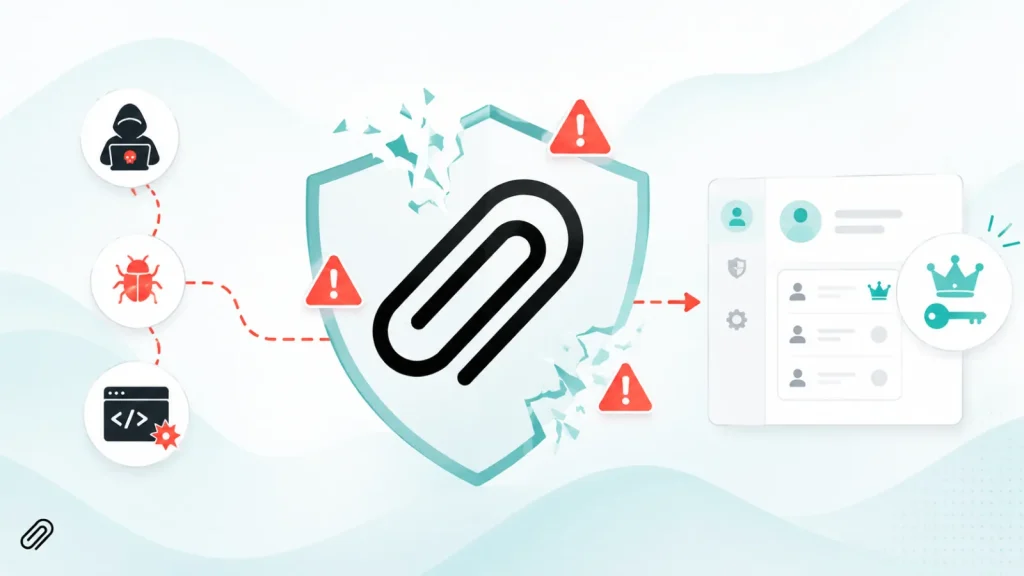
Organizations leveraging AI agent orchestration platforms face a new and severe cybersecurity threat. Recent disclosures reveal critical vulnerabilities within Paperclip, an acclaimed AI orchestration tool, that could grant attackers full administrative control and arbitrary command execution on affected servers. This development demands immediate attention from IT professionals, security analysts, and developers responsible for maintaining secure AI infrastructure.
Understanding the Core Threat: CVE-2026-41679 and Beyond
The most alarming flaw, identified as CVE-2026-41679, carries a maximum CVSS score of 10.0, signaling an extreme level of severity. This particular vulnerability impacts network-accessible Paperclip deployments configured with default authenticated settings. An attacker exploiting this could effectively bypass authentication mechanisms, elevate privileges, and execute commands directly on the underlying server. Such a compromise could lead to data exfiltration, service disruption, or further lateral movement within an organization’s network.
While the source primarily highlights CVE-2026-41679, the term “vulnerabilities” (plural) suggests additional, potentially less critical, but still significant weaknesses may exist. The collective impact of these flaws underscores the urgent need for comprehensive risk assessment and mitigation.
Impact on AI Operations and Data Security
Paperclip’s role in helping organizations “operate autonomous AI” means that a compromise of this platform has far-reaching consequences. An attacker gaining administrative access could:
- Manipulate AI Models: Tamper with AI model parameters, introduce backdoors, or alter training data, leading to biased or malicious AI outputs.
- Exfiltrate Sensitive Data: Access and steal proprietary algorithms, customer data processed by AI, or intellectual property residing on the compromised server.
- Establish Persistence: Install malicious software or create new user accounts to maintain access even after initial detection and remediation efforts.
- Launch Further Attacks: Utilize the compromised server as a pivot point to attack other internal systems within the organization’s network.
- Disrupt Operations: Take down critical AI services, leading to operational downtime and financial losses.
The integrity and confidentiality of AI-driven processes are directly threatened by these Paperclip vulnerabilities, making swift action imperative for any organization utilizing the platform.
Remediation Actions: Securing Your Paperclip Deployments
Immediate action is critical to protect your AI orchestration environment from these severe vulnerabilities. Organizations should prioritize the following:
- Apply Patches Immediately: Monitor official Paperclip channels for security advisories and promptly apply all available patches and updates that address CVE-2026-41679 and any other disclosed vulnerabilities. This is the most direct and effective mitigation.
- Review Network Exposure: Assess the network accessibility of your Paperclip deployments. If possible, restrict access to only trusted IP ranges or internal networks, minimizing exposure to the public internet.
- Strengthen Authentication: Even with default authenticated configurations being affected, reinforcing authentication practices is crucial. Implement strong, unique passwords and multi-factor authentication (MFA) for all administrative accounts.
- Implement Least Privilege: Ensure that Paperclip and its underlying services operate with the minimum necessary privileges required for their function.
- Regular Security Audits: Conduct frequent security audits and penetration testing of your AI infrastructure, including Paperclip deployments, to identify and address potential weaknesses proactively.
- Monitor for Suspicious Activity: Deploy robust logging and monitoring solutions to detect unusual login attempts, unauthorized command execution, or anomalous network traffic originating from or targeting Paperclip servers.
Essential Tools for Vulnerability Detection and Mitigation
Leveraging the right tools can significantly enhance your ability to detect, assess, and mitigate the risks posed by these Paperclip vulnerabilities.
| Tool Name | Purpose | Link |
|---|---|---|
| Nessus | Vulnerability Scanning & Management | https://www.tenable.com/products/nessus |
| OpenVAS | Open Source Vulnerability Scanner | http://www.openvas.org/ |
| Snort | Intrusion Detection/Prevention System | https://www.snort.org/ |
| Splunk | SIEM for Log Management & Monitoring | https://www.splunk.com/ |
| Qualys VMDR | Vulnerability Management, Detection and Response | https://www.qualys.com/apps/vmdr/ |
Protecting Your AI Future
The disclosure of critical Paperclip vulnerabilities, particularly CVE-2026-41679, represents a significant cybersecurity challenge for organizations relying on this AI orchestration platform. The potential for administrative takeover and arbitrary command execution demands a proactive and systematic response. Prioritizing patching, securing network access, and implementing robust monitoring are not merely best practices; they are essential steps to safeguard your AI infrastructure, protect sensitive data, and maintain operational integrity in the face of evolving cyber threats.




