
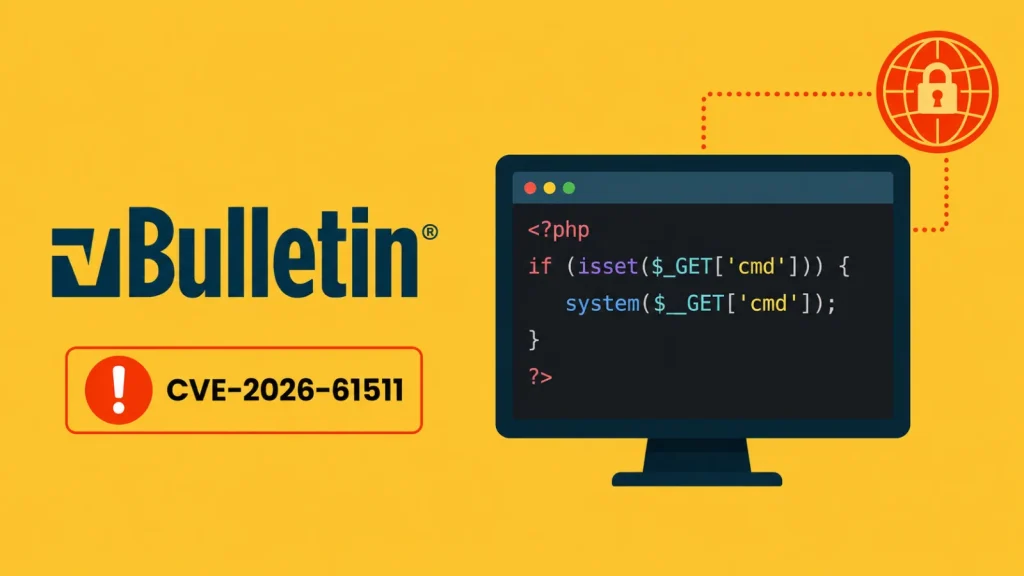
Critical vBulletin Flaw Lets Unauthenticated Attackers Execute PHP Code Remotely
Urgent Warning: Critical vBulletin Flaw Exposes Forum Servers to Remote Takeover
In the vibrant ecosystem of online communities, forums powered by platforms like vBulletin have long been instrumental in fostering discussion and collaboration. However, a recently discovered and patched critical vulnerability, tracked as CVE-2026-61511, has sent a ripple of concern throughout the cybersecurity landscape. This severe remote code execution (RCE) flaw allows unauthenticated attackers to execute arbitrary PHP code on vulnerable vBulletin forum servers, effectively paving the way for complete server compromise.
The potential ramifications of such a vulnerability are profound. An attacker exploiting this flaw could gain unauthorized access to sensitive data, deface websites, install malware, or even use compromised servers as launching pads for further attacks. This serves as a stark reminder of the perpetual need for vigilance in maintaining secure online environments.
Understanding CVE-2026-61511: The Technical Details
The vulnerability, identified as CVE-2026-61511, resides within the core functionality of specific vBulletin versions. Specifically, the flaw is located in the file /includes/vb5/template/runtime.php, within the vB5_Template_Runtime::runMaths() method. This function, intended for processing specific values, contains a critical oversight that enables malicious input to be interpreted as executable PHP code.
The core issue stems from insecure handling of user-supplied data, where an attacker can inject crafted input that bypasses security checks and is then processed directly by the PHP interpreter. This “arbitrary PHP code execution” gives the attacker nearly limitless control over the affected server, making it a very high-severity vulnerability.
Affected vBulletin Versions
This critical RCE vulnerability impacts a significant range of vBulletin installations, leaving many forum administrators grappling with potential exposure. The flaw affects:
- vBulletin versions 6.2.1 and earlier
- vBulletin versions 6.1.6 and earlier
Users operating any version within these ranges are strongly advised to take immediate action to mitigate the risk.
Remediation Actions: Securing Your vBulletin Forum
Given the critical nature of CVE-2026-61511, prompt action is paramount. Forum administrators and IT professionals responsible for vBulletin deployments must prioritize patching their systems.
- Immediate Patching: The most crucial step is to update your vBulletin installation to the latest patched version. vBulletin has released fixes addressing this vulnerability. Ensure you are running a version higher than 6.2.1 or 6.1.6, as appropriate for your branch. Always back up your forum data and database before initiating any major update.
- Review Server Logs: After patching, meticulously review your web server and vBulletin application logs for any suspicious activity that might indicate a prior exploitation attempt. Look for unusual requests to
runtime.phpor unexpected PHP errors. - Implement Web Application Firewall (WAF): A properly configured Web Application Firewall can provide an additional layer of defense by detecting and blocking malicious requests, including attempts to exploit vulnerabilities like RCE.
- Least Privilege Principle: Ensure that the PHP process running vBulletin operates with the minimum necessary privileges to function. This limits the damage an attacker can inflict even if they manage to execute code.
- Regular Security Audits: Conduct regular security audits of your vBulletin installation and underlying server infrastructure to identify and address potential weaknesses proactively.
Detection and Mitigation Tools
While direct detection of the exploit in progress might require deep packet inspection, several tools can aid in identifying vulnerable systems and providing mitigation layers.
| Tool Name | Purpose | Link |
|---|---|---|
| Nessus | Vulnerability Scanning (identifies outdated software and known CVEs) | https://www.tenable.com/products/nessus |
| OpenVAS | Open Source Vulnerability Scanner | http://www.openvas.org/ |
| ModSecurity | Web Application Firewall (WAF) for detecting and blocking malicious requests | https://modsecurity.org/ |
| Sucuri Website Security | Cloud-based WAF and malware detection/removal | https://sucuri.net/ |
Staying Ahead: A Proactive Security Posture
The discovery of CVE-2026-61511 underscores the constant threat landscape faced by web applications. For administrators of vBulletin forums and other web platforms, a proactive security posture is non-negotiable. This includes staying informed about the latest vulnerabilities, adhering to best practices for secure coding and configuration, and establishing robust incident response plans. Timely patching, continuous monitoring, and a layered security approach are the cornerstones of protecting valuable online communities from emerging threats.




