
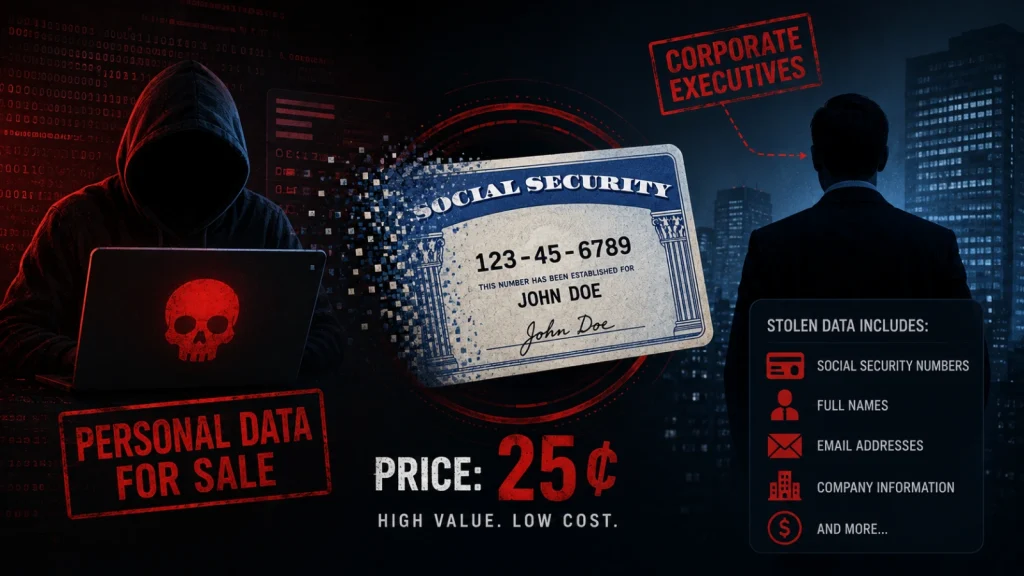
Cybercriminals Are Selling Corporate Executives’ Social Security Numbers for Just 25 Cents
The Devaluation of Executive Identity: Social Security Numbers for Pennies on the Dark Web
In a deeply unsettling revelation, threat intelligence from Rapid7 exposes a stark reality: the most sensitive personal data of corporate executives – their Social Security Numbers (SSNs) – are being hawked on dark web marketplaces for as little as 25 cents. This isn’t just about financial fraud; it represents a profound devaluation of identity and a permanent liability for those affected. Unlike a compromised credit card, which can be quickly canceled and replaced, a stolen SSN grants cybercriminals persistent access to an individual’s financial, medical, and personal history, making it a cornerstone for long-term identity theft and targeted attacks.
The Pernicious Power of a Stolen SSN
A Social Security Number is the bedrock of an individual’s financial identity in many countries. Its compromise opens the floodgates to a myriad of malicious activities. For just a quarter, threat actors gain the master key to:
- Synthetic Identity Fraud: Combining real SSNs with fabricated details to create new, fraudulent identities.
- Account Takeovers: Gaining access to bank accounts, investment portfolios, and other financial services.
- Loan Applications: Obtaining loans, credit cards, and mortgages in the victim’s name.
- Tax Fraud: Filing false tax returns to claim refunds.
- Medical Identity Theft: Accessing healthcare services or filing false claims.
- Spear Phishing & Business Email Compromise (BEC): Using personal details to craft highly convincing social engineering attacks against the executive or their organization.
The long-term implications are severe, requiring extensive time and resources for victims to mitigate the damage and restore their financial integrity. For corporate executives, whose positions often involve access to sensitive company data, the compromise of their SSN introduces an additional layer of risk, potentially leading to corporate espionage or insider threat scenarios.
How Executive SSNs End Up on the Dark Web
The pathways for executive SSNs to land on dark web markets are diverse, highlighting systemic vulnerabilities across various sectors:
- Data Breaches: Large-scale breaches of corporate HR systems, healthcare providers, or government databases often expose vast quantities of PII, including SSNs. Even organizations with robust cybersecurity defenses can fall victim to sophisticated attacks.
- Insider Threats: Disgruntled employees or malicious insiders with access to HR records can exfiltrate sensitive data.
- Phishing & Social Engineering: Executives themselves can be tricked into divulging personal information through sophisticated phishing campaigns designed to mimic legitimate requests from banks, government agencies, or even internal IT departments.
- Third-Party Vendor Compromise: Organizations often share executive data with third-party payroll providers, benefits administrators, or recruitment firms. A breach in one of these vendors can directly impact executive PII.
- Lack of Data Minimization: Organizations may collect and retain more personal data than necessary, increasing the attack surface.
Remediation Actions and Protective Measures
Given the permanence of a compromised SSN, preventative measures and rapid response are paramount. Organizations and executives must adopt a multi-layered approach to protect this critical piece of identity information.
For Organizations:
- Robust Data Security & Encryption: Implement strong encryption for all PII, especially SSNs, both at rest and in transit. Regularly audit and update security protocols.
- Access Control & Least Privilege: Limit access to sensitive HR data to only those employees who absolutely require it for their job functions. Implement multi-factor authentication (MFA) for all administrative access.
- Employee Training & Awareness: Conduct regular, engaging cybersecurity training for all employees, especially executives, on recognizing phishing attempts, social engineering tactics, and safe data handling practices.
- Third-Party Risk Management: Vet all third-party vendors with access to executive PII. Ensure they meet stringent security standards and have contractual obligations for data protection.
- Data Minimization: Only collect and retain SSNs and other sensitive data when absolutely necessary and for the shortest possible duration.
- Incident Response Plan: Develop and regularly test a comprehensive incident response plan specifically for PII breaches, focusing on rapid detection, containment, and notification.
For Executives:
- Identity Theft Protection Services: Subscribe to reputable identity theft protection services that offer credit monitoring, dark web scanning, and identity restoration assistance.
- Credit Freezes: Proactively place freezes on your credit with all major credit bureaus (Equifax, Experian, TransUnion) to prevent new accounts from being opened in your name.
- Review Financial Statements: Regularly review bank statements, credit card bills, and credit reports for any suspicious activity.
- Use Strong, Unique Passwords & MFA: Implement strong, unique passwords for all online accounts and enable multi-factor authentication wherever possible.
- Be Wary of Unsolicited Requests: Be extremely cautious of emails, calls, or texts requesting personal information, even if they appear to be from legitimate sources. Verify requests through official channels.
Relevant Tools for Detection and Mitigation
Proactive monitoring and robust security tools are critical in combating the threat of stolen executive identities.
| Tool Name | Purpose | Link |
|---|---|---|
| Rapid7 InsightIDR | Comprehensive SIEM and XDR for threat detection and incident response, including identity-based threats. | https://www.rapid7.com/products/insightidr/ |
| Identity Monitoring Services (e.g., LifeLock, IdentityForce) | Personal and executive identity theft protection, credit monitoring, and dark web scanning. | https://www.lifelock.com/ (example) |
| Password Managers (e.g., LastPass, 1Password) | Securely store and manage strong, unique passwords for all accounts, reducing the risk of credential stuffing. | https://lastpass.com/ (example) |
| Credit Bureaus (Equifax, Experian, TransUnion) | Place credit freezes, obtain credit reports, and monitor credit activity. | https://www.equifax.com/ (example) |
| Phishing Simulation Platforms (e.g., KnowBe4, Proofpoint) | Train employees to recognize and report phishing and social engineering attempts. | https://www.knowbe4.com/ (example) |
The Enduring Threat of Devalued Identity
The trade of executive Social Security Numbers for mere quarters underscores a critical vulnerability in our interconnected digital landscape. While the financial cost to cybercriminals is minimal, the potential for long-term identity theft and corporate risk is immense. Proactive cybersecurity measures, continuous vigilance, and robust identity protection strategies are not just best practices; they are essential defenses against the enduring and evolving threat of devalued personal data on the dark web.




