
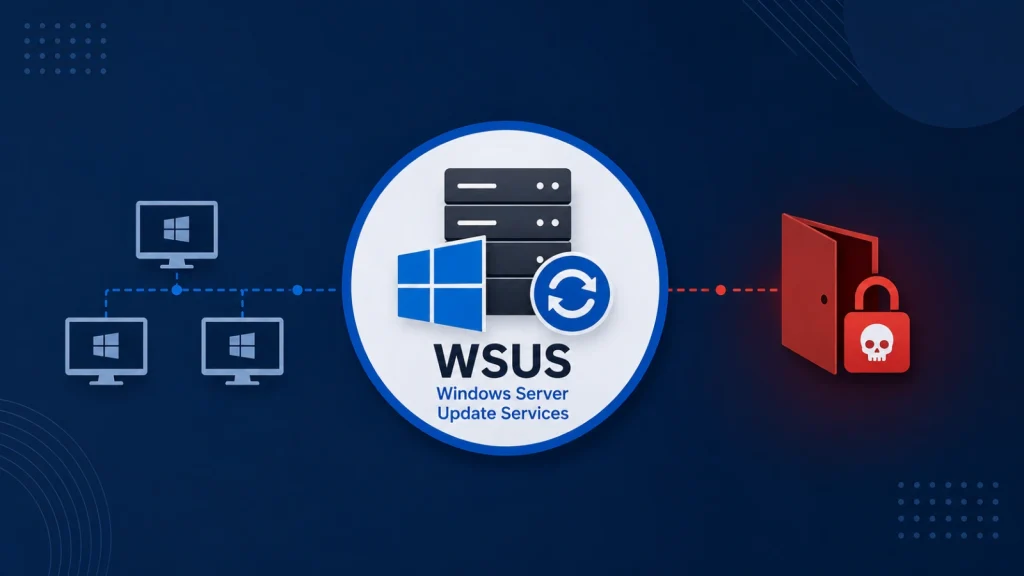
Hackers Can Leverage WSUS Servers to Deliver Malware and Compromise Enterprise Endpoints
In the intricate landscape of enterprise security, the trust placed in critical infrastructure components can sometimes be weaponized. One such component, the Windows Server Update Services (WSUS), a cornerstone for patch management in countless organizations, has been identified as a potential vector for sophisticated attack chains. Recent research reveals a concerning operational risk: adversaries can hijack WSUS servers to deliver malware and compromise enterprise endpoints, leveraging an attack path that exploits specific configurations.
The Undermining of Trusted WSUS Infrastructure
WSUS plays a vital role in maintaining the security posture of an enterprise by distributing critical updates and patches. Its inherent trustworthiness, however, can be turned into a vulnerability. The novel attack chain, brought to light by SpecterOps researcher Beyviel David, demonstrates how this trusted system can be repurposed by attackers. The core of this vulnerability lies in specific deployment configurations, particularly when WSUS relies on an external SQL Server database for its operations.
How Adversaries Exploit WSUS for Malware Delivery
The research pinpoints a critical operational risk: organizations hosting WSUS on an external SQL Server database are particularly susceptible. Attackers with local network access can coerce authentication from the WSUS server to an attacker-controlled resource. This coercion, a common technique in network exploitation, provides the adversary with the necessary credentials or hashes to gain further access. Once authentication is coerced, attackers can then manipulate the WSUS database, specifically by altering update metadata or even directly injecting malicious payloads disguised as legitimate updates.
This method circumvents traditional endpoint protection measures because the malware is delivered through a trusted, internal source – the WSUS server itself. Endpoints configured to receive updates from the compromised WSUS server will then download and execute the malicious software, believing it to be a legitimate security patch or feature update.
The Threat Landscape: Initial Access to Endpoint Compromise
This attack chain highlights the importance of securing every link in the enterprise infrastructure. An attacker who gains even limited network access can escalate privileges and move laterally by compromising the WSUS server. From there, the potential for widespread endpoint compromise is significant, allowing for data exfiltration, ransomware deployment, or the establishment of persistent backdoors. The impact can be devastating, affecting a large number of machines simultaneously and potentially bypassing existing security controls designed to detect external threats.
Remediation Actions: Securing Your WSUS Deployment
Protecting your WSUS infrastructure from such sophisticated attacks requires a multi-faceted approach. Organizations must prioritize hardening their WSUS deployments, especially those utilizing external SQL Server databases. Here are key actions to mitigate the risk:
- Isolate WSUS Servers: Implement strict network segmentation for WSUS servers. Limit network access only to necessary update sources and target endpoints.
- Implement Least Privilege: Ensure that the WSUS service account and the account used to access the SQL database operate with the absolute minimum necessary permissions.
- Secure SQL Server: If using an external SQL Server, apply all security best practices for the database server. This includes strong authentication, encryption for data in transit and at rest, and regular security audits.
- Disable Unnecessary Protocols: Disable NTLM authentication where possible, favoring Kerberos for environments that support it, to reduce the effectiveness of authentication coercion attacks.
- Monitor for Anomalous Activity: Implement robust logging and monitoring for your WSUS server and the associated SQL database. Look for unusual update patterns, unexpected database modifications, or authentication attempts from suspicious sources.
- Regular Patch Management for WSUS: While WSUS delivers patches, it also needs to be patched regularly. Ensure the WSUS server itself and its underlying operating system are always up-to-date.
- Consider Internal Database Hosting: If feasible and aligned with your organizational security policies, consider hosting the WSUS database locally on the WSUS server to reduce the attack surface associated with external database connections.
Relevant Tools for Detection and Mitigation
Utilizing appropriate tools can significantly bolster your defense against WSUS-based attacks.
| Tool Name | Purpose | Link |
|---|---|---|
| Microsoft Baseline Security Analyzer (MBSA) | Identifies common security misconfigurations on Windows systems, including WSUS. | MBSA Documentation |
| Wireshark | Network protocol analyzer to monitor and inspect network traffic for suspicious activity, including authentication coercion attempts. | Wireshark Official Site |
| SQL Server Audit | Audits database events for potential unauthorized access or modifications to the WSUS database. | SQL Server Audit Documentation |
| Endpoint Detection and Response (EDR) Solutions | Detects and responds to suspicious activities on endpoints that might indicate malicious payloads delivered via WSUS. | (Vendor-specific, e.g., CrowdStrike, SentinelOne) |
Conclusion
The discovery of this attack chain targeting WSUS servers serves as a stark reminder that even the most trusted internal systems can become conduits for compromise. Organizations must recognize the critical importance of securing their patch management infrastructure, particularly when WSUS is integrated with external SQL databases. By implementing robust security controls, continuous monitoring, and proactive remediation strategies, enterprises can significantly reduce their exposure to these sophisticated attacks and maintain the integrity of their endpoint security.




