
Hackers Pose as Recruiters and Send Fake Coding Tests to Infect Software Developers
The promise of a new career opportunity can be incredibly enticing, especially for skilled software developers. But what if that seemingly legitimate coding challenge was actually a carefully crafted trap designed to compromise your systems? Recent reports highlight a concerning trend where cybercriminals are weaponizing the recruitment process, transforming routine job interviews into sophisticated malware delivery mechanisms. This isn’t just about phishing emails; it’s about a targeted, multi-stage attack that preys on the trust and professional aspirations of developers.
The Deceptive Recruitment Campaign: A Closer Look
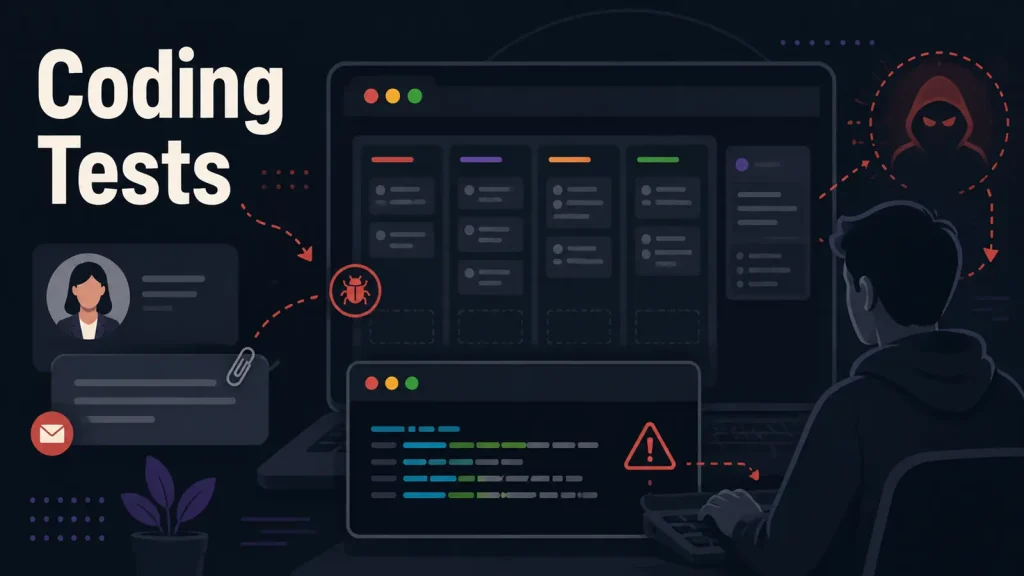
Cybersecurity researchers have uncovered a cunning campaign where threat actors impersonate recruiters to ensnare software developers. The modus operandi is disturbingly effective: instead of traditional malicious attachments, these attackers deliver malware through what appear to be genuine take-home coding tests. This approach leverages the standard practices of the tech hiring pipeline, making the initial approach seem entirely legitimate.
The campaign specifically targets professionals in critical sectors, including aviation, aerospace, and financial technology. Victims have been identified across various geographical regions, notably Egypt, Ethiopia, and Afghanistan. This broad reach and focus on high-value industries underscore the attackers’ strategic intent to gain access to sensitive data and intellectual property.
NodeRabbit and PollCat: The Malware of Choice
Once a developer engages with the fake coding test, the door opens for the delivery of two potent cross-platform remote access tools (RATs): NodeRabbit and PollCat. These RATs are designed to provide attackers with persistent access and control over compromised systems, allowing for data exfiltration, further reconnaissance, and the deployment of additional malicious payloads. The cross-platform nature of these tools is particularly concerning, as it allows attackers to target a wider array of operating systems, including Windows, macOS, and Linux, without significant modification.
While specific CVEs directly linked to NodeRabbit or PollCat as distinct vulnerabilities may not exist, their deployment often leverages common software vulnerabilities or misconfigurations. For instance, privilege escalation or remote code execution vulnerabilities in common development tools or operating systems could facilitate their initial execution. Regularly patching systems and development environments is crucial to mitigate such risks.
Tactics, Techniques, and Procedures (TTPs)
The attackers employ several sophisticated TTPs that make this campaign particularly effective:
- Social Engineering at Scale: Impersonating recruiters and creating convincing job scenarios is a classic but highly effective social engineering tactic. They exploit the desire for career advancement.
- Weaponized Coding Tests: Instead of simple infected documents, the malware is embedded within what appears to be a legitimate technical challenge, blending seamlessly with a developer’s typical workflow.
- Cross-Platform Attack: The use of NodeRabbit and PollCat, known for their cross-platform capabilities, indicates a broader targeting strategy not limited to a single operating system.
- Targeted Industries: The focus on aviation, aerospace, and financial technology suggests an interest in high-value intellectual property, sensitive financial data, or critical infrastructure access.
Remediation Actions
Defending against these sophisticated recruitment-based attacks requires a multi-layered approach focusing on vigilance, technical controls, and security awareness:
- Verify Recruiters and Job Offers: Always independently verify the identity of recruiters and the legitimacy of job offers. Cross-reference company websites, LinkedIn profiles, and official contact information. Be wary of unsolicited offers from unknown sources.
- Isolate Development Environments: Implement strict segregation for development environments. Use virtual machines or containerized environments for coding challenges from unverified sources. This minimizes the risk of a breach spreading to your primary system.
- Strict Code Review for External Submissions: If you are a hiring manager or lead, implement rigorous security reviews for any code submitted by candidates, even for seemingly innocuous take-home tests. Scan for suspicious executables, obfuscated code, or unusual network activity.
- Endpoint Detection and Response (EDR) Solutions: Deploy EDR solutions on all workstations, especially those used by developers. EDR tools can detect and alert on suspicious process behavior, unauthorized network connections, and the execution of unusual scripts, which are hallmarks of RAT activity.
- Network Segmentation: Segment your network to limit the lateral movement of threats. If a developer’s machine is compromised, network segmentation can prevent the malware from reaching critical servers or other sensitive systems.
- Regular Security Awareness Training: Educate developers and all employees about the latest social engineering tactics, including sophisticated phishing and pretexting attempts. Emphasize the dangers of executing untrusted code or opening attachments from unverified sources.
- Patch Management: Maintain a rigorous patch management schedule for operating systems, development tools, and all installed software to mitigate known vulnerabilities that attackers might exploit for initial access or privilege escalation.
Tools for Detection and Mitigation
The following tools can aid in detecting and mitigating threats like NodeRabbit and PollCat:
| Tool Name | Purpose | Link |
|---|---|---|
| VirusTotal | File and URL analysis for malware detection. | https://www.virustotal.com |
| Cuckoo Sandbox | Automated malware analysis sandbox. | https://cuckoosandbox.org |
| Wireshark | Network protocol analyzer for detecting suspicious network traffic. | https://www.wireshark.org |
| Endpoint Detection and Response (EDR) Solutions | Real-time monitoring and threat detection on endpoints (e.g., CrowdStrike Falcon, SentinelOne, Microsoft Defender for Endpoint). | (Provider-specific links) |
Conclusion
The weaponization of recruitment processes represents an alarming evolution in cyber warfare. For software developers, the line between a legitimate job opportunity and a malicious trap has become increasingly blurred. Organizations and individuals must prioritize robust verification processes, advanced endpoint security, and continuous security awareness training. Remaining vigilant against these sophisticated social engineering tactics is not just good practice; it’s essential for protecting intellectual property and maintaining operational integrity.




