
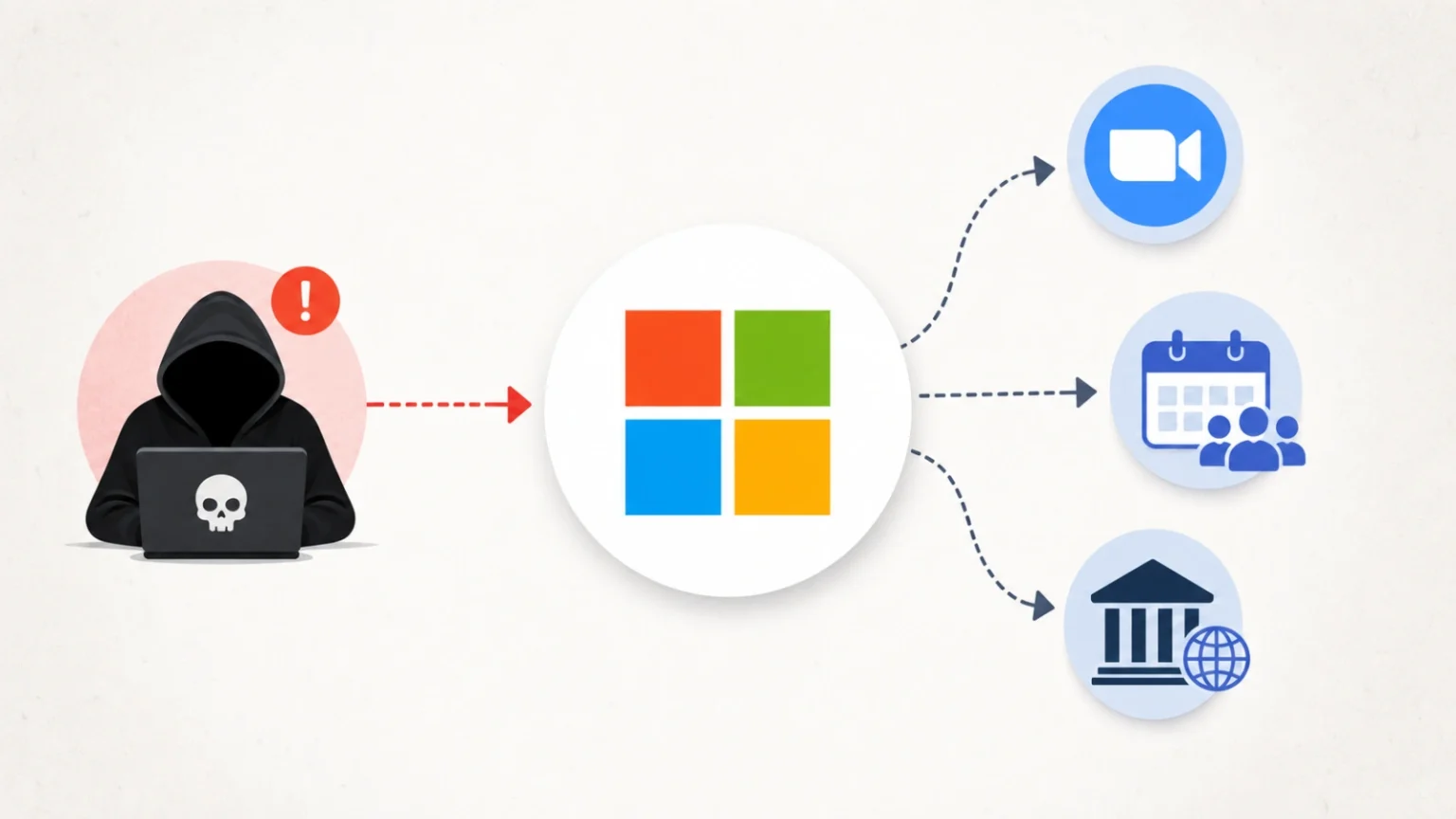
Hackers Turned Microsoft Logins, Zoom Events, and Government Websites Into Attack Tools
The Deceptive Cloak of Trust: How Hackers Weaponize Everyday Tools
The digital landscape is a battleground, and cybercriminals are constantly refining their tactics. A disturbing trend emerged in July 2026, revealing a sophisticated evolution in attack methodologies: the weaponization of highly trusted business utilities. Threat actors are no longer relying solely on obscure vulnerabilities; instead, they are leveraging platforms we interact with daily – Microsoft login pages, Zoom event invitations, and even official government portals – to infiltrate enterprise targets. This shift demands a critical re-evaluation of our perimeter defenses and a deeper understanding of social engineering’s pervasive power.
Weaponizing Trust: Microsoft Logins, Zoom, and Government Portals
Research from ANY.RUN’s threat intelligence highlights a systematic exploitation of routine corporate workflows across the United States, Europe, and Brazil. This isn’t about breaking into these platforms; it’s about using their inherent trustworthiness as a Trojan horse. Imagine receiving an email that appears to be a legitimate Microsoft authentication prompt, directing you to what looks like a genuine login page. Or a Zoom event invitation for an upcoming internal meeting, leading you to a compromised portal. These aren’t isolated incidents but a calculated strategy to bypass traditional security controls.
The core of these attacks lies in masquerading as legitimate communications and services. By imitating familiar interfaces and processes, cybercriminals effectively trick users into divulging credentials or executing malicious code. This technique exploits the fundamental human tendency to trust known brands and established communication channels.
Beyond the Perimeter: Bypassing Security Controls
The effectiveness of these attacks stems from their ability to sidestep conventional perimeter defenses. Firewalls, intrusion detection systems, and even some email filters are designed to flag suspicious executables or unusual network traffic. However, when the attack vector is a seemingly legitimate link to a Microsoft service or a Zoom webinar, these systems often fail to identify the threat. The malicious payload is disguised within the trusted context, making it incredibly difficult for automated systems to differentiate between benign and malicious activity.
Once inside, the objective is clear: harvest credentials and maintain persistence. Stolen login details provide direct access to internal networks, cloud services, and sensitive data. With legitimate credentials, attackers can move laterally within an organization, escalate privileges, and establish long-term footholds, making detection and eradication significantly more challenging.
The Social Engineering Masterclass: Exploiting Human Nature
These sophisticated attacks are a testament to the enduring power of social engineering. They prey on human curiosity, urgency, and the inherent trust we place in established digital ecosystems. Employees are conditioned to expect official communications from Microsoft for authentication, or Zoom for meeting invites. By crafting highly convincing replicas of these interactions, attackers capitalize on our learned behaviors, turning our trust into their greatest weapon.
- Phishing Campaigns: Highly targeted emails designed to mimic official communications, often containing links to fake login pages.
- Credential Harvesting: Deceptive websites mirroring legitimate services to trick users into entering their usernames and passwords.
- Malware Distribution: Legitimate-looking attachments or links within compromised events that deliver malware.
Remediation Actions: Fortifying Against Trust-Based Attacks
Combating these advanced social engineering tactics requires a multi-layered approach that combines robust technology with vigilant human awareness. Here are critical steps organizations must take:
- Enhanced Employee Training: Regular and comprehensive training on identifying phishing attempts, recognizing suspicious URLs, and verifying sender identities. Focus on real-world examples of these sophisticated attacks.
- Multi-Factor Authentication (MFA) Everywhere: Implement MFA for all critical systems and services, especially for Microsoft accounts, VPNs, and cloud applications. Even if credentials are stolen, MFA acts as a vital secondary barrier.
- Email Authentication Protocols: Ensure strong implementation of DMARC, SPF, and DKIM to prevent email spoofing and increase the trustworthiness of internal communications.
- Advanced Threat Protection for Email: Utilize email security solutions with advanced capabilities to detect sophisticated phishing, impersonation attacks, and malicious URLs even within seemingly legitimate contexts.
- Endpoint Detection and Response (EDR): Deploy EDR solutions to monitor endpoint activity for suspicious behavior, even if initial access was gained through legitimate-looking means.
- Regular Security Audits and Penetration Testing: Conduct frequent audits to identify potential weaknesses in your security posture and perform penetration tests to simulate these sophisticated social engineering attacks.
- Principle of Least Privilege: Restrict user access to only the resources necessary for their role, limiting the damage an attacker can inflict even if they gain access to a compromised account.
- Continuous Monitoring and Threat Intelligence: Stay updated on the latest threat intelligence, particularly regarding new social engineering tactics and weaponized trusted platforms.
The Path Forward: Vigilance and Adaptive Defense
The July 2026 incidents serve as a stark reminder that cyber adversaries are constantly innovating, turning our most trusted digital tools into attack vectors. Traditional perimeter defenses are insufficient against these sophisticated social engineering campaigns. Organizations must adopt a proactive, adaptive security posture that emphasizes user education, robust authentication, and continuous monitoring. By understanding the evolving threat landscape and implementing comprehensive countermeasures, we can better protect our enterprises from these deceptive and dangerous attacks.




