
Hackers Using Vibe-Coded Generated PowerShell Script to Enumerate Active Directory Accounts
The Shifting Sands of Cybercrime: When AI Crafts Your Next PowerShell Nightmare
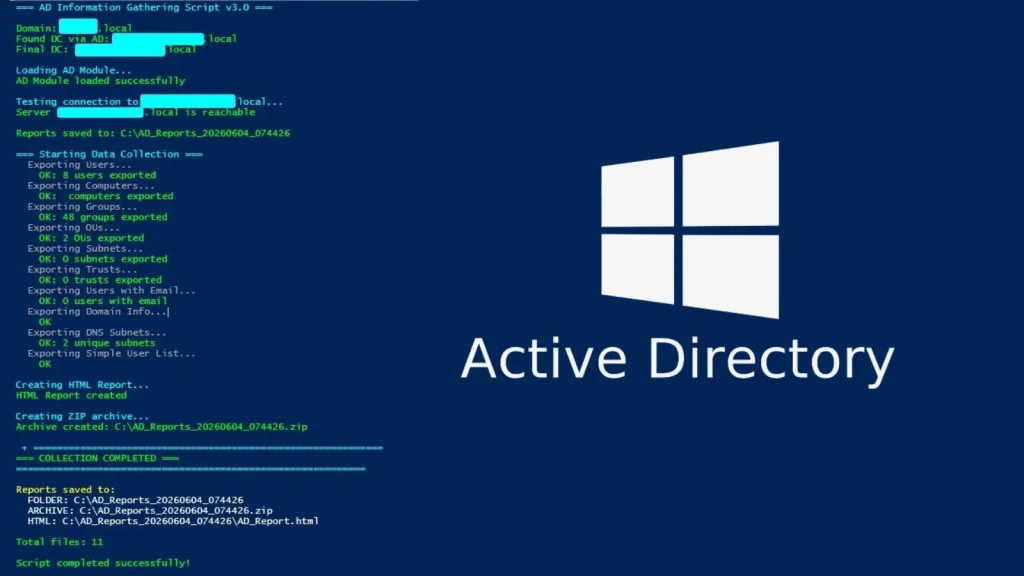
In a significant evolution of cyberattack methodologies, threat actors are increasingly leveraging artificial intelligence to craft custom, “vibe-coded” PowerShell scripts. This marks a concerning departure from readily available, off-the-shelf hacking tools, presenting a new challenge for organizations defending their networks. Specifically, these sophisticated scripts are now being weaponized to
The implications are profound. Traditional signature-based detection methods struggle against these bespoke tools, which are designed to evade scrutiny. This post delves into how these AI-generated scripts function, the discovery by security researchers, and crucial remediation strategies to protect your Active Directory environment.
“Vibe-Coded” Attacks: A New Frontier in Evasion
The term <strongVb “vibe coding”</strongVb refers to the iterative process of using AI prompts to generate software, effectively creating unique and customized malicious code. Unlike standard malware, which often reuses known components, vibe-coded scripts are essentially one-off creations, crafted to specific attack parameters and target environments. This bespoke nature makes them incredibly difficult to detect using conventional security measures.
Security researchers at Huntress recently brought this alarming trend to light. They successfully recovered and meticulously reconstructed one such AI-generated PowerShell script, which they dubbed
Untitled1.ps1: AI’s Blueprint for Active Directory Enumeration
The
- Identify high-value targets, such as administrators or privileged accounts.
- Understand the organizational structure and trust relationships within AD.
- Discover potential weak points for further exploitation, such as misconfigured accounts or outdated entries.
- Craft more targeted phishing campaigns or spear-phishing attacks.
By automating this initial reconnaissance with AI-generated scripts, threat actors can accelerate their attack timelines and increase their operational efficiency, reducing the time spent on manual reconnaissance and increasing the chances of a successful breach.
Remediation Actions: Fortifying Your Active Directory Defenses
Given the evolving nature of these attacks, a proactive and multi-layered approach is essential to defend against AI-generated PowerShell scripts targeting Active Directory. Organizations must move beyond static defenses and embrace adaptive security measures:
- Implement Robust Endpoint Detection and Response (EDR) Solutions: EDR tools with behavioral analysis capabilities are crucial. They can detect anomalous PowerShell activity, even if the script itself is unknown. Look for EDR solutions that can identify common reconnaissance patterns, even if the specific script varies.
- Principle of Least Privilege (PoLP): Strictly enforce the principle of least privilege across all user accounts and applications. Limit PowerShell execution to necessary users and contexts, and ensure that administrator accounts are properly secured with multi-factor authentication (MFA).
- Monitor PowerShell Script Execution: Implement vigilant monitoring of PowerShell script execution logs. Tools like Sysmon can provide detailed insights into script activities, command-line arguments, and process relationships. Look for unusual script names, execution paths, or command sequences related to AD enumeration.
- Regular Active Directory Audits: Conduct frequent audits of your Active Directory environment to identify outdated accounts, misconfigurations, and suspicious access patterns. Remove dormant accounts and strengthen password policies.
- User Education and Awareness: Train employees to recognize and report suspicious emails, links, and attachments that could be used to deliver or trigger malicious PowerShell scripts.
- Application Whitelisting: Configure application whitelisting policies to only allow approved applications and scripts to run on workstations and servers. This can significantly reduce the attack surface for arbitrary script execution.
- Network Segmentation: Segment your network to limit the blast radius of a potential breach. Restrict PowerShell remoting to only essential systems and enforce strict firewall rules.
- Threat Intelligence Integration: Stay updated with the latest threat intelligence on AI-generated malware and PowerShell-based attacks. Integrate this intelligence into your security operations to proactively identify and block emerging threats.
The Future is AI-Driven: Adapting Our Defense Strategies
The emergence of “vibe-coded” PowerShell scripts for Active Directory enumeration signals a critical shift in the cybersecurity landscape. Threat actors are rapidly adopting AI to enhance their offensive capabilities, moving away from predictable tools towards dynamic, custom-generated malware. Organizations must recognize this paradigm shift and adapt their defense strategies accordingly. Relying solely on signature-based detection is no longer sufficient. Instead, a focus on behavioral analysis, proactive monitoring, strong access controls, and continuous user education will be paramount in safeguarding Active Directory environments against these increasingly sophisticated, AI-driven threats.




