
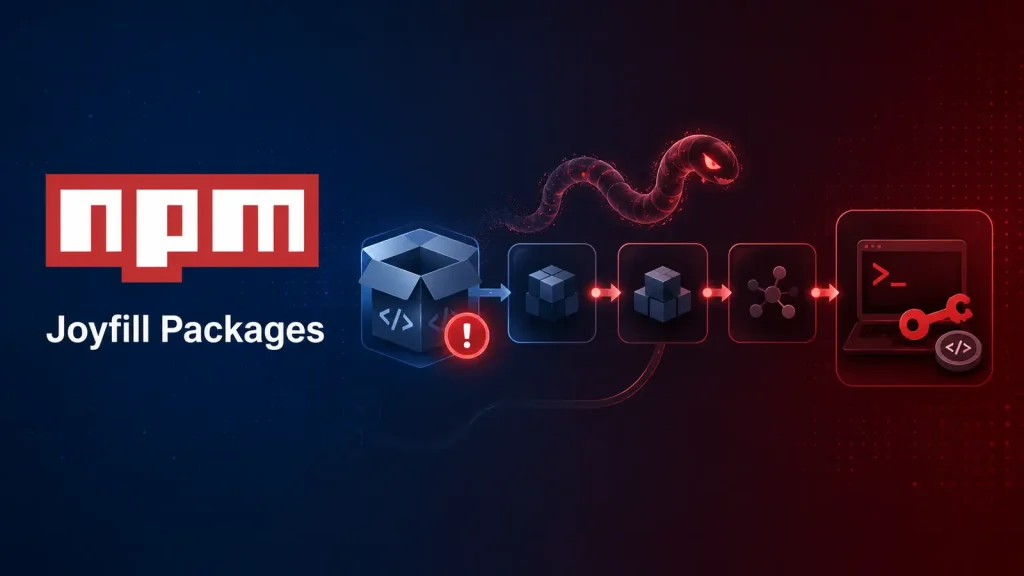
Hijacked Joyfill npm Packages Deploy Worm-Like RAT and Steal Developer Credentials
The software supply chain, a complex web of dependencies and open-source libraries, has once again become the battleground for a significant cybersecurity incident. Developers and IT professionals are on high alert following the discovery of malicious code injected into popular npm packages. This isn’t just a simple malware drop; these hijacked libraries deployed a sophisticated, worm-like Remote Access Trojan (RAT) designed to pilfer developer credentials, creating a serious and far-reaching threat.
The Joyfill Package Hijack: A Closer Look
On July 28, 2026, a fresh wave of concern swept through the development community. Attackers successfully infiltrated the npm registry, a critical repository for JavaScript packages, by publishing malicious beta builds of two widely used Joyfill packages: @joyfill/components and @joyfill/layouts. These libraries are fundamental to many web applications, serving purposes such as form building and layout management. The insidious nature of this attack lies in its ability to compromise trust; developers relying on these seemingly legitimate packages unknowingly introduced a potent threat into their environments.
The incident highlights a persistent vulnerability within the open-source ecosystem. Malicious actors are increasingly targeting these public repositories, understanding that a single compromised package can propagate malware across countless projects and organizations. This specific attack demonstrates a calculated move to capitalize on the reliance developers place on established tools.
Understanding the Worm-Like RAT and Credential Theft
The malware deployed through these hijacked Joyfill packages is particularly dangerous. Described as a “worm-like RAT” (Remote Access Trojan), it possesses capabilities that go beyond simple data exfiltration. A RAT grants attackers comprehensive control over a compromised system, often allowing for remote observation, file manipulation, and further malware deployment. The “worm-like” characteristic suggests its potential to self-propagate across networks, amplifying the impact of the initial compromise.
Perhaps the most critical aspect of this attack is its primary objective: the theft of developer credentials. These credentials typically include API keys, repository access tokens, and cloud service authentication details. With these in hand, attackers can gain unauthorized access to source code, deployment pipelines, production environments, and sensitive organizational data, leading to breaches with potentially catastrophic consequences. This type of credential theft can open doors to deeper, more expansive attacks within an organization’s infrastructure.
Remediation Actions for Developers and Organizations
Given the severity of this supply chain attack, immediate and thorough remediation is crucial. Developers and organizations must take proactive steps to identify, isolate, and eliminate any potential compromise. While a specific CVE for this incident may not be immediately available, the principles of open-source supply chain security remain paramount.
- Audit Dependencies Immediately: Review all project dependencies, especially those pulled from npm. Look for any usage of
@joyfill/componentsor@joyfill/layoutsbeta versions that were active around July 28, 2026. Prioritize removal and replacement with known good, stable versions. - Revoke All Potentially Compromised Credentials: If your development environment or CI/CD pipelines used the affected packages, assume all associated credentials (API keys, repository tokens, cloud access keys, SSH keys) are compromised. Initiate a full credential revocation and rotation process across all relevant platforms.
- Scan Development Environments: Conduct comprehensive malware scans on all developer workstations and build servers that may have interacted with the malicious packages. Look for suspicious processes, network connections, and unauthorized file modifications.
- Implement Software Supply Chain Security Tools: Utilize tools that perform static and dynamic analysis of dependencies. These tools can help identify known vulnerabilities and potential malicious code within your supply chain.
- Enforce Strict Package Versioning: Always pin package versions in your
package.jsonor equivalent dependency manifest. Avoid floating dependencies (e.g., using^or~) in production environments to prevent automatic updates to potentially malicious versions. - Educate Development Teams: Reinforce best practices for open-source consumption, including careful vetting of new libraries, understanding the risks of beta builds, and vigilance regarding suspicious activity.
- Monitor for Anomalous Activity: Implement robust logging and monitoring for both development and production environments. Look for unusual access patterns, unauthorized deployments, or unexpected changes to code repositories.
Detection and Mitigation Tools
Implementing a robust security posture for your software supply chain requires employing specialized tools. These can help detect and mitigate risks associated with compromised packages.
| Tool Name | Purpose | Link |
|---|---|---|
| Snyk | SCA, SAST, DAST, IaC Security | https://snyk.io/ |
| Dependabot | Automated dependency updates and vulnerability alerts | https://docs.github.com/en/code-security/dependabot/dependabot-security-updates/about-dependabot-security-updates |
| OWASP Dependency-Check | Identifies project dependencies and checks for known vulnerabilities | https://owasp.org/www-project-dependency-check/ |
| npm audit | Built-in npm command to identify vulnerabilities in dependencies | https://docs.npmjs.com/cli/v9/commands/npm-audit |
| Sonatype Nexus Lifecycle | Automated open source governance and security for SDLC | https://www.sonatype.com/products/nexus-platform/nexus-lifecycle |
Key Takeaways for a Safer Software Supply Chain
This incident serves as a stark reminder of the persistent and evolving threats targeting the software supply chain. The compromise of Joyfill npm packages deploying a worm-like RAT underscores the sophisticated nature of these attacks and their potential for widespread damage. Organizations must adopt a proactive and multi-layered security strategy, moving beyond traditional perimeter defenses to secure every stage of their software development lifecycle. Continuous monitoring, strict dependency management, robust credential hygiene, and developer education are no longer optional but essential components of a resilient cybersecurity posture. The fight against supply chain attacks requires constant vigilance and a collective commitment to security best practices.




