
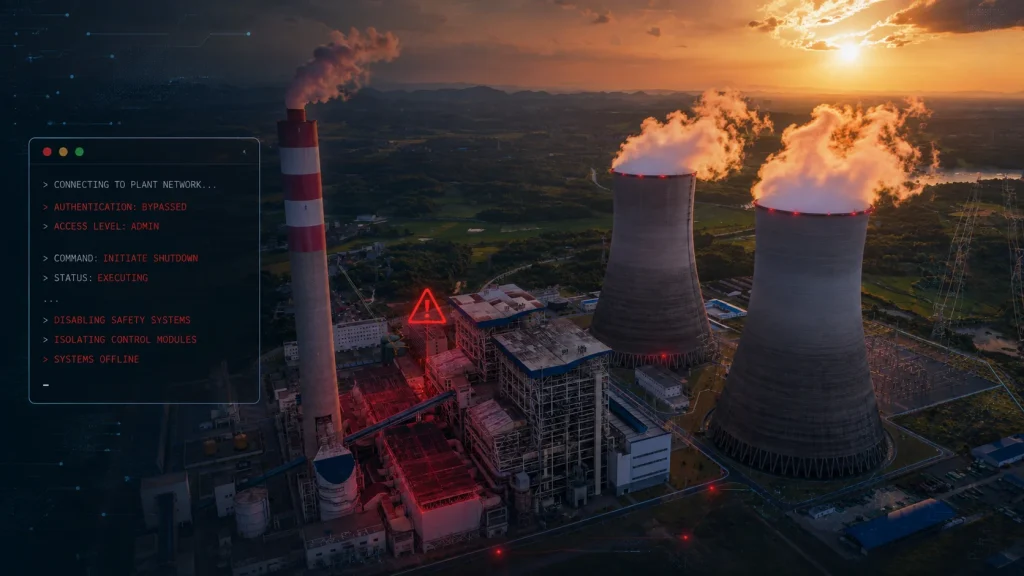
Iran-Linked Hackers Force UK Power Plant Offline in Unprecedented Four-Day Cyberattack
Iran-Linked Hackers Force UK Power Plant Offline in Unprecedented Four-Day Cyberattack
The lights went out, not due to a technical glitch, but a deliberate act of cyber warfare. Last month, a British power plant was brought to a standstill for four consecutive days following a sophisticated cyberattack attributed to state-sponsored hackers linked to Iran. This incident, first reported by The Telegraph, marks a deeply troubling milestone: the first successful and sustained cyberattack of its kind against the United Kingdom’s critical energy infrastructure. It’s a stark reminder of the escalating cyber threats facing nations worldwide and the urgent need for robust defense strategies.
The Unprecedented Attack: A Closer Look
While specific technical details of the attack remain under wraps, the impact is undeniable. A critical piece of UK infrastructure, a power plant, was rendered inoperable for nearly 100 hours. This goes beyond mere data breaches or espionage; it’s a direct assault on operational technology (OT) systems designed to control physical processes. Such an event underscores the advanced capabilities of the threat actors and their willingness to disrupt essential services. The attribution to Iran-linked hackers aligns with a growing pattern of state-sponsored groups targeting critical infrastructure globally.
Understanding the Threat Landscape for Critical Infrastructure
Critical infrastructure, encompassing sectors like energy, water, transportation, and healthcare, is increasingly vulnerable to cyberattacks. These systems, often a mix of legacy and modern technologies, present a complex attack surface. Industrial Control Systems (ICS) and Supervisory Control and Data Acquisition (SCADA) systems, which are the backbone of these operations, were historically isolated but are now frequently connected to broader networks for efficiency and remote management. This interconnectedness, while beneficial, introduces significant security risks. Adversaries are actively developing and deploying specialized malware and tactics to exploit these vulnerabilities, aiming for disruption, sabotage, or data exfiltration.
Why State-Sponsored Actors Target Energy Grids
State-sponsored hacking groups often have geopolitical motivations. Targeting a nation’s energy grid offers several strategic advantages:
- Economic Disruption: Halting power production can cause significant economic losses, impacting industries, businesses, and daily life.
- Public Panic and Loss of Trust: Widespread power outages can create public panic, erode trust in government, and demonstrate a nation’s vulnerability.
- Geopolitical Leverage: The ability to disrupt critical services provides a powerful tool for diplomatic pressure or retaliation.
- Espionage and Reconnaissance: Even without full disruption, gaining access allows for intelligence gathering on operational capabilities and potential future attack vectors.
Remediation Actions and Proactive Defense
Defending against such sophisticated attacks requires a multi-layered and proactive approach, particularly for critical infrastructure operators. While this incident didn’t have a specific CVE associated with a new vulnerability (as it was an operational disruption), the principles of robust cybersecurity apply:
- Robust Network Segmentation: Isolate critical OT/ICS networks from enterprise IT networks. Implement strict firewall rules and a “zero trust” architecture to limit lateral movement.
- Regular Vulnerability Assessments and Patching: Continuously scan for vulnerabilities in both IT and OT environments. Promptly apply security patches to known vulnerabilities. While this incident wasn’t tied to a specific CVE, understanding common ICS/SCADA vulnerabilities like those in CVE-2022-26463 (Rockwell Automation) or CVE-2021-39294 (Siemens S7-1500) is crucial.
- Advanced Threat Detection and Monitoring: Deploy Security Information and Event Management (SIEM) systems with specialized OT/ICS monitoring capabilities. Utilize intrusion detection/prevention systems (IDPS) tailored for industrial protocols.
- Incident Response Plan Development and Testing: Develop comprehensive incident response plans specifically for OT environments. Regularly conduct tabletop exercises and full-scale simulations to test the effectiveness of these plans.
- Strong Access Control: Implement multi-factor authentication (MFA) for all remote access and privileged accounts. Enforce least privilege principles across all systems.
- Employee Training and Awareness: Educate all personnel, from IT to operations, on cybersecurity best practices, phishing awareness, and social engineering tactics.
- Redundancy and Offline Backups: Ensure critical systems have redundant backups, preferably offline, to facilitate rapid recovery in case of a successful attack.
Tools for Critical Infrastructure Security
While no specific tool can prevent all attacks, a combination of technologies significantly enhances defense posture:
| Tool Name | Purpose | Link |
|---|---|---|
| Claroty Continuous Threat Detection | OT/ICS network monitoring, threat detection, vulnerability management. | https://claroty.com/ |
| Dragos Platform | Industrial cybersecurity, threat intelligence, incident response for OT. | https://www.dragos.com/ |
| Tenable.ot | Visibility, security, and control across converged IT/OT environments. | https://www.tenable.com/products/tenable-ot |
| Snort | Open-source network intrusion detection system (NIDS). | https://www.snort.org/ |
| Splunk Enterprise Security | SIEM for security operations, incident response, threat detection. | https://www.splunk.com/en_us/software/splunk-enterprise-security.html |
Conclusion: A New Era of Cyber Warfare
The cyberattack on the UK power plant is a watershed moment, illustrating the tangible and disruptive potential of state-sponsored cyber operations against critical national infrastructure. It serves as a stark warning to all nations: the digital battleground is expanding, and the stakes are higher than ever. Robust investment in cybersecurity, coupled with international collaboration and proactive threat intelligence sharing, is not just advisable, but absolutely essential to safeguard our connected world and the physical systems that underpin it. The four days of darkness in the UK should illuminate a path forward for enhanced global cyber resilience.




