
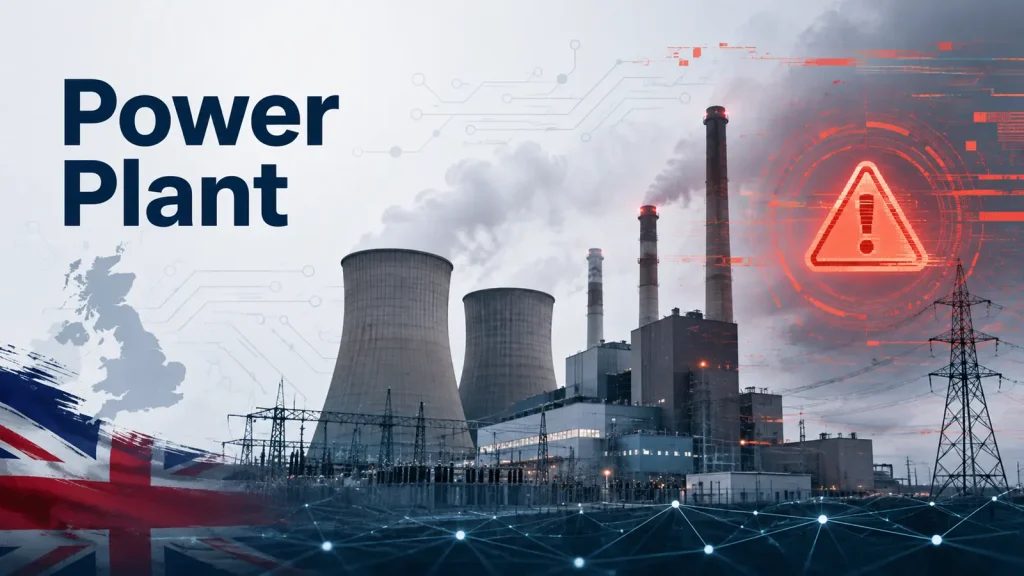
Iran-Linked Hackers Reportedly Knock UK Power Plant Offline for Four Days
The lights stayed on, but a chilling silence fell over a British power plant this July. For four days, an operational technology (OT) site critical to the UK’s energy infrastructure ceased normal function, reportedly due to a cyber incident. While customer outages were averted and the broader electricity grid remained stable, this event, brought to light on August 22nd, serves as a stark reminder of the escalating threat posed by state-sponsored actors to vital national assets.
The Incident: Unpacking the UK Power Plant Shutdown
In mid-July, an unnamed power plant in the United Kingdom experienced an operational halt lasting approximately four days. The cause, as later reported, was attributed to a cyberattack. Although specific details regarding the nature of the attack remain under wraps, the disruption was significant enough to force a temporary shutdown of the plant’s activities. Crucially, the incident did not propagate to the wider national grid, preventing widespread power loss. This points to either robust segmentation within the UK’s energy system or the attackers’ objectives being focused on disruption rather than cascading failures. The link to Iran-backed hacker groups, while not officially confirmed by UK authorities, underscores a growing trend of state-sponsored cyber warfare targeting critical infrastructure.
The Threat Landscape: State-Sponsored Actors and Critical Infrastructure
The reported involvement of Iran-linked hackers in this incident highlights a persistent and evolving threat to critical national infrastructure (CNI) worldwide. State-sponsored groups often possess sophisticated capabilities, extensive resources, and strategic motivations that extend beyond financial gain. Their objectives can include intelligence gathering, sabotage, and the projection of geopolitical influence. The energy sector, with its intricate operational technology (OT) and industrial control systems (ICS), presents a particularly attractive target due to its potential for widespread disruption and economic impact.
- Advanced Persistent Threats (APTs): State-backed groups frequently employ APT tactics, involving prolonged and stealthy infiltration to achieve specific objectives.
- Supply Chain Attacks: Compromising software or hardware vendors used by critical infrastructure organizations is a common method for initial access.
- OT/ICS Vulnerabilities: Legacy systems, poor patch management, and inadequate network segmentation within OT environments create significant attack surfaces. For instance, vulnerabilities like CVE-2022-26925 affecting ICS components can be exploited for unauthorized access.
Why Energy Facilities are Prime Targets
Energy facilities, ranging from nuclear power plants to hydroelectric dams and fossil fuel plants, are foundational to a nation’s stability and economy. A successful cyberattack on such infrastructure can have catastrophic consequences:
- Economic Disruption: Power outages can halt industrial production, disrupt transportation, and cripple financial markets.
- Public Safety Risks: Loss of power affects essential services like hospitals, emergency response, and water treatment.
- National Security Implications: Disrupting energy supplies can be a strategic move in geopolitical conflicts, designed to weaken an adversary’s capabilities or resolve.
- Environmental Damage: Attacks on certain types of energy facilities could lead to environmental disasters.
The increasing interconnectedness of OT systems with IT networks, often for remote monitoring and management, introduces additional vectors for attack. This convergence, while offering efficiency benefits, also expands the potential reach of cyber adversaries.
Remediation Actions and Proactive Defense for OT Environments
Protecting critical energy infrastructure requires a multi-layered, proactive cybersecurity strategy specifically tailored for OT environments. Organizations managing such assets must move beyond traditional IT security paradigms.
- Network Segmentation: Implement stringent network segmentation between IT and OT networks, and within OT networks themselves. Use firewalls and data diodes to control traffic flow and prevent lateral movement.
- Asset Inventory and Visibility: Maintain a comprehensive and up-to-date inventory of all connected devices within the OT environment, including their configurations, vulnerabilities, and communication patterns.
- Vulnerability Management and Patching: Regularly identify and patch vulnerabilities in OT systems. While patching in OT can be complex due to uptime requirements, robust testing and phased deployment are crucial. Pay close attention to vulnerabilities such as those outlined in CVE-2023-3881 affecting various industrial protocols.
- Intrusion Detection and Monitoring: Deploy specialized OT-aware intrusion detection systems (IDS) and security information and event management (SIEM) solutions to monitor network traffic and system behavior for anomalies.
- Incident Response Plan: Develop and regularly test a detailed incident response plan specifically for OT cyber incidents, including procedures for containment, eradication, recovery, and communication.
- Employee Training and Awareness: Educate all personnel, especially those with access to OT systems, on cybersecurity best practices, phishing awareness, and social engineering tactics.
- Strong Authentication and Access Control: Implement multi-factor authentication (MFA) wherever possible and enforce the principle of least privilege for all user accounts, both human and machine.
- Supply Chain Security: Vet third-party vendors and suppliers for their cybersecurity practices, as they can be a significant attack vector.
- Regular Audits and Assessments: Conduct independent cybersecurity audits and penetration tests tailored to OT environments to identify weaknesses before attackers do.
The reported UK power plant incident underscores the ongoing necessity for vigilance and investment in OT cybersecurity. While the lack of wider disruption is reassuring, it should not lead to complacency. Continuous improvement in defense mechanisms, threat intelligence sharing, and international cooperation are paramount to safeguarding these vital systems.




