
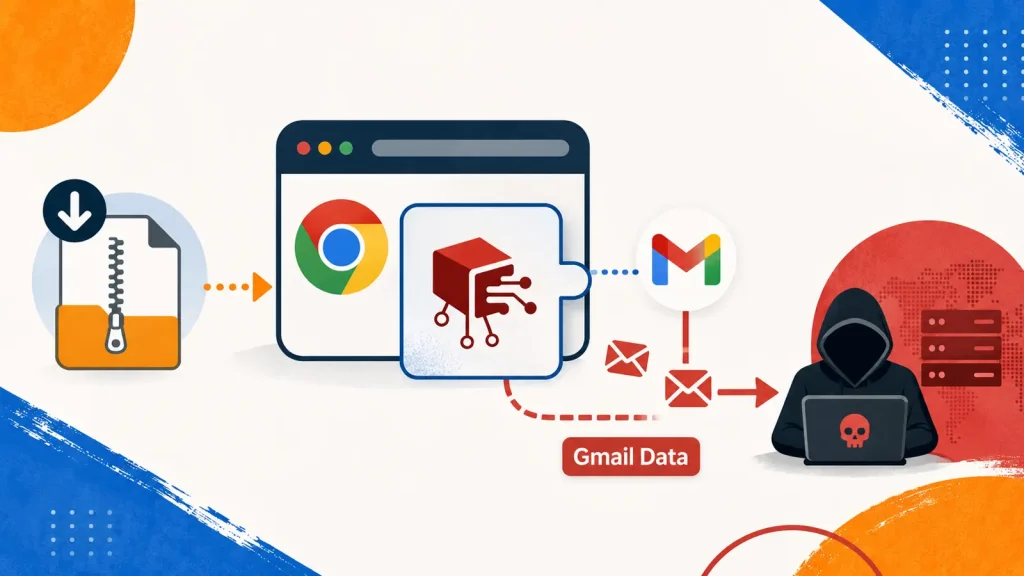
Kimsuky Uses AI-Generated Chrome Extension to Automatically Steal Gmail Data
In the relentless landscape of cyber espionage, threat actors continually refine their tactics. A recent and concerning development highlights the Kimsuky threat group’s innovative use of AI-generated Chrome extensions to systematically exfiltrate sensitive Gmail data. This sophisticated campaign underscores a growing trend of leveraging everyday browser functionalities for targeted, stealthy information theft. Understanding this new modus operandi is crucial for bolstering digital defenses against such insidious attacks.
Kimsuky’s Espionage Evolution: AI-Powered Gmail Theft
The Kimsuky APT group, known for its persistent and targeted espionage operations, has unveiled a new, highly effective method for data exfiltration. Their latest campaign leverages a custom-built, AI-generated Chrome extension, transforming a common browser add-on into a silent data collector. This isn’t merely about gaining access; it’s about automating the theft of critical information directly from a victim’s Gmail account.
The attack chain typically commences with meticulously crafted phishing emails. These initial lures are designed to be highly convincing, often mimicking legitimate communications to trick unsuspecting users. Once a victim falls prey and interacts with the malicious content – whether through clicking a link or opening an attachment – the groundwork for the extension’s deployment is laid. The extension then quietly integrates into the Chrome browser, operating with a low profile to avoid detection.
Anatomy of the Attack: Browser Theft Meets Remote Control
The malicious Chrome extension, likely generated with assistance from AI tools, is engineered to interact directly with Gmail. Its primary function is to automatically harvest messages, attachments, and potentially other sensitive data accessible via the Gmail interface. This automation significantly streamlines the data collection process for the attackers, allowing them to scale their espionage efforts more efficiently.
The danger is compounded by the fact that the campaign often integrates browser theft with broader remote control capabilities. This means that a single successful compromise, initiated by opening a seemingly innocuous file, can grant attackers not only access to a victim’s email communications but also control over their entire computer. This dual-threat approach elevates the risk profile substantially, turning a localized email compromise into a systemic security breach.
Remediation Actions and Proactive Defenses
Defending against such sophisticated attacks requires a multi-layered approach, combining user education with robust technical controls. Here are critical steps to mitigate the risk of Kimsuky’s AI-generated Chrome extension campaign:
- Enhance Email Security Gateways: Implement advanced email security solutions that can detect and block sophisticated phishing attempts, including those using AI-generated content or obfuscated links.
- Strengthen User Awareness Training: Regularly educate employees about the dangers of phishing, the importance of scrutinizing email senders, and the risks associated with installing unverified browser extensions. Emphasize that legitimate software and extensions should only be downloaded from official sources.
- Implement Multi-Factor Authentication (MFA): Enforce MFA for all critical accounts, especially email and other cloud services. Even if credentials are compromised, MFA provides an additional layer of security.
- Control Browser Extension Policies: For organizational environments, implement strict policies regarding browser extension installation. Allow only whitelisted extensions and block installations from unknown sources. Regularly audit installed extensions.
- Deploy Endpoint Detection and Response (EDR): Utilize EDR solutions to monitor for suspicious activities on endpoints, including unusual process executions, file modifications, and network connections that might indicate the presence of malicious software or extensions.
- Regular Software Updates: Ensure all operating systems, browsers, and applications are kept up-to-date with the latest security patches to address known vulnerabilities.
- Network Segmentation and Least Privilege: Segment networks and apply the principle of least privilege to limit the potential lateral movement and damage an attacker can inflict if a system is compromised.
Detection and Mitigation Tools
Leveraging appropriate tools is essential for detecting and mitigating threats like the Kimsuky campaign. Here’s a selection of tool categories and examples:
| Tool Name / Category | Purpose | Link (Example) |
|---|---|---|
| Advanced Email Security Gateways | Detect and block sophisticated phishing, spam, and malware at the email perimeter. | Proofpoint |
| Endpoint Detection and Response (EDR) | Monitor endpoints for suspicious activities, detect malicious code, and provide response capabilities. | CrowdStrike Falcon |
| Browser Security Solutions | Manage and secure browser extensions, enforce policies, and detect browser-based threats. | Google Chrome Enterprise |
| Threat Intelligence Platforms | Provide insights into emerging threats, attacker tactics, techniques, and procedures (TTPs). | Recorded Future |
| Security Information and Event Management (SIEM) | Aggregate and analyze security logs from various sources to identify anomalies and security incidents. | Splunk Enterprise Security |
Conclusion
The Kimsuky group’s adoption of AI-generated Chrome extensions for automated Gmail data exfiltration marks a significant escalation in their espionage capabilities. This blend of sophisticated social engineering, browser-based exploitation, and potential remote control access presents a formidable challenge. Organizations and individuals must prioritize robust email security, diligent user education, and proactive endpoint protection strategies to effectively counter these evolving and increasingly stealthy cyber threats. Vigilance and a proactive security posture are paramount in safeguarding sensitive information against such determined adversaries.




