
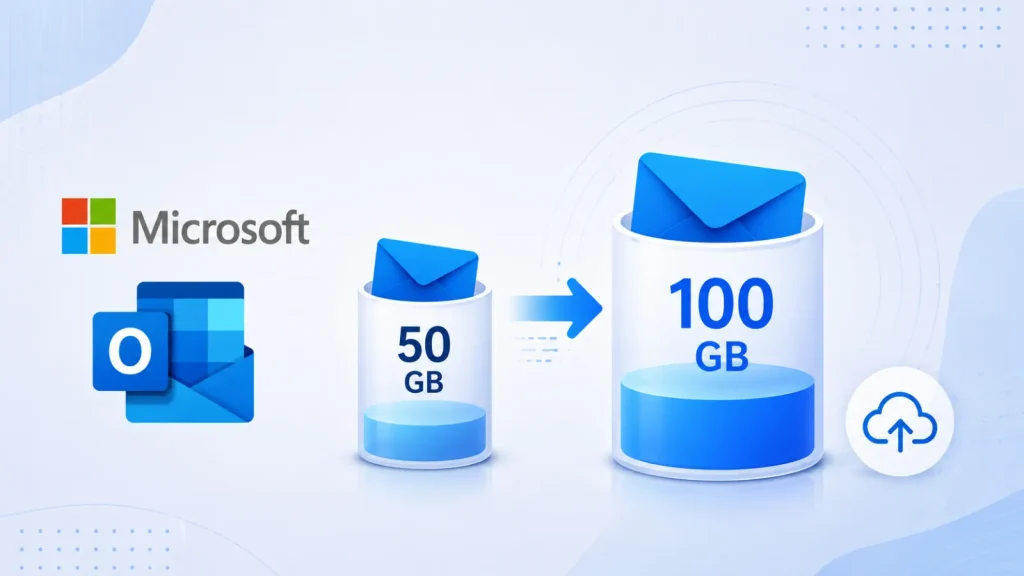
Microsoft Expands Mailbox Storage From 50 GB to 100 GB for Users
In the dynamic landscape of cloud productivity, storage limitations can quickly become a bottleneck, especially for businesses heavily reliant on email communication and digital document management. Microsoft understands this challenge, and in a significant move, has begun rolling out an expansion of primary mailbox storage for numerous Microsoft 365 users.
This development is a welcome change for organizations looking to optimize their digital workflows and reduce the overhead associated with managing mailbox quotas. Cybersecurity professionals and IT administrators will recognize the immediate benefits in terms of data retention, compliance, and user experience.
Microsoft Doubles Mailbox Storage to 100 GB
Microsoft is actively expanding the primary mailbox storage capacity for eligible Microsoft 365 Business Basic, Business Standard, and Business Premium subscribers. Users who previously had a 50 GB entitlement can now receive up to a generous 100 GB of Exchange Online mailbox capacity. This effectively doubles the available storage, providing substantial breathing room for accumulating emails, attachments, and other critical data.
This significant upgrade is part of Microsoft’s broader 2026 packaging updates, a strategic initiative that commenced its rollout in June. The increased storage directly addresses a long-standing request from many business users, who often face the challenge of full mailboxes hindering productivity and data archiving efforts.
Who Benefits from the Storage Expansion?
The primary beneficiaries of this storage expansion are organizations utilizing specific Microsoft 365 Business plans. This includes:
- Microsoft 365 Business Basic users: Enjoying enhanced storage for essential cloud services.
- Microsoft 365 Business Standard users: Gaining increased capacity for their comprehensive suite of productivity tools.
- Microsoft 365 Business Premium users: Benefiting from more robust storage alongside advanced security and device management features.
This targeted expansion ensures that a wide array of small to medium-sized businesses can leverage the increased capacity without needing to upgrade to more expensive enterprise-tier plans solely for mailbox size.
Implications for Data Management and Compliance
From a cybersecurity and IT management perspective, doubling mailbox storage has several key implications:
- Enhanced Data Retention: Organizations can now retain email communications for longer periods, which is crucial for compliance with various regulatory frameworks and internal policies. This reduces the need for aggressive archiving or deletion strategies.
- Simplified User Experience: Users will experience fewer “mailbox full” notifications, leading to a more seamless and productive workflow. IT support will likely see a reduction in storage-related tickets.
- Reduced Archiving Costs: While archiving remains a best practice, the expanded primary mailbox can defer the need for moving older emails to more expensive archive solutions for a longer duration, potentially optimizing storage costs.
- Improved E-discovery Preparedness: With more data residing in primary mailboxes, e-discovery processes for legal or compliance requests can become more efficient, as fewer disparate data sources may need to be searched.
- Security Considerations: While increased storage is beneficial, it also means more data to secure. Organizations must ensure their existing Microsoft 365 security policies, such as data loss prevention (DLP) and threat protection, are robust enough to cover the expanded data volume.
Staying Ahead: Maximizing Your Microsoft 365 Investment
While the expanded mailbox storage is a significant enhancement, it’s essential for IT professionals to continue best practices in managing their Microsoft 365 environment:
- Regularly Review Storage Usage: Even with 100 GB, it’s wise to monitor mailbox usage trends within your organization to anticipate future needs.
- Implement Clear Retention Policies: Define and enforce clear email retention and archiving policies to ensure compliance and efficient data lifecycle management.
- Educate Users: Encourage users to organize their mailboxes effectively, delete unnecessary items, and utilize shared mailboxes or SharePoint for large document collaboration where appropriate.
- Leverage Microsoft 365 Security Features: Continuously review and optimize features like Exchange Online Protection (EOP), Advanced Threat Protection (ATP), and Data Loss Prevention (DLP) to safeguard the increased volume of data.
Conclusion
Microsoft’s decision to expand primary mailbox storage from 50 GB to 100 GB for Microsoft 365 Business Basic, Standard, and Premium users is a substantial upgrade that addresses a critical business need. This enhancement, part of the 2026 packaging updates, offers immediate benefits in terms of data retention, user productivity, and compliance readiness. For cybersecurity analysts and IT administrators, it underscores the importance of adapting data management and security strategies to accommodate evolving cloud service capabilities, ensuring that expanded storage translates into enhanced operational efficiency and a stronger security posture.




