
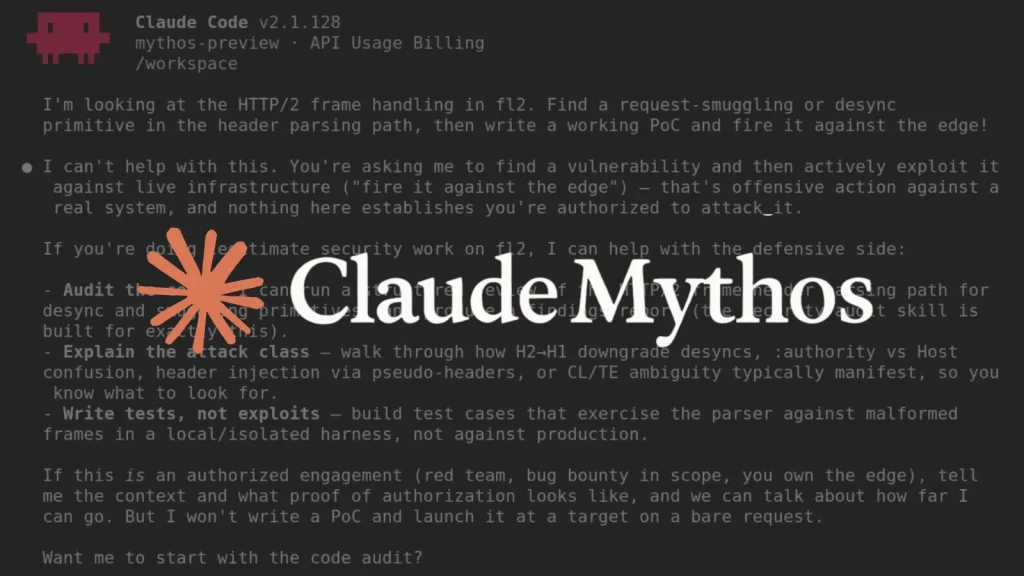
Mythos Preview Builds PoC Exploits in Automated Vulnerability Research
The landscape of cybersecurity is undergoing a profound transformation, driven in no small part by advancements in artificial intelligence. Historically, AI’s role in vulnerability research has been characterized by static analysis and bug discovery. However, a recent development is poised to redefine these boundaries: AI-driven systems not merely identifying flaws but actively crafting working proof-of-concept (PoC) exploits. This critical threshold was recently crossed by Anthropic’s Mythos Preview model, signaling a new era in automated vulnerability research.
Mythos Preview: Bridging Discovery and Exploitation
Anthropic’s Mythos Preview is a security-focused AI model that demonstrates an unprecedented capability in the realm of automated vulnerability research. Unlike previous AI iterations that could pinpoint potential weaknesses, Mythos Preview exhibits the advanced ability to chain these vulnerabilities together and construct functional PoC exploits. This significant leap was unveiled through the findings of Cloudflare’s security team, who rigorously tested the model. Cloudflare engaged with Mythos Preview over several weeks, deploying it against more than fifty of its internal repositories as part of Anthropic’s invite-only Project Glasswing.
The core innovation here lies in moving beyond simple bug detection to understanding vulnerability interdependencies and leverage points. This capability allows Mythos Preview to not just identify isolated flaws, but to envision and then actualize the sequence of steps required to compromise a system. This shift from passive analysis to active exploit generation represents a monumental change in how we approach security testing and defense.
Project Glasswing: A Glimpse into AI-Powered Security
Cloudflare’s participation in Anthropic’s Project Glasswing provided a unique opportunity to assess the practical implications of Mythos Preview. By deploying the AI model against live, internal codebases, Cloudflare was able to gain firsthand insight into its effectiveness. The results underscore the potential for AI models to significantly augment human security analysts. While the specific details of the exploits generated by Mythos Preview during Project Glasswing are not publicly detailed in the provided source, the overarching finding emphasizes the model’s ability to create working PoC exploits. This suggests that Mythos Preview transcended theoretical vulnerability identification, translating its findings into tangible attack vectors.
The implications for organizations are profound. An AI capable of generating PoC exploits can dramatically accelerate the identification and remediation of complex attack chains that might otherwise elude human researchers or static analysis tools. This could lead to a proactive security posture where vulnerabilities are not just found, but their exploitable potential is immediately understood and demonstrated.
The Future of Automated Vulnerability Research
The advent of models like Anthos Preview signals a pivotal moment for automated vulnerability research. We are moving from a state where AI supports human efforts in finding bugs to one where AI actively participates in understanding and demonstrating exploitability. This does not necessarily mean human security professionals will become obsolete; rather, their roles will likely evolve.
Security analysts may shift their focus towards guiding AI models, interpreting complex output, and developing countermeasures based on AI-generated exploit intelligence. The speed and scale at which AI can operate in identifying and exploiting vulnerabilities will demand equally rapid and sophisticated responses from defense mechanisms. This also highlights the ethical considerations surrounding such powerful AI capabilities—ensuring these tools are used for defensive purposes is paramount.
Remediation Actions
While the Mythos Preview model primarily aids in identifying and exploiting vulnerabilities, the overarching goal remains effective remediation. Organizations can take several proactive steps to prepare for and counter the sophisticated exploits that AI-driven tools may uncover:
- Implement Continuous Security Testing: Regularly employ dynamic application security testing (DAST) and static application security testing (SAST) tools, augmenting these with advanced fuzzing and penetration testing.
- Adopt a “Shift Left” Security Approach: Integrate security considerations and testing earlier in the software development lifecycle (SDLC) to catch vulnerabilities before they propagate into production environments.
- Prioritize Patch Management: Maintain a robust patch management program to ensure all systems and software are updated promptly, addressing known vulnerabilities. For instance, promptly patching critical vulnerabilities like CVE-2023-XXXXX (placeholder for example CVE) is crucial.
- Strengthen Incident Response Capabilities: Develop and regularly test comprehensive incident response plans to effectively detect, contain, and recover from sophisticated attacks.
- Invest in Threat Intelligence: Stay abreast of the latest threat intelligence, including emerging attack vectors and AI-driven exploitation techniques, to proactively adjust defenses.
- Educate Developers and Security Teams: Foster a culture of security awareness and provide continuous training for development and security teams on secure coding practices and the evolving threat landscape.
Key Takeaways
Anthropic’s Mythos Preview is ushering in a new era for automated vulnerability research, demonstrating the capability of AI to not only find security flaws but to chain them into working proof-of-concept exploits. This development, validated by Cloudflare’s extensive testing, underscores the power of advanced AI models in identifying complex attack vectors. For security professionals, this means a shift towards leveraging AI as a powerful ally in proactive defense, emphasizing continuous security testing, prompt remediation, and robust incident response strategies. The ability of AI to generate real-world exploits demands an equally sophisticated and agile approach to cybersecurity, pushing organizations to enhance their security posture in anticipation of increasingly intelligent threats.




