
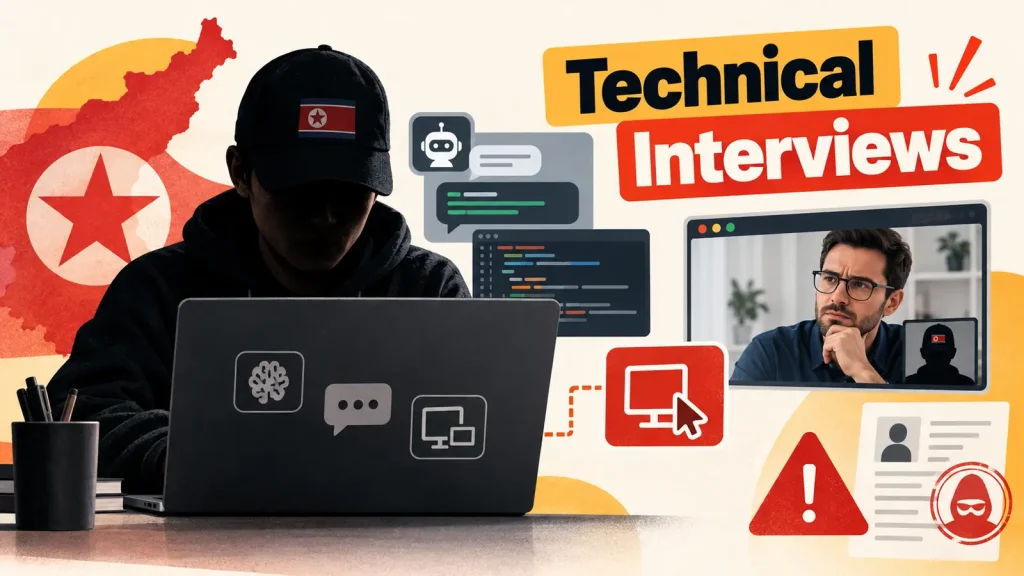
North Korean IT Workers Use AI and Remote Desktop Tools to Fake Technical Interviews
The Deceptive Digital Facade: North Korean IT Workers Exploit AI and RDP in Job Scams
The landscape of cyber threats constantly shifts, but few tactics are as insidious and economically damaging as those that weaponize the very processes designed to build legitimate teams. Recent intelligence highlights a deeply concerning trend: North Korean IT operatives are leveraging sophisticated techniques, including artificial intelligence (AI) and remote desktop protocols (RDP), to convincingly impersonate genuine candidates during technical interviews. This isn’t merely about gaining employment; it’s a calculated strategy to evade sanctions, perpetrate payroll fraud, steal sensitive data, and establish backdoor access into corporate networks. This alarming activity, initially surfacing from a job advertisement on the Mouse Review Discord, underscores a critical vulnerability in modern hiring practices that organizations can no longer afford to overlook.
The Anatomy of Deception: AI, RDP, and Human Stand-ins
The scheme employed by North Korean operators is multi-layered and highly effective. At its core, it relies on a blend of technology and human guile to create a compelling, albeit fraudulent, impression of technical proficiency. Here’s how they orchestrate these sophisticated scams:
- AI-Enhanced Impersonation: Advanced AI tools are reportedly used to refine communication, assist with coding challenges, and provide real-time answers during interviews. This allows the fraudulent candidate to appear more knowledgeable and articulate than they truly are. The AI can process questions, search for relevant answers, and even generate code snippets, all while maintaining a convincing human-like interaction.
- Remote Desktop Protocol (RDP) Exploitation: RDP plays a pivotal role in enabling the remote manipulation of the interview environment. While a less-skilled individual (or even an AI-driven script) might present themselves on camera, the actual technical work, such as coding tests or debugging exercises, is performed by a more skilled North Korean operative located remotely. This is achieved by taking control of the candidate’s local machine via RDP, essentially having a hidden expert performing the tasks.
- Hired Stand-ins: To complete the illusion, less technically proficient individuals are sometimes hired as “stand-ins.” These individuals act as the visible face during video interviews, while the real technical work is executed covertly by the remote operative. This allows for a smooth, seemingly legitimate interaction, masking the true identity and location of the skilled individual.
Broader Implications: Sanctions Evasion and Data Theft
The ramifications of this deception extend far beyond just fraudulent hiring. These activities are directly linked to several high-priority national security and corporate risks:
- Sanctions Evasion: By infiltrating global companies, North Korean IT workers generate foreign currency that directly supports the regime’s illicit activities, including its weapons programs, in direct violation of international sanctions.
- Payroll Fraud: Once embedded within an organization, these operatives can collect legitimate salaries, channeling these funds back to North Korea, thereby perpetuating a continuous stream of illicit income.
- Data Theft: Access to internal systems, even seemingly innocuous ones, can be exploited for industrial espionage, intellectual property theft, or the exfiltration of sensitive corporate and customer data.
- System Access and Espionage: Gaining access to company networks provides a beachhead for further malicious activities, including deploying malware, establishing persistent backdoors, or facilitating more extensive cyberattacks. This could potentially lead to supply chain attacks affecting multiple organizations.
Remediation Actions: Fortifying Your Hiring Defenses
Combating this sophisticated threat requires a multi-faceted approach to bolster your organization’s hiring and security posture. Organizations must evolve their defenses to match the ingenuity of these attackers.
- Enhanced Identity Verification: Implement rigorous identity verification processes beyond simple ID checks. Consider using biometric verification tools, multi-factor authentication (MFA) for interview platforms, and background checks that include international sanction lists.
- Proctored Technical Assessments: For critical roles, particularly those requiring access to sensitive systems, conduct proctored technical assessments. This could involve live coding environments with screen sharing and webcam monitoring, ensuring the candidate is the sole individual performing the tasks. Utilize tools that can detect remote access software during assessments.
- Behavioral Analysis During Interviews: Train interviewers to recognize suspicious behavioral patterns. Inconsistencies between verbal communication and technical output, unusual delays in responses, or excessive looking away from the camera could be indicators of remote assistance.
- Review Remote Access Policies: Strictly control and monitor remote access to corporate systems, especially for new hires. Implement Zero Trust Network Access (ZTNA) principles to ensure that only authorized devices and users can access specific resources, and only after continuous verification.
- Geographic IP Monitoring: While not foolproof due to VPNs, monitoring the geographic origin of IP addresses during interviews and initial onboarding can sometimes flag unusual activity. Combine this with other detection methods.
- Security Awareness Training: Educate HR teams, hiring managers, and technical interviewers about these specific threats. Knowledge is the first line of defense against social engineering and sophisticated impersonation.
- Pre-Employment Cybersecurity Screening: For roles requiring access to sensitive data, consider more in-depth cybersecurity screening as part of the background check process.
Conclusion: Adapting to the Evolving Threat Landscape
The emergence of North Korean IT workers leveraging AI and remote access tools to fake technical interviews represents a significant escalation in cyber threat tactics. It underscores the critical need for organizations to adapt their security strategies, not just to defend against external attacks, but also to secure their internal processes, particularly those as fundamental as hiring. By implementing robust identity verification, proctored assessments, and comprehensive security awareness training, companies can significantly reduce their exposure to sanctions evasion, data theft, and infiltration by hostile state-sponsored actors. Remaining vigilant and proactive in addressing these evolving threats is paramount for safeguarding corporate assets and national security.




