
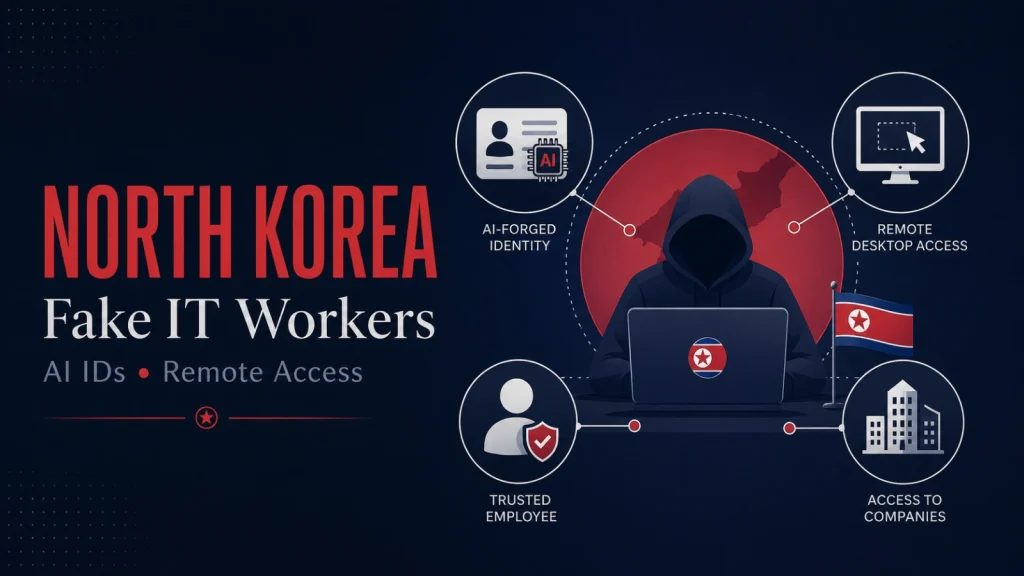
North Korean IT Workers Use AI-Forged IDs and Remote Desktops to Become Trusted Employees
The digital landscape is rife with sophisticated threats, but few are as insidious as nation-state actors infiltrating legitimate organizations from within. Recent revelations expose a disturbing tactic: North Korean IT workers leveraging AI-forged identities and remote access to secure positions as trusted employees, operating undetected for extended periods. This isn’t just about bypassing initial checks; it’s about embedding themselves deep within corporate structures, posing a significant risk to data integrity, intellectual property, and national security.
A joint investigation by threat intelligence specialists Mauro Eldritch (BCA LTD) and Heiner García (NorthScan) has meticulously uncovered the layers of this operation. Their findings paint a stark picture of how these operatives don’t just “slip past” hiring processes; they actively establish themselves as invaluable team members, all while serving the interests of a hostile foreign power. Understanding this multifaceted threat is paramount for any organization serious about its cybersecurity posture.
The Deceptive Playbook: AI-Forged Identities and Remote Desktop Infiltration
The core of this sophisticated scheme lies in deception at its finest. North Korean IT workers aren’t just using stolen credentials; they’re creating entirely new, believable digital personas. The investigation highlights the critical role of Artificial Intelligence (AI) in this process. AI-powered tools enable the creation of highly convincing forged IDs, complete with realistic background information, employment histories, and even social media presence. These AI-crafted identities are designed to withstand scrutiny during the hiring process, making it incredibly difficult for standard HR and background checks to flag them.
Once past the initial hurdle, the next phase involves leveraging remote desktop protocols (RDP) and other remote access solutions. These operatives gain legitimate access to company networks, not as intruders, but as bona fide employees. This trusted access is then exploited to conduct espionage, intellectual property theft, or to lay groundwork for future malicious operations. The use of remote desktops also provides a crucial layer of obfuscation, allowing the operatives to work from geographically diverse locations, further complicating attribution and detection.
Beyond the Hiring Process: Becoming a Trusted Insider
What sets this threat apart is the operatives’ ability to move beyond mere access and integrate themselves as trusted insiders. The research by Eldritch and García underscores that these individuals are often highly skilled IT professionals. They contribute to projects, meet deadlines, and build rapport with colleagues, all while operating under false pretenses. This prolonged presence within an organization allows them to:
- Map Internal Networks: Gain a deep understanding of network architecture, critical systems, and data repositories.
- Exfiltrate Sensitive Data: Slowly and systematically steal intellectual property, customer data, and proprietary information without raising immediate alarms.
- Establish Backdoors: Create persistent access points for future operations, even if their primary accounts are eventually compromised.
- Plant Malware: Introduce malicious code into systems, potentially leading to future ransomware attacks, data destruction, or disruption of services.
- Gather Intelligence: Collect information on organizational vulnerabilities, employee habits, and strategic initiatives.
The implications of such an embedded threat are profound. Unlike external attacks that trigger immediate alarms, an insider operating with trusted access can cause far greater damage over time, often without detection until it’s too late.
Remediation Actions: Fortifying Defenses Against Insider Threats
Addressing this sophisticated threat requires a multi-layered approach, focusing on both preventative measures and enhanced detection capabilities. Organizations must recognize that the traditional perimeter defense is insufficient when the threat is already inside.
Enhanced Vetting and Background Checks
- AI-Powered Identity Verification: Implement advanced AI and machine learning tools to scrutinize identity documents and digital footprints for inconsistencies and anomalies. These tools can detect subtle signs of AI-generated forgeries that human eyes might miss.
- Multi-Factor Vetting: Go beyond standard background checks. Incorporate social media analysis, professional network verification, and direct outreach to references with structured questions designed to uncover discrepancies.
- Continuous Background Checks: Periodically re-verify employee information, especially for those with elevated privileges. Changes in digital footprint or unusual online behavior could be red flags.
Strengthening Remote Access Security
- Zero Trust Architecture (ZTA): Implement a Zero Trust model where no user or device is inherently trusted, regardless of their location. Every access request must be authenticated, authorized, and continuously validated.
- Multi-Factor Authentication (MFA) Everywhere: Enforce strong MFA for all remote access points, critical systems, and privileged accounts. Consider hardware tokens or biometric authentication for enhanced security.
- Granular Access Controls: Implement the principle of least privilege, ensuring employees only have access to the resources absolutely necessary for their job functions. Regularly review and revoke unnecessary access.
- Session Monitoring and Recording: Monitor and record remote desktop sessions, especially for privileged users. This provides an audit trail and can help detect anomalous behavior.
- Geofencing and IP Restrictions: Where feasible, restrict access to specific geographic locations or whitelisted IP addresses for certain roles or systems.
Proactive Threat Detection and Insider Risk Management
- User and Entity Behavior Analytics (UEBA): Deploy UEBA solutions to establish baseline behaviors for all users and flag deviations. Unusual login times, access patterns, data transfers, or resource utilization can indicate compromise or malicious insider activity.
- Data Loss Prevention (DLP): Implement robust DLP solutions to monitor, detect, and block sensitive data from leaving the organization’s network without authorization.
- Endpoint Detection and Response (EDR) / Extended Detection and Response (XDR): Utilize EDR/XDR solutions to gain deep visibility into endpoint activities, detect sophisticated threats, and respond quickly to incidents.
- Regular Security Audits and Penetration Testing: Conduct frequent internal and external security audits and penetration tests to identify vulnerabilities that could be exploited by insiders or external attackers.
- Employee Security Awareness Training: Continuously train employees on social engineering tactics, phishing, and the importance of reporting suspicious activity. A well-informed workforce is a critical line of defense.
Conclusion: A New Era of Sophisticated Digital Espionage
The revelations concerning North Korean IT workers using AI-forged IDs and remote desktops to infiltrate organizations mark a significant escalation in nation-state cyber tactics. This isn’t a mere technical vulnerability; it’s a sophisticated human engineering and technological blend designed to bypass conventional security measures. Organizations can no longer solely focus on external threats while neglecting the potential for deep-seated internal compromise.
By adopting a holistic security approach that combines stringent vetting, robust access controls, continuous monitoring, and proactive threat intelligence, companies can build resilience against these evolving threats. The battle for digital security is increasingly fought from within, making vigilance and adaptive defense strategies more critical than ever.




