
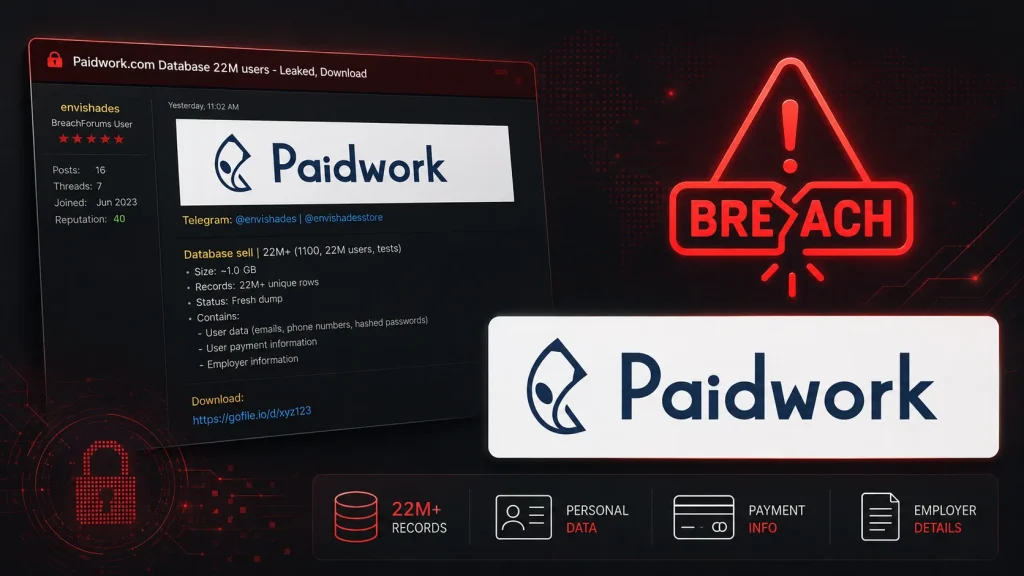
Paidwork Data Breach Exposes 23 Million Users’ Banking and Personal Data
In an alarming development that underscores the persistent threat of cybercrime against personal and financial data, gig economy platform Paidwork has fallen victim to a significant data breach. This incident has exposed the sensitive banking and personal information of over 23 million users globally, raising serious concerns about digital security and the responsibility of platforms handling such critical data.
The Paidwork Data Breach: A Timeline of Exposure
The first signs of this substantial security compromise emerged in March 2026, when malicious actors began offering the stolen data for sale on underground forums. The situation escalated dramatically in July of the same year, with nearly 11GB of the compromised dataset being publicly leaked. This public dissemination transformed a potential threat into a confirmed and widespread data exposure, directly impacting Paidwork’s immense user base.
Understanding the Impact: What Data Was Compromised?
The scale of the Paidwork data breach is concerning, not just due to the number of affected users, but also the highly sensitive nature of the information exposed. While the precise details of every compromised data point may vary, typical data sets involved in such breaches often include:
- Financial Information: Bank account numbers, routing numbers, and potentially credit/debit card details. This exposure carries a high risk of financial fraud and identity theft.
- Personal Identifiable Information (PII): Full names, addresses, email addresses, phone numbers, and dates of birth. Such data can be leveraged for sophisticated phishing attacks, account takeovers, and other forms of identity manipulation.
- Login Credentials: Usernames and hashed passwords. While passwords are often stored in a hashed format, weaker or commonly used hashes can be cracked, giving attackers access to other online accounts where users have reused passwords.
The ramifications for the 23 million affected individuals are considerable, ranging from increased susceptibility to phishing scams to the potential for direct financial losses.
The Rising Tide of Gig Economy Platform Breaches
The Paidwork incident is a stark reminder that platforms operating in the rapidly expanding gig economy are increasingly attractive targets for cybercriminals. These platforms often manage vast amounts of user data, including payment information, personal details, and work history, making them rich targets for data extortion and theft. The distributed nature of the gig workforce also presents unique security challenges, as users may be less aware of data protection best practices or may use less secure personal devices for platform access.
Remediation Actions for Affected Users
For individuals concerned that their data may have been compromised in the Paidwork breach, immediate action is crucial to mitigate potential risks. While there is no specific CVE associated with a data breach, proactive security measures are essential.
- Change Passwords: Immediately update your password on Paidwork and any other platform where you use the same or similar credentials. Use strong, unique passwords for every account.
- Enable Multi-Factor Authentication (MFA): Activate MFA wherever possible to add an extra layer of security to your accounts. This makes it significantly harder for unauthorized individuals to gain access, even if they have your password.
- Monitor Financial Accounts: Regularly review bank statements, credit card transactions, and credit reports for any suspicious activity. Report any unauthorized transactions to your financial institution immediately.
- Be Wary of Phishing Attempts: Cybercriminals often use compromised data to craft highly convincing phishing emails or messages. Exercise extreme caution with unsolicited communications, and never click on suspicious links or download attachments from unknown sources.
- Consider Identity Theft Protection: Enroll in an identity theft protection service if you are particularly concerned. These services can monitor your personal information and alert you to potential fraud.
Broader Implications for Data Security
This incident underscores the continuous need for robust cybersecurity frameworks within all organizations, particularly those handling sensitive user data on a large scale. Data breaches are not merely isolated incidents; they have far-reaching consequences, eroding user trust and potentially leading to significant financial and reputational damage for affected companies.
Platforms like Paidwork must prioritize investment in advanced security measures, including:
- Strong encryption for data at rest and in transit.
- Regular security audits and penetration testing.
- Employee training on cybersecurity best practices.
- Incident response plans that allow for rapid detection, containment, and notification.
- Adherence to data protection regulations such as GDPR and CCPA.
Conclusion
The Paidwork data breach involving 23 million users’ banking and personal information stands as a stark reminder of the escalating cyber threats in our connected world. Both platforms and individual users must remain vigilant. For platforms, this means committing to uncompromised data security. For users, it means adopting proactive security habits to protect their digital identities and financial well-being against the ever-present threat of data exploitation.




