
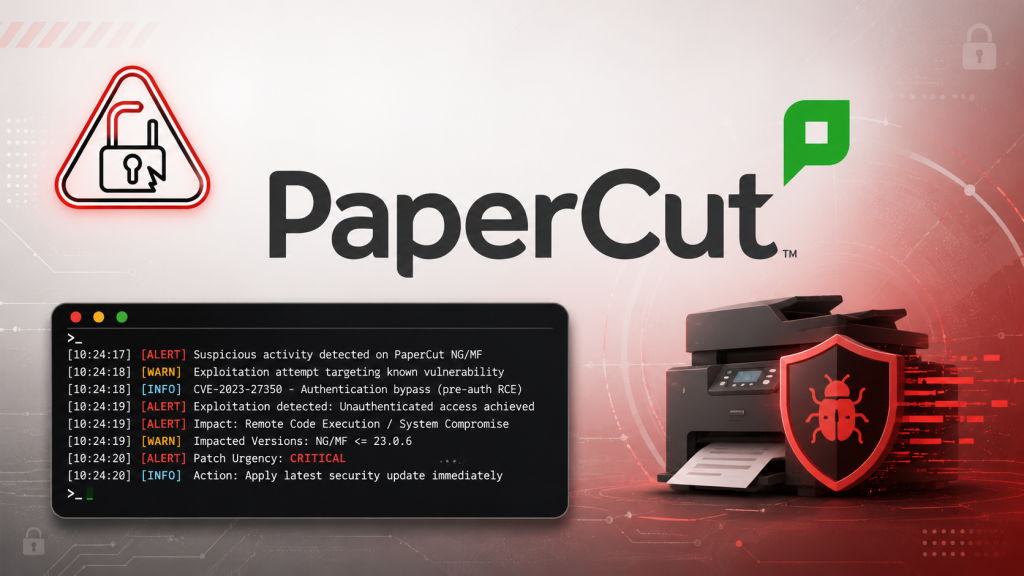
PaperCut NG/MF Vulnerability Actively Exploited in Attack – All Versions Impacted
Organizations worldwide relying on PaperCut NG and PaperCut MF for print management are facing an immediate and critical threat. Recent reports, confirmed by PaperCut itself, indicate that an unpatched vulnerability within their widely used software is being actively exploited by malicious actors. This isn’t a theoretical risk; it’s an ongoing attack, impacting all versions of the software and necessitating urgent action from IT and security teams.
The Critical PaperCut Vulnerability: What We Know
PaperCut, the Australian vendor behind the popular print management solutions, has issued an emergency warning regarding active exploitation of an undisclosed vulnerability. This rapid response, including the swift release of a patch, underscores the severity and urgency of the situation. While specific details about the vulnerability itself are still emerging, the company’s security response team is actively investigating “confirmed customer incidents.” This means organizations globally are already experiencing attacks leveraging this flaw.
The core issue revolves around an unpatched vulnerability in PaperCut NG and PaperCut MF. Such vulnerabilities often involve insufficient input validation, authentication bypasses, or remote code execution (RCE) capabilities, which can allow attackers to gain unauthorized access to systems, steal sensitive data, or even establish persistence within a network. Given the widespread use of PaperCut in corporate and educational environments, the potential impact is substantial.
Understanding the Impact of Print Management Software Exploits
Print management software, while seemingly innocuous, often holds significant privileges within an organizational network. It typically interacts with active directory, user authentication systems, and can manage print queues across an entire infrastructure. An exploit in such a system can lead to:
- Data Exfiltration: Attackers could access print job data, which may contain sensitive documents, personal information, or proprietary corporate data.
- Lateral Movement: With control over the print server, attackers can often move laterally within the network, escalating privileges and compromising other systems.
- Denial of Service: Malicious actors could disrupt printing services, causing operational downtime and significant business impact.
- System Compromise: In severe cases, exploitation could lead to full compromise of the underlying server hosting the PaperCut software.
The fact that “all versions are impacted” is particularly concerning, as it implies a fundamental flaw that has existed across the software’s development lifecycle, making a broad range of installations vulnerable.
Remediation Actions: Immediate Steps to Protect Your Environment
Given the active exploitation, immediate action is paramount. Organizations using PaperCut NG or PaperCut MF must prioritize these steps:
- Apply Emergency Patches Immediately: PaperCut has released emergency patches. Identify your version of PaperCut NG/MF and apply the corresponding patch without delay. Continuously monitor PaperCut’s official security advisories for the latest updates.
- Isolate PaperCut Servers: If immediate patching isn’t possible, consider temporarily isolating PaperCut servers from the broader network. Implement strict firewall rules to limit external access to only essential ports and trusted IP addresses.
- Monitor for Suspicious Activity: Enhance monitoring on PaperCut servers. Look for unusual process execution, unexpected network connections, unauthorized file modifications, or abnormal user activity. Focus on outbound connections from the print server to external, unknown destinations.
- Review Logs: Scrutinize system and application logs on PaperCut servers for any signs of compromise pre- and post-patching. Pay close attention to authentication logs, application error logs, and any entries indicating privilege escalation attempts.
- Incident Response Plan Activation: If signs of compromise are detected, activate your organization’s incident response plan immediately. This includes containment, eradication, recovery, and post-incident analysis.
- Backup and Restore Preparedness: Ensure recent, verified backups of your PaperCut configuration and relevant server data are available and tested for restoration.
Detection and Mitigation Tools
Leveraging the right tools can significantly aid in detecting and mitigating threats related to this vulnerability.
| Tool Name | Purpose | Link |
|---|---|---|
| Endpoint Detection and Response (EDR) Solutions | Real-time monitoring of endpoints (including PaperCut servers) for suspicious activities, process injection, and network connections. | (Vendor Specific – e.g., CrowdStrike, SentinelOne) |
| Network Intrusion Detection/Prevention Systems (NIDS/NIPS) | Monitoring network traffic for known attack signatures, anomalous behavior, and suspicious connections to/from PaperCut servers. | (Vendor Specific – e.g., Snort, Suricata, Palo Alto Networks) |
| Vulnerability Scanners | Identifying unpatched software versions or misconfigurations on PaperCut servers. | (e.g., Nessus, OpenVAS, Qualys) |
| Security Information and Event Management (SIEM) | Centralized log collection and analysis from PaperCut servers and other network devices to detect patterns of attack. | (e.g., Splunk, Elastic SIEM, IBM QRadar) |
Looking Ahead: Proactive Security Posture
This incident serves as a stark reminder of the importance of continuous vulnerability management and a proactive security posture. Regularly updating all software, implementing strong network segmentation, and maintaining robust monitoring capabilities are non-negotiable in today’s threat landscape. Organizations should also consider isolating critical infrastructure components, like print servers, into their own network segments to limit the blast radius of any successful attack.
Key Takeaways for Cybersecurity Professionals
The active exploitation of a vulnerability in PaperCut NG/MF is a high-priority incident demanding immediate attention. Organizations must prioritize applying the emergency patches, enhance monitoring on affected systems, and review their incident response procedures. This event underscores that even seemingly benign infrastructure components can become critical attack vectors when vulnerabilities are present and actively exploited. Stay vigilant, stay updated, and secure your systems.




