
Phantom Deal Hackers Impersonate Executives and Use Fake NDAs to Steal Corporate Wire Transfers
The Phantom Deal: A New Wave of Executive Impersonation Scams
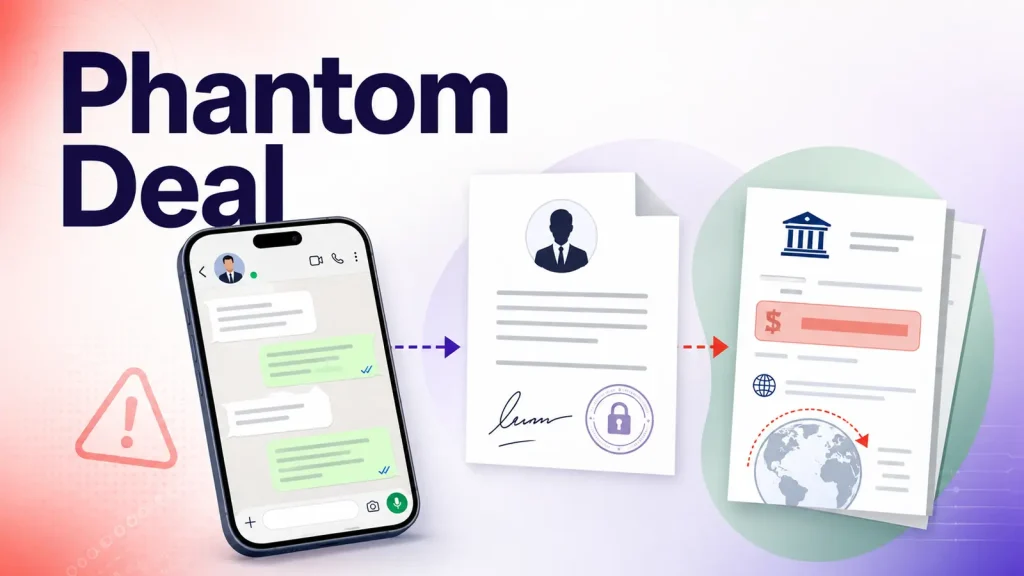
Imagine receiving an urgent WhatsApp message from your CEO, detailing a top-secret acquisition. The message stresses the extreme confidentiality, even hinting that standard company protocols could jeopardize the deal. This isn’t a hypothetical scenario; it’s the insidious new tactic cybercriminals are employing in the “Phantom Deal” campaign, designed to bypass established safeguards and steal corporate wire transfers. These sophisticated attacks leverage executive impersonation and fake Non-Disclosure Agreements (NDAs) to manipulate employees into making significant financial transactions, posing a severe threat to organizations of all sizes.
Understanding the Phantom Deal Campaign Mechanics
The Phantom Deal campaign operates with a chilling level of social engineering sophistication. It begins with a seemingly innocuous, yet highly targeted, communication. Cybercriminals establish contact, often via WhatsApp, impersonating a high-ranking executive within the victim’s organization. This initial message sets the stage for a confidential, time-sensitive “acquisition deal.”
The core of the deception lies in turning everyday corporate safeguards into perceived obstacles. Victims are informed that due to the extreme sensitivity of the deal, traditional communication channels and verification processes must be bypassed. This narrative is further reinforced by the introduction of fake NDAs, which lend an air of legitimacy and pressure the victim into compliance. These forged documents are designed to instill a sense of urgency and exclusivity, making the target believe they are privy to critical, privileged information that must be protected at all costs. The ultimate goal, of course, is to steer the unsuspecting employee towards initiating large, unauthorized wire transfers to accounts controlled by the attackers.
Tactics and Social Engineering Used
The success of Phantom Deal hinges on expertly crafted social engineering techniques:
- Executive Impersonation: Attackers meticulously research their targets and their organizations to convincingly impersonate executives. This often involves using publicly available information to mimic communication styles and even predict potential business ventures.
- Urgency and Secrecy: A constant theme throughout the campaign is the critical need for speed and absolute confidentiality. This pressure is designed to override rational thought and encourage immediate action without proper verification.
- Fake NDAs and Legal Facades: The use of fabricated Non-Disclosure Agreements adds a layer of false legitimacy. These documents, while fake, are often well-produced and can trick individuals into believing they are legally bound to secrecy and compliance.
- Bypassing Protocols: The narrative explicitly instructs victims to avoid standard financial protocols, claiming these would jeopardize the secret deal. This directly undermines internal controls and creates a direct path for fraudulent transfers.
Remediation Actions and Proactive Defense
Protecting your organization from sophisticated scams like Phantom Deal requires a multi-layered approach combining technology, policy, and rigorous employee training.
- Robust Email and Messaging Security: Implement advanced email filtering and messaging security solutions that can detect and flag impersonation attempts, even from external platforms like WhatsApp. Look for solutions that leverage AI and behavioral analysis to identify anomalies.
- Strict Verification Protocols for Wire Transfers: Establish and rigorously enforce multi-factor authentication and out-of-band verification for all wire transfers, especially those exceeding a certain threshold. This means independent verification through a separate channel (e.g., a phone call to a known number, not one provided in the suspicious message).
- Comprehensive Cybersecurity Awareness Training: Regularly train employees on the latest social engineering tactics, including executive impersonation, phishing, and whaling. Emphasize the importance of questioning unusual requests, especially those related to financial transactions or deviations from standard procedures.
- Incident Response Plan: Develop and regularly test an incident response plan for financial fraud. This plan should clearly outline steps to take if an employee suspects or falls victim to such a scam, including immediate contact points and protocols for freezing transactions.
- Verify Confidentiality Claims: Educate employees that legitimate confidential transactions will still follow established internal verification processes. Any request to bypass these processes due to “secrecy” should be an immediate red flag.
- Secure Communication Channels: Promote the use of secure, official communication channels for sensitive business discussions and financial requests. Discourage the use of personal messaging apps for corporate finance matters.
Tools for Detecting and Preventing Impersonation Attacks
| Tool Name | Purpose | Link |
|---|---|---|
| Proofpoint EFD (Email Fraud Defense) | Detects and blocks email-based executive impersonation (whaling) attacks. | https://www.proofpoint.com/us/products/email-protection/email-fraud-defense |
| Mimecast Impersonation Protect | Provides protection against impersonation attacks and spear-phishing. | https://www.mimecast.com/products/email-security-3-0/impersonation-protect/ |
| Microsoft Defender for Office 365 (Anti-Phishing) | Offers impersonation detection and anti-phishing capabilities within the M365 ecosystem. | https://learn.microsoft.com/en-us/microsoft-365/security/office-365-security/anti-phishing-policies-mdo?view=o365-worldwide |
| KnowBe4 (Security Awareness Training) | Provides simulated phishing and social engineering training to educate employees. | https://www.knowbe4.com/ |
Key Takeaways for Organizational Security
The Phantom Deal campaign serves as a stark reminder that even the most robust technical defenses can be circumvented by sophisticated social engineering. Organizations must prioritize continuous security awareness training that specifically addresses impersonation scams and the manipulation tactics used by attackers. Implementing stringent financial verification processes, backed by out-of-band confirmations, remains paramount. No legitimate business deal, however confidential, will ever require bypassing established security protocols that protect corporate assets. Vigilance, verification, and a healthy skepticism towards urgent, unusual requests are the strongest defenses against these evolving financial threats.




