
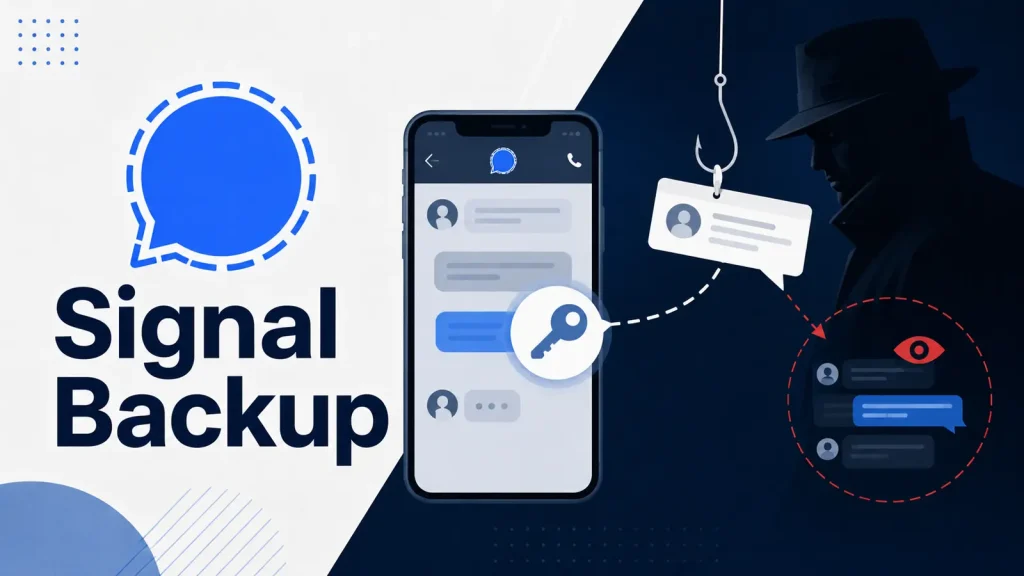
Russian Intelligence Hackers Phish Signal Backup Keys to Hijack Accounts and Messages
A disturbing new report reveals a sophisticated phishing campaign targeting high-profile individuals, including officials, military personnel, political figures, journalists, and Ukrainian leaders. Russian intelligence-linked attackers are employing social engineering tactics to phish Signal backup recovery keys, granting them unauthorized access to sensitive conversations and accounts. This campaign underscores the persistent threat of nation-state actors and highlights the critical importance of robust security practices, even with end-to-end encrypted platforms.
The Deceptive Play: Phishing Signal Backup Keys
This attack vector doesn’t exploit a flaw in Signal’s renowned end-to-end encryption. Instead, it leverages human vulnerability through highly targeted phishing. The attackers masquerade as legitimate Signal support staff, meticulously crafting convincing lures designed to trick targets into divulging their critical backup recovery keys. These keys, if compromised, allow an attacker to restore a Signal account on a new device, thereby gaining complete access to all past and present conversations, contacts, and shared media.
The implications of such a compromise are profound. For individuals involved in sensitive discussions – particularly those operating in geopolitically charged environments – the loss of privacy could have severe real-world consequences, ranging from intelligence leaks to personal endangerment. This method of compromise bypasses the technical security of the application itself, proving that even the most secure communication platforms are only as strong as their weakest link: the user.
Who is at Risk? High-Value Targets Identified
The campaign’s focus is unmistakably strategic. Individuals with access to sensitive intelligence and high-level communications are the primary targets:
- Officials and Military Personnel: Those involved in national security, defense, and foreign policy.
- Political Figures: Individuals shaping policy and public discourse.
- Journalists: Those reporting on conflict, investigations, and sensitive political topics.
- Ukrainian Leaders: A particularly vulnerable group given the ongoing geopolitical conflict.
The selection of these targets confirms that the objective extends beyond simple data theft; it aims at intelligence gathering and potential strategic disruption.
Understanding Signal Backup Recovery Keys
Signal’s backup recovery key is a 30-digit passphrase that allows users to restore their conversation history and account data if they lose or replace their device. While an essential feature for data portability, its compromise grants an attacker the ability to effectively “become” the user on a new device. This isn’t a vulnerability in the traditional software sense, like CVE-2023-XXXXX (placeholder for example CVE if applicable to a software flaw, which isn’t the case here as it’s social engineering), but rather a design element that requires careful user management.
Remediation Actions and Enhanced Security Measures
Protecting against this specific type of social engineering attack requires vigilance and adherence to best practices. No software patch can entirely mitigate human deception, but several actions can significantly reduce risk:
- Enable Screen Lock and PIN: Ensure a strong Signal PIN is set and memorize it. This PIN acts as a second layer of defense, preventing unauthorized access even if your device is physically compromised.
- Be Skeptical of Unsolicited Requests: Signal support will generally not ask for your backup recovery key directly via message. Be extremely wary of any communication claiming to be from Signal that requests this information. When in doubt, verify through official channels, not by replying to the suspicious message.
- Understand the Recovery Key’s Purpose: Never share your 30-digit recovery key with anyone. It is akin to sharing your most sensitive password.
- Regularly Review Linked Devices: Periodically check Signal’s settings to see which devices are linked to your account. Remove any unfamiliar or unauthorized devices immediately.
- Utilize Alternative Backup Strategies (If Applicable): While Signal’s encrypted backups are generally secure, for extremely sensitive communications, consider not using the backup feature that generates a recovery key, or store the key in an ultra-secure, offline location.
- Educate Yourself and Your Team: Conduct regular cybersecurity awareness training, especially for individuals in high-risk professions. Phishing remains one of the most effective attack vectors.
Monitoring for Account Takeover Indicators
While preventative measures are crucial, awareness of potential compromise is also vital. Look for these signs:
- Unexpected messages indicating a new device has linked to your account.
- Changes in your account settings that you did not initiate.
- Reports from contacts that your account is sending unusual messages.
- Inability to access your Signal account despite correct credentials.
Essential Security Tools
While this attack relies on social engineering rather than a technical vulnerability, general security hygiene and tools remain important for overall protection against related threats.
| Tool Name | Purpose | Link |
|---|---|---|
| Password Manager | Securely store unique, strong passwords for all online services, reducing the impact of credential stuffing if one service is breached. | Bitwarden / 1Password |
| Anti-Phishing Training Platforms | Educate users on identifying and avoiding phishing attempts through simulated attacks and educational modules. | KnowBe4 / Cofense |
| Endpoint Detection and Response (EDR) | Monitors and responds to threats on user devices, which can detect credential harvesting malware or suspicious network activity. | CrowdStrike Falcon / SentinelOne Singularity |
Key Takeaways for Digital Defense
The Russian intelligence-linked campaign targeting Signal backup keys serves as a stark reminder that even the most robust encryption cannot withstand sophisticated social engineering. Users, particularly those engaged in high-stakes communications, must maintain extreme vigilance against phishing attempts. The security of your digital communications ultimately hinges on your ability to recognize and resist deception. Protecting your Signal recovery key is paramount; treat it with the same criticality as your most sensitive personal information.




