
SpankRAT Exploits Windows Explorer Processes for Stealth and Delayed Detection
A new two-component Remote Access Trojan (RAT) toolkit, dubbed SpankRAT, has been observed actively exploiting legitimate Windows processes to achieve stealth and bypass conventional security controls. Built in Rust, this sophisticated threat demonstrates a heightened level of evasion, making its detection incredibly challenging for organizations. Security researchers at ANY.RUN recently identified and analyzed SpankRAT, highlighting its ability to maintain persistent access within compromised environments while largely evading detection on platforms like VirusTotal.
SpankRAT’s Modus Operandi: Abusing Windows Explorer
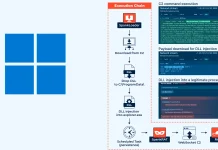
SpankRAT distinguishes itself by abusing legitimate Windows processes, specifically those related to Windows Explorer. This technique allows the RAT to blend in with normal system activity, making it difficult for reputation-based security tools to flag its presence. By injecting itself into critical system processes, SpankRAT can operate under the radar, delaying detection and maximizing its operational time within a victim’s network. This method not only enhances its stealth but also complicates forensic analysis, as its activities appear to originate from trusted executables.
Component Analysis: A Two-Pronged Attack
SpankRAT operates as a two-component toolkit, indicating a modular design that likely offers flexibility and resilience to its operators. While specific details on each component’s function are still emerging, this architecture typically involves one component responsible for initial compromise and persistent access (e.g., a loader or dropper), and another acting as the primary RAT payload, handling command and control (C2) communications and executing malicious commands. The use of Rust for its development further contributes to its stealth, as Rust executables often have a smaller footprint and can be less prone to detection by signature-based antivirus solutions compared to malware written in more common languages like C++ or C#.
Evasion Techniques and VirusTotal Blind Spots
One of the most concerning aspects of SpankRAT is its remarkable ability to evade detection, particularly on public scanning platforms like VirusTotal. When analyzed, initial samples of SpankRAT registered very few, if any, detections across a wide array of antivirus engines. This low detection rate is a strong indicator of its sophisticated evasion capabilities, likely employing techniques such as:
- Runtime encryption/obfuscation: Continuously altering its code or memory footprint to avoid signature matches.
- Anti-analysis techniques: Detecting virtualized environments or debuggers and altering its behavior accordingly.
- Polymorphic behavior: Generating unique variants for each infection to bypass static signature detection.
- Leveraging legitimate processes: As previously mentioned, executing within the context of trusted applications like Explorer.exe significantly masks its malicious intent.
This evasion capability means that security teams heavily reliant on traditional signature-based detection or preliminary VirusTotal checks may find themselves vulnerable to SpankRAT without advanced behavioral analysis and threat intelligence.
Maintaining Persistence and Command & Control
Beyond initial infiltration and evasion, SpankRAT is designed for persistent access. This typically involves establishing various mechanisms to ensure it re-establishes itself after system reboots or if its primary process is terminated. Common persistence methods include:
- Registry run keys
- Scheduled tasks
- Startup folders
- WMI event subscriptions
Once persistent, SpankRAT would then establish command and control (C2) communication with its operators. This C2 channel allows threat actors to remotely control the compromised system, exfiltrate data, deploy additional malware, or execute other malicious activities. The specifics of SpankRAT’s C2 protocol are likely designed for resilience and stealth, potentially using encrypted communications or standard protocols like HTTP/S to blend in with legitimate network traffic.
Remediation Actions
Addressing the threat posed by SpankRAT requires a multi-layered security strategy. Given its stealth and evasion capabilities, a proactive and adaptive approach is crucial.
- Endpoint Detection and Response (EDR): Implement EDR solutions that focus on behavioral analysis rather than just signatures. EDR can detect anomalous process injection, suspicious network connections, and unexpected system modifications even when traditional antivirus fails.
- Network Segmentation: Limit lateral movement by segmenting networks. If SpankRAT compromises one segment, it will be harder for it to spread to other critical parts of the infrastructure.
- Principle of Least Privilege: Enforce the principle of least privilege for all users and applications. Restricting permissions limits the damage a compromised process can inflict.
- Regular Patch Management: Ensure operating systems and all software applications are regularly patched. While SpankRAT may not rely on a specific CVE for initial access (e.g., CVE-2023-38824 related to WinRAR being exploited by other RATs, not SpankRAT directly, but illustrating a general attack vector), patching eliminates other potential entry points for threat actors.
- User Training and Awareness: Educate users about phishing, social engineering, and safe browsing habits, as these are common initial vectors for RATs like SpankRAT.
- Threat Intelligence Integration: Subscribe to and integrate up-to-date threat intelligence feeds to understand new tactics, techniques, and procedures (TTPs) and indicators of compromise (IOCs) associated with evolving threats like SpankRAT.
- Advanced Malware Analysis: For suspected infections, conduct in-depth forensic analysis and sandbox execution to understand the full scope of the RAT’s capabilities and its specific evasive maneuvers.
Detection and Analysis Tools
While SpankRAT aims for stealth, several classes of tools can aid in its detection, analysis, and mitigation:
| Tool Name | Purpose | Link |
|---|---|---|
| ANY.RUN | Interactive Sandbox for dynamic malware analysis | https://any.run/ |
| Sysmon | Windows system service for generating detailed activity logs | https://learn.microsoft.com/en-us/sysinternals/downloads/sysmon |
| Process Explorer | Advanced task manager for Windows, shows process details | https://learn.microsoft.com/en-us/sysinternals/downloads/process-explorer |
| Volatility Framework | Open-source memory forensics framework | https://www.volatilityfoundation.org/ |
| YARA | Pattern matching tool for malware researchers | https://virustotal.github.io/yara/ |
Conclusion: The Evolving RAT Landscape
The emergence of SpankRAT underscores a continuing trend where threat actors leverage modern programming languages like Rust and sophisticated evasion techniques to bypass traditional security defenses. Its exploitation of legitimate Windows Explorer processes for stealth and delayed detection presents a significant challenge for cybersecurity professionals. Organizations must move beyond static, signature-based security approaches and adopt comprehensive EDR solutions, robust network segmentation, and proactive threat intelligence to effectively counter advanced threats like SpankRAT and protect their critical assets.




