
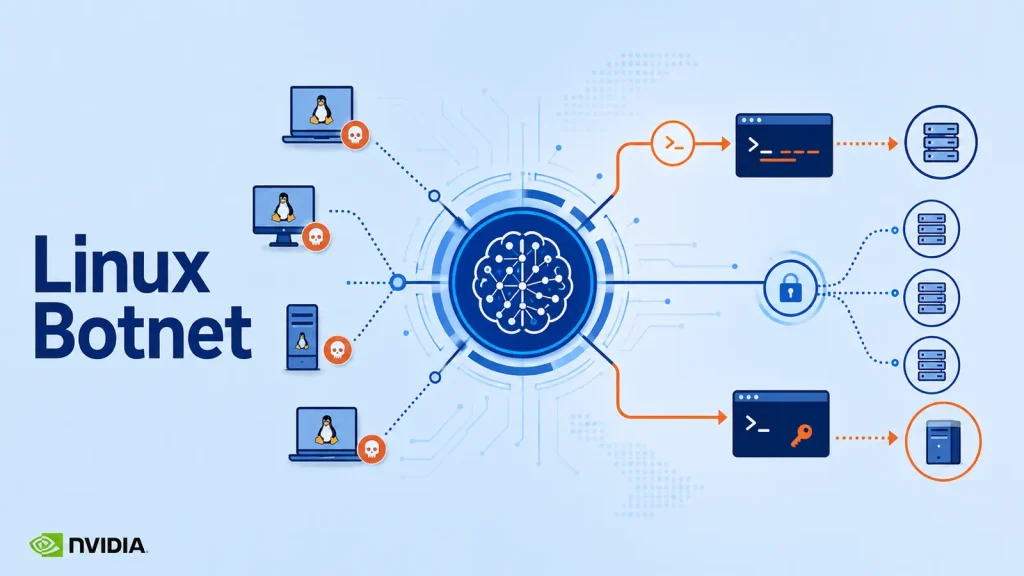
ToxNetV2 Linux Botnet Uses NVIDIA AI to Generate Shell and Remote SSH Attack Actions
The convergence of artificial intelligence and malicious operations marks a critical shift in the cybersecurity landscape. A new threat, the ToxNetV2 Linux botnet, exemplifies this evolution, demonstrating how AI is moving beyond mere text generation to actively inform and accelerate real-world attack actions. This sophisticated botnet leverages NVIDIA AI services to transform system and botnet data into proposed commands, offering operators a frighteningly efficient mechanism for orchestrating attacks.
ToxNetV2: A New Generation of AI-Powered Botnets
ToxNetV2 is not a traditional botnet. Its distinction lies in its innovative use of artificial intelligence. Instead of relying on static command-and-control (C2) structures or manual operator input for every action, ToxNetV2 integrates AI to analyze collected data. This data, encompassing system telemetry and botnet operational information, is fed into an AI service, likely residing on NVIDIA’s powerful GPU-accelerated platforms, to generate actionable intelligence.
The AI’s role is to process this raw data and produce suggested commands. These proposals are then presented to human operators, who can quickly evaluate and approve them. This design significantly reduces the cognitive load on attackers, enabling faster decision-making and more dynamic, adaptive attack strategies. It’s a fundamental shift from AI being a tool for content creation to an active participant in attack orchestration.
How ToxNetV2 Leverages NVIDIA AI for Attack Actions
The mechanism behind ToxNetV2’s AI integration is particularly concerning. The botnet gathers extensive data from compromised Linux systems and its own internal network state. This aggregated information is then submitted to an AI service. While the exact AI model and specific NVIDIA service are not publicly detailed, the implication is that these are likely advanced models capable of contextual understanding and command generation.
The AI’s output isn’t a fully automated execution, but rather a set of “proposed commands.” These suggestions range from generating shell commands to initiating remote SSH attack actions. This human-in-the-loop approach allows operators to maintain ultimate control while benefiting from the AI’s analytical speed and ability to identify optimal attack vectors or expansion opportunities. It effectively acts as an intelligent assistant for cybercriminals, accelerating the attack lifecycle.
Implications for Cybersecurity and Future Threats
The emergence of ToxNetV2 highlights several critical implications for the cybersecurity community:
- Accelerated Attack Cycles: AI-generated commands mean faster responses to network changes, quicker exploitation of vulnerabilities, and more efficient lateral movement within compromised environments.
- Increased Adaptability: Botnets can become more resilient and adaptive, with AI dynamically adjusting tactics based on real-time data, making them harder to detect and dismantle.
- Lower Barrier to Entry: While still requiring human oversight, the AI component could potentially lower the technical expertise required for some aspects of botnet operation, broadening the pool of potential attackers.
- Detection Challenges: Traditional signature-based detection methods may struggle against AI-informed attacks that exhibit novel patterns and behaviors.
Remediation Actions and Proactive Defense
Addressing threats like ToxNetV2 requires a multi-layered and proactive defense strategy. Organizations must strengthen their security posture across several vectors:
- Patch Management: Regularly update and patch all Linux systems to mitigate known vulnerabilities. Unpatched systems are primary targets for initial compromise.
- Strong Authentication: Implement multi-factor authentication (MFA) for all remote access services, especially SSH. Enforce strong, unique passwords.
- Network Segmentation: Segment networks to limit lateral movement if a system is compromised. This restricts the botnet’s ability to expand its foothold.
- Endpoint Detection and Response (EDR): Deploy EDR solutions capable of detecting anomalous behavior and potential AI-generated commands on Linux endpoints.
- Behavioral Analytics: Utilize security information and event management (SIEM) systems with behavioral analytics capabilities to identify unusual system calls, network traffic patterns, or user activity that might indicate botnet presence.
- Intrusion Detection/Prevention Systems (IDS/IPS): Configure IDS/IPS to monitor for common botnet C2 communications and known attack signatures.
- Regular Audits and Monitoring: Conduct frequent security audits of Linux configurations and continuously monitor logs for suspicious activity.
- Employee Training: Educate users and administrators about social engineering tactics, phishing, and other initial compromise vectors.
Tools for Detection and Mitigation
Effective defense against AI-driven threats requires robust tooling. Here are some categories and examples of relevant tools:
| Tool Category | Purpose | Examples & Links |
|---|---|---|
| Vulnerability Scanners | Identify and prioritize vulnerabilities on Linux systems. | Tenable Nessus, Qualys VMDR |
| Endpoint Detection & Response (EDR) | Detect and respond to advanced threats, including AI-generated command execution. | CrowdStrike Falcon Insight, Microsoft Defender for Endpoint |
| Network Monitoring (IDS/IPS) | Detect and prevent suspicious network traffic and C2 communications. | Snort, Suricata |
| SIEM & Log Management | Aggregate and analyze security logs for anomalous behavior and threat intelligence. | Splunk, Elastic SIEM |
| Configuration Management | Enforce secure configurations across Linux fleets. | Ansible, Puppet |
Conclusion
The ToxNetV2 Linux botnet serves as a stark reminder that artificial intelligence is rapidly becoming a potent weapon in the hands of cyber adversaries. Its ability to leverage NVIDIA AI for generating shell commands and orchestrating remote SSH attacks represents a significant leap in botnet sophistication. Security professionals must acknowledge this evolution and adapt their defense strategies accordingly. By focusing on proactive measures, robust security tools, and continuous vigilance, organizations can better protect their Linux environments from the escalating threat of AI-powered cyberattacks.




