
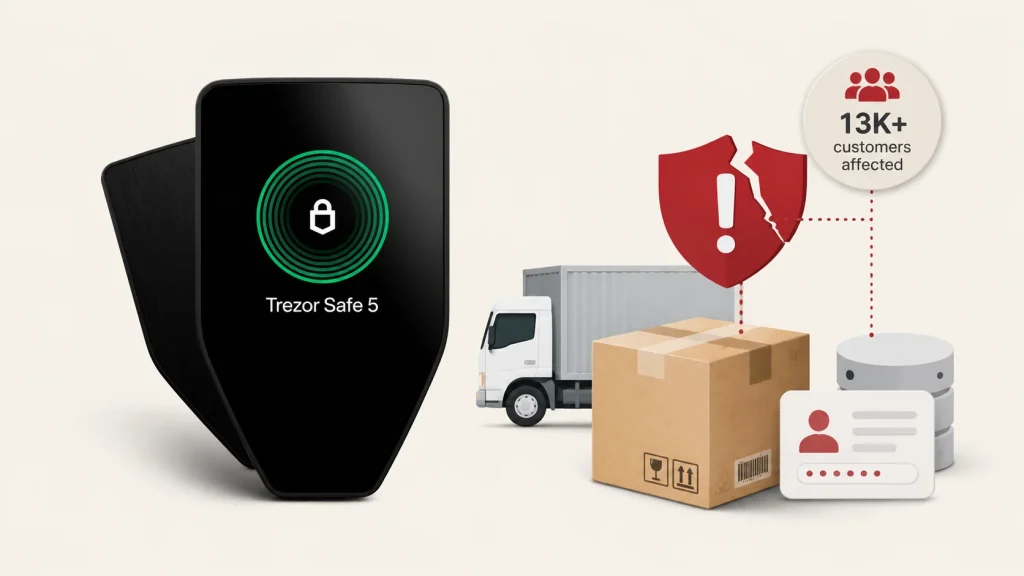
Trezor ShipMonk Data Breach Exposes Personal Data of Over 13,000 Hardware Wallet Customers
In a stark reminder that even robust security measures can be circumvented through third-party vulnerabilities, hardware wallet giant Trezor recently disclosed a data breach originating from one of its shipping partners, ShipMonk. While Trezor’s own fortified systems and cryptographic devices remained uncompromised, the incident exposed personal data for over 13,000 customers, elevating their risk of sophisticated phishing attacks. This event underscores a critical lesson in today’s interconnected digital landscape: an organization’s security posture is only as strong as its weakest link within its supply chain.
The ShipMonk Breach: What Happened?
On Monday, August 10, 2026, Trezor, a leading manufacturer of cryptocurrency hardware wallets, issued an alert regarding unauthorized access to systems maintained by ShipMonk, a key logistics provider responsible for handling customer orders. This breach specifically targeted customer order data, which, despite not containing financial details or direct access to crypto assets, includes sensitive personally identifiable information (PII).
The compromised data primarily consists of:
- Customer names
- Shipping addresses
- Email addresses
- Order details (what products were purchased)
This information, while seemingly innocuous on its own, becomes a potent weapon in the hands of malicious actors, significantly increasing the likelihood and efficacy of targeted phishing campaigns. The absence of a specific CVE for this third-party logistics breach highlights its nature as a supply chain compromise rather than a software vulnerability within Trezor’s products themselves.
Understanding the Risk: Phishing and Social Engineering
The core danger stemming from this data exposure is not direct financial loss through compromised wallets, but rather the heightened risk of sophisticated phishing and social engineering attacks. Attackers can leverage the stolen PII to craft highly convincing communications that appear to originate from Trezor or its partners.
- Targeted Phishing Emails: Knowing a customer purchased a Trezor wallet, attackers can send emails mimicking support requests, firmware updates, or even fake refund offers, luring victims into clicking malicious links or divulging more sensitive information.
- Physical Mail Scams: With shipping addresses compromised, there’s a potential for physical mail scams, such as fake product recalls or demands for “return” of devices.
- Identity Theft Risk: While not the primary concern, the combination of names and addresses can contribute to broader identity theft efforts when combined with other data breaches.
It’s crucial for affected users to understand that their actual Trezor devices remain secure. The breach did not expose private keys, seed phrases, or any data stored on the hardware wallets themselves. The threat lies in external manipulation and deception.
Trezor’s Response and Customer Guidance
Trezor acted swiftly upon receiving notification from ShipMonk, initiating an internal investigation and communicating transparently with its customer base. While the specifics of ShipMonk’s security vulnerabilities are not fully public, Trezor’s response emphasizes vigilance from its users.
Customers potentially affected by the breach were likely notified directly by Trezor. Key advice from Trezor and cybersecurity experts includes:
- Extreme Caution with Emails: Scrutinize every email claiming to be from Trezor, especially those requesting personal information, asking you to click links, or download software. Always verify the sender’s email address and look for inconsistencies.
- Official Channels Only: When in doubt, navigate directly to Trezor’s official website (trezor.io) for support, updates, or any official communications. Do not use links provided in emails.
- Enable Two-Factor Authentication (2FA): Ensure 2FA is enabled on all online accounts, especially email accounts tied to Trezor purchases and other crypto services.
- Hardware Wallet Security Practices: Reinforce fundamental hardware wallet security: never share your seed phrase, always verify addresses on the device screen, and only download software from official sources.
Remediation Actions for Affected Users
For the over 13,000 customers whose data was exposed, immediate proactive steps are essential to mitigate the risk of subsequent attacks. While no tool can completely undo the exposure, a combination of vigilance and security best practices can significantly reduce vulnerability.
- Monitor for Suspicious Communications: Be hyper-aware of unsolicited emails, texts, or even physical mail related to your Trezor purchase. Look for grammatical errors, unusual sender addresses, or requests for sensitive information.
- Strengthen Email Security: Change the password for the email address used for your Trezor purchase to a strong, unique password. Enable 2FA on this email account. Consider using an alias email address for future online purchases to compartmentalize your digital identity.
- Educate Yourself on Phishing Techniques: Understand common phishing tactics. Recognize that legitimate companies rarely ask for sensitive information like passwords or seed phrases via email.
- Report Suspicious Activity: If you receive a suspicious communication purporting to be from Trezor, report it to their official support channels.
- Review Other Accounts: If you reuse passwords, immediately change passwords on any other accounts where you used the same credentials as your Trezor-related accounts.
The Broader Implications for Supply Chain Security
This incident serves as a salient case study for the critical importance of supply chain security. Organizations often focus intensely on fortifying their own perimeter, yet a single weak link in their network of third-party vendors can unravel those efforts. The Trezor ShipMonk breach highlights several key considerations for businesses and consumers alike:
- Vendor Risk Management: Companies must rigorously vet and continuously monitor the security practices of their third-party logistics, cloud providers, and other vendors. Service Level Agreements (SLAs) should include stringent security clauses and audit rights.
- Data Minimization: Only collect and store the absolute minimum amount of customer data necessary for operations. The less data held, the less there is to expose in a breach.
- Incident Response Planning: Third-party breaches necessitate robust incident response plans that clearly define communication protocols, data recovery strategies, and customer notification procedures.
- Consumer Awareness: End-users must be educated on the risks associated with data breaches, particularly concerning phishing and social engineering. The responsibility for vigilance often falls on the individual.
The Trezor ShipMonk breach is not an isolated incident. As organizations increasingly rely on a complex ecosystem of vendors, supply chain attacks are becoming a more prevalent threat vector. Proactive measures, stringent oversight, and continuous education are the only effective defenses.
Key Takeaways
The Trezor ShipMonk data breach, while not compromising the integrity of Trezor’s hardware wallets directly, serves as a significant wake-up call regarding third-party security risks. Over 13,000 customers now face an elevated risk of sophisticated phishing attempts due to exposed personal information like names, addresses, and email accounts. This incident underscores that an organization’s security posture extends far beyond its own internal systems, encompassing every link in its supply chain. For affected users, heightened vigilance against suspicious communications and adherence to strong cybersecurity practices are paramount. For businesses, it’s a stark reminder to implement robust vendor risk management programs and ensure comprehensive incident response capabilities that account for third-party breaches.




