
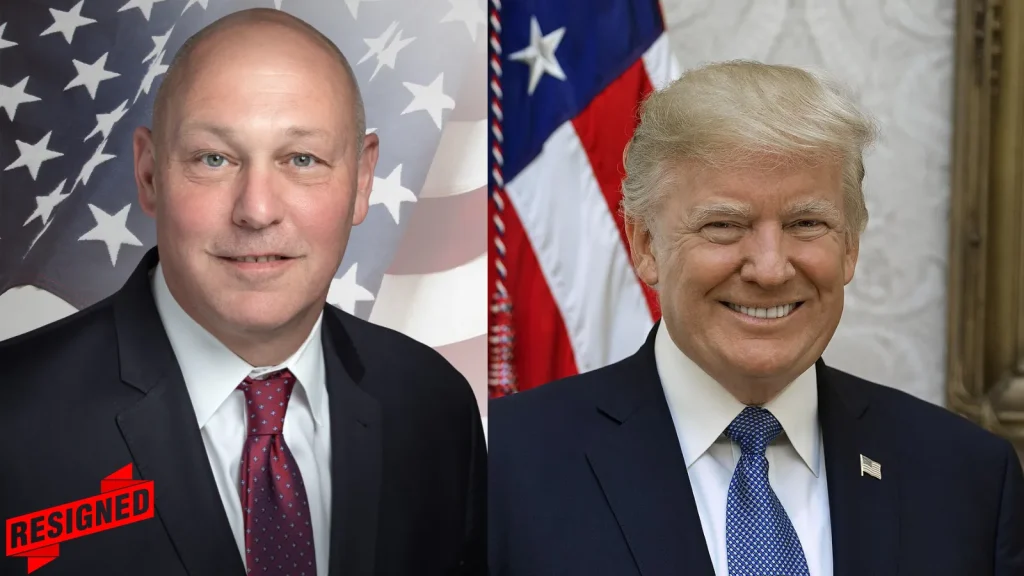
Trump’s AI Safety Chief Quits Just Three Months After Taking Charge
The Sudden Departure: Trump’s AI Safety Chief Exits Amidst Critical AI Development
In the rapidly evolving landscape of artificial intelligence, leadership and stability are paramount, especially within government-backed initiatives. The recent resignation of Chris Fall as the director of the Center for AI Standards and Innovation (CAISI) marks a significant moment, leaving the Trump administration’s AI safety organization without a permanent head just three months after his appointment. This abrupt departure, initially reported by Axios and subsequently confirmed by CNBC, raises critical questions about the continuity and direction of U.S. AI safety efforts.
Understanding CAISI’s Mandate and the Vacancy’s Impact
The Center for AI Standards and Innovation (CAISI) was established with a crucial mission: to spearhead the development and implementation of AI safety standards. In an era where AI’s capabilities are expanding at an unprecedented rate, ensuring its responsible and ethical deployment is not merely a technical challenge but a societal imperative. CAISI’s role involves collaborating with industry, academia, and international partners to formulate guidelines, benchmarks, and best practices that mitigate potential risks associated with AI, such as bias, privacy violations, and security vulnerabilities.
Chris Fall’s tenure, albeit brief, was intended to provide strategic direction and impetus to these vital efforts. His sudden departure creates a leadership void at a critical juncture. The Department of Commerce has, as of now, provided no public explanation for his resignation, leaving room for speculation regarding the underlying reasons. This lack of transparency can undermine public and private sector confidence in the stability of government AI initiatives, potentially slowing progress on crucial AI safety frameworks.
The Urgency of AI Safety and Standards
The development of AI is not without its perils. From autonomous systems making life-or-death decisions to sophisticated algorithms influencing public opinion, the potential for misuse or unintended consequences is immense. Therefore, robust AI safety standards are not elective but essential. These standards aim to achieve several key objectives:
- Mitigating Bias: Ensuring AI systems do not perpetuate or amplify existing societal biases.
- Enhancing Transparency: Making AI decision-making processes understandable and auditable.
- Ensuring Security: Protecting AI models from adversarial attacks and data breaches.
- Promoting Accountability: Establishing clear lines of responsibility for AI system failures.
- Fostering Trust: Building public confidence in AI technologies through responsible development.
A stable and experienced leadership at CAISI is crucial for these efforts. Without it, there is a risk of a fragmented approach to AI safety, potentially leaving gaps that malicious actors could exploit or leading to the deployment of unsafe AI systems. For instance, consider the vulnerabilities inherent in large language models. While not explicitly mentioned in the source, the broader context of AI safety includes addressing issues such as adversarial attacks on AI models or data poisoning. Such vulnerabilities underscore the need for continuous, expert-led efforts in establishing protective measures. Though no specific CVE is directly tied to an organizational leadership change, the absence of strong, consistent leadership can indirectly contribute to unaddressed security gaps in AI development, potentially leading to future vulnerabilities akin to a CVE-2023-xxxxxx issue if critical security practices are neglected.
Potential Ramifications for U.S. AI Strategy
The departure of a key leader like Chris Fall can have several ramifications for the broader U.S. AI strategy:
- Delayed Progress: The search for a new director and the subsequent onboarding process can lead to significant delays in critical initiatives.
- Loss of Institutional Knowledge: Fall’s experience and insights, especially from his brief tenure, might be difficult to replace immediately.
- Uncertainty for Stakeholders: Companies and research institutions collaborating with CAISI may face uncertainty regarding future policy directions.
- Impact on International Collaboration: A lack of stable leadership could affect the U.S.’s standing in international discussions on AI governance and standards.
Maintaining a consistent and forward-looking approach to AI safety is vital for national security and economic competitiveness. The U.S. government’s ability to attract and retain top talent in this highly specialized field will be key to navigating the complex challenges and opportunities presented by AI.
Looking Ahead: The Path to Rebuilding Leadership
The immediate priority for the Department of Commerce will be to find a suitable replacement for Chris Fall. This individual will need not only a deep understanding of AI technologies and their implications but also strong leadership and diplomatic skills to unite diverse stakeholders. The process should ideally be expedited to minimize disruption to ongoing projects and to reassure the AI community of the administration’s commitment to AI safety.
Furthermore, regardless of who takes the helm, transparency regarding the challenges and progress of CAISI will be crucial. Open communication fosters trust and enables better collaboration, which are indispensable for developing effective AI safety standards that can adapt to the rapid pace of technological innovation.
Key Takeaways
- Chris Fall’s resignation from CAISI leaves a critical leadership void in the Trump administration’s AI safety initiatives.
- CAISI is vital for developing and implementing AI safety standards to mitigate risks associated with rapidly evolving AI technologies.
- The disruption poses challenges for the continuity of U.S. AI strategy, potentially impacting development, stakeholder confidence, and international partnerships.
- Rebuilding stable leadership and fostering transparency will be crucial for the continued success of AI safety efforts.




