
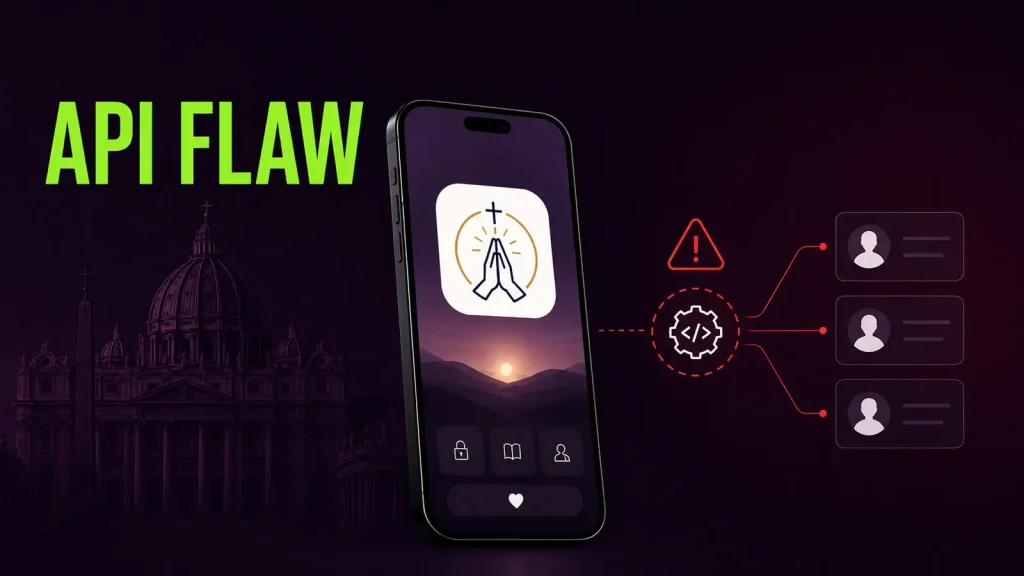
Vatican’s Click to Pray App Exposes 700,000 Users Through Unauthenticated API Flaw
When Faith Meets Flaw: The Vatican’s Click to Pray App Security Lapse
In an era where digital presence is paramount for organizations of all sizes, even traditional institutions face the stark realities of cybersecurity risks. This reality recently became clear with the Vatican’s official “Click to Pray” app. Over 700,000 users found their personal information exposed due to a critical application programming interface (API) flaw. This incident serves as a stark reminder that robust security practices are non-negotiable for any entity collecting user data, regardless of its mission.
The Unauthenticated API: A Gateway to Private Data
The core of the vulnerability lay in an unauthenticated API. For those less familiar, an API acts as a communication bridge, allowing different software components to interact. Authentication mechanisms are crucial for these bridges, ensuring that only authorized users or systems can access specific data or functionalities. In the case of the Click to Pray app, this vital security gate was missing. This meant that anyone with a basic understanding of web browsing could retrieve sensitive account data without needing to log in, bypassing any intended security layers.
This type of flaw, often categorized as an API authentication bypass (for a general understanding, though a specific CVE for this particular incident wasn’t immediately published in the source), highlights a persistent challenge in web application development. Developers sometimes overlook the necessity of implementing strict authentication and authorization checks at every API endpoint, leading to significant exposure.
What Information Was Exposed?
While the specific types of exposed data were not exhaustively detailed in the immediate report, such unauthenticated API flaws typically lead to the exposure of data points associated with user profiles. This could include, but is not limited to, usernames, email addresses, prayer intentions, and potentially other personal details submitted during registration or app usage. For an app designed for personal reflection and spiritual connection, the exposure of such information, even if seemingly innocuous, can erode user trust and raise significant privacy concerns.
The Impact: Trust, Privacy, and Reputation
For the 700,000 users of the Click to Pray app, this incident creates an understandable sense of vulnerability and betrayal. Beyond the immediate technical fix, the Vatican, like any organization facing similar breaches, must address the damage to its users’ trust and its own digital reputation. Data breaches, regardless of the nature of the data, can have long-lasting effects on user engagement and public perception. This incident underscores that strong cybersecurity is not merely a technical requirement but a fundamental component of maintaining institutional integrity and user confidence.
Remediation Actions: Securing APIs and Protecting Users
Addressing an unauthenticated API flaw requires immediate and thorough action. Organizations, especially those handling personal data, should implement the following remediation steps:
- Implement Robust Authentication and Authorization: Ensure every API endpoint requires proper authentication (e.g., API keys, OAuth tokens, session cookies) and granular authorization checks to verify user permissions for accessing specific resources.
- Conduct Regular Security Audits and Penetration Testing: Proactive testing, including API-specific penetration tests, can identify such vulnerabilities before they are exploited.
- Input Validation and Output Encoding: While not directly addressing the authentication issue, these practices are crucial for overall API security, preventing injection attacks and cross-site scripting (XSS).
- Principle of Least Privilege: Grant APIs and users only the minimum necessary permissions to perform their intended functions.
- API Gateway Implementation: Utilize API gateways to centralize security policies, including authentication, authorization, rate limiting, and traffic management.
- Maintain Comprehensive Logging and Monitoring: Implement solutions to detect unusual API access patterns and potential exploitation attempts.
- User Notification and Transparency: In the event of a breach, promptly and transparently inform affected users about the incident, the nature of the exposed data, and steps being taken to mitigate risks.
Tools for API Security
Organizations can leverage a variety of tools to enhance API security and prevent similar incidents:
| Tool Name | Purpose | Link |
|---|---|---|
| Postman | API development, testing, and debugging, including security testing with custom scripts. | https://www.postman.com/ |
| OWASP ZAP | Open-source web application security scanner; excellent for finding vulnerabilities in APIs. | https://www.zaproxy.org/ |
| Burp Suite | Industry-standard penetration testing tool for web applications, including comprehensive API analysis. | https://portswigger.net/burp |
| Swagger/OpenAPI Specification | Standard for defining RESTful APIs, which can aid in consistent security policy application. | https://swagger.io/specification/ |
| Noname Security | Dedicated API security platform for discovery, posture management, runtime protection, and testing. | https://nonamesecurity.com/ |
Lessons Learned: A Universal Security Principle
The Vatican’s Click to Pray app incident underscores a universal principle in cybersecurity: no platform or organization is immune to vulnerabilities. The exposure of sensitive data from 700,000 users through an unauthenticated API flaw serves as a critical case study for developers, security professionals, and organizational leaders alike. Prioritizing API security, implementing rigorous authentication, and conducting continuous security assessments are not just best practices—they are necessities in safeguarding user trust and privacy in our interconnected world.




