
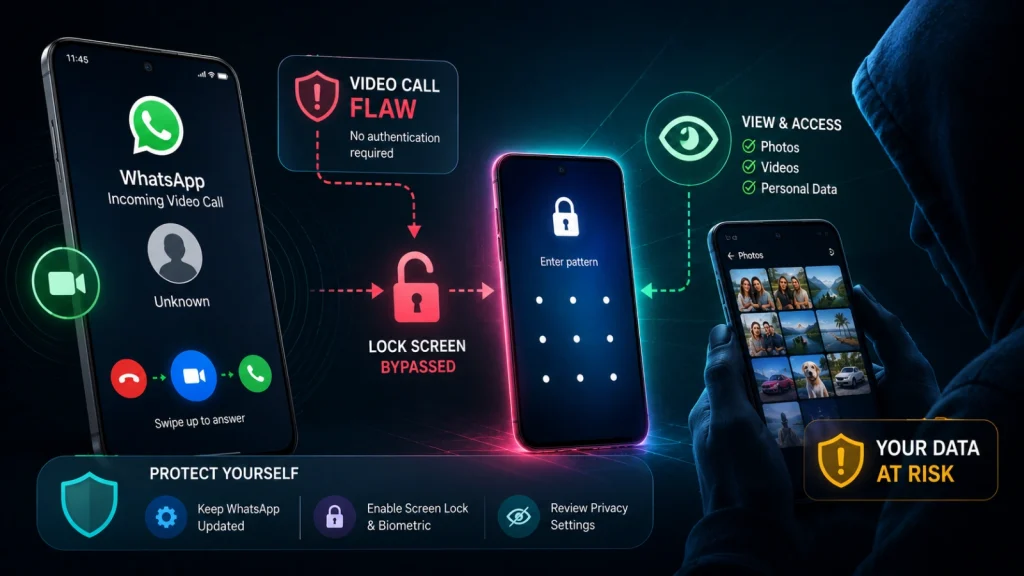
WhatsApp Video Call Flaw Lets Anyone Bypass Your Android Lock Screen and View Your Photos
A Disturbing Android Vulnerability: WhatsApp Video Call Exposes Your Photos
The privacy of our mobile devices is paramount, yet new threats constantly emerge to challenge that security. A recently disclosed vulnerability in WhatsApp for Android devices has sent ripples through the cybersecurity community, revealing a concerning method by which an attacker could bypass your lock screen and gain unauthorized access to your precious photo gallery. This isn’t merely a theoretical exploit; it represents a tangible risk for millions of Android users.
This critical flaw highlights the ongoing need for vigilance and timely updates, even within applications we use daily. Understanding how such vulnerabilities operate and, more importantly, how to mitigate them, is crucial for maintaining digital security in an increasingly interconnected world.
Understanding the WhatsApp Lock Screen Bypass Flaw
Security researcher Jose Rodriguez, renowned for his consistent discoveries of lock screen bypasses across various Android versions, uncovered this particular vulnerability. The exploit leverages a specific interaction during an incoming WhatsApp video call on a locked Android phone. Essentially, by manipulating the call interface, an unauthorized individual holding the locked device could navigate directly into the device’s photo gallery.
The core of the issue lies in how WhatsApp handles the video call UI and its interaction with the underlying Android operating system’s lock screen protocols. While exact technical specifics beyond the publicly available information are not fully detailed, the reported method suggests a race condition or an unexpected state transition that momentarily grants access beyond the lock screen’s intended boundaries. This is not a remote exploit; it requires physical access to the locked device. However, the ease with which it can be triggered makes it a significant concern for devices left unattended or in the wrong hands.
Impact and Potential Ramifications
The immediate and most obvious impact of this WhatsApp flaw is the unauthorized viewing of a user’s entire photo gallery. For many, a photo gallery contains highly personal and sensitive information – family pictures, private documents, or even credentials. The exposure of such data can lead to severe privacy breaches, identity theft, or even blackmail.
While the vulnerability specifically targets photo access, the implications could extend to other forms of data exposure depending on how the Android system handles permissions and access after the initial bypass. It underscores the critical importance of robust lock screen security and the potential for seemingly innocuous application interactions to create unexpected security holes. Though a specific CVE ID for this particular WhatsApp flaw hasn’t been widely publicized at the time of writing, it mirrors the severity of issues often tracked under designations such as CVE-2023-XXXXX (placeholder for similar potential lock screen bypasses).
Remediation Actions for Android Users
Addressing this type of vulnerability requires a multi-pronged approach involving both user action and software updates. Here’s what you can do:
- Update WhatsApp Immediately: Ensure your WhatsApp application is updated to the latest version available through the Google Play Store. Software vendors typically release patches swiftly once such vulnerabilities are disclosed.
- Keep Your Android OS Updated: Regularly install Android operating system updates. These updates often include security patches that address underlying system vulnerabilities that applications might inadvertently exploit.
- Implement Strong Screen Lock Mechanisms: While this flaw bypasses the lock screen, a strong PIN, pattern, or biometric authentication (fingerprint, facial recognition) remains your first line of defense against general unauthorized access.
- Physical Security: The nature of this exploit requires physical access to your device. Be mindful of where you leave your phone and who might have access to it, even for short periods.
- Review App Permissions: Periodically review the permissions granted to WhatsApp and other applications. While this specific flaw isn’t directly related to explicit permissions, maintaining a least-privilege approach is always good practice.
Tools for Device Security and Monitoring
While direct tools to detect this specific WhatsApp lock screen bypass are generally not user-facing, a robust security posture benefits from various tools. These tools aid in overall device health, vulnerability management, and incident response.
| Tool Name | Purpose | Link |
|---|---|---|
| Google Play Protect | Built-in malware scanning and app security analysis for Android devices. | Google Play Protect Info |
| Mobile Device Management (MDM) Solutions | For organizations, MDM solutions can enforce security policies, manage app updates, and monitor device compliance. | Android Enterprise MDM |
| Virustotal Mobile (via web upload) | Analyzes suspicious APK files for various threats by leveraging multiple antivirus engines. | Virustotal Upload |
Conclusion
The discovery of the WhatsApp video call flaw on Android serves as a stark reminder that even widely used and trusted applications can harbor critical security vulnerabilities. While the immediate fix lies in updating WhatsApp, this incident underscores the broader necessity for users to maintain constant vigilance, keep all software updated, and adhere to best practices for physical device security. As security researchers continue to uncover and disclose such flaws, our collective responsibility is to stay informed and proactive in protecting our digital privacy.




