
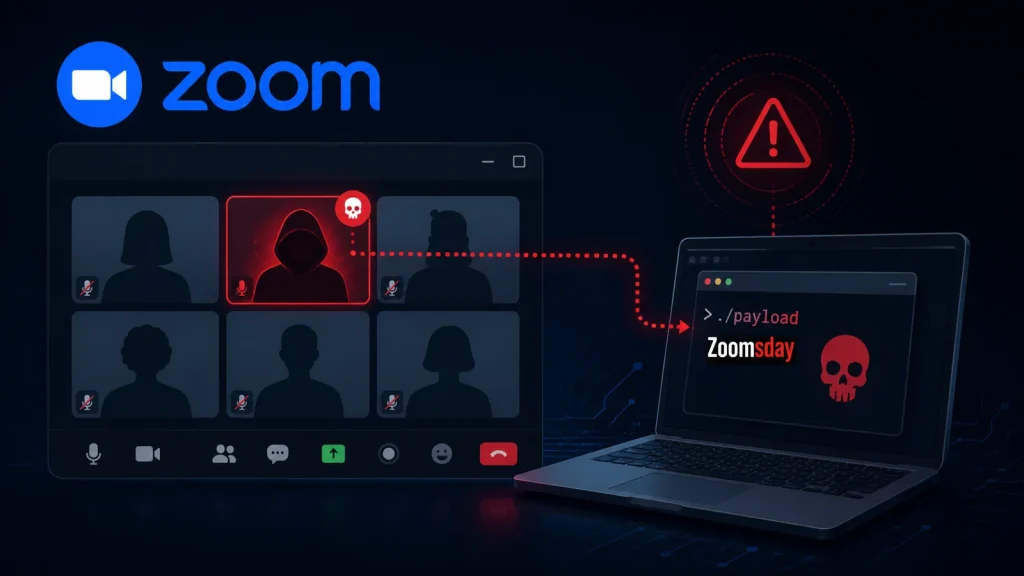
Zoom Zero-Click Vulnerabilities Allow Meeting Participants to Hijack Other Users’ Devices
Unveiling “Zoomsday”: The Critical Zoom Zero-Click Vulnerabilities
Recent disclosures have sent a ripple through the cybersecurity community, revealing a critical threat to users of the ubiquitous video conferencing platform, Zoom. Researchers have uncovered a series of zero-click vulnerabilities, collectively dubbed “Zoomsday,” that allowed malicious participants to remotely seize control of other attendees’ devices without any user interaction. This revelation underscores the constant need for vigilance and timely patching in our interconnected digital lives.
Understanding the “Zoomsday” Threat
At the heart of the matter are four newly patched security flaws within the Zoom application. The most severe of these, tracked as CVE-2026-53413, presented a particularly insidious risk. Unlike traditional exploits that require a user to click a malicious link or download a compromised file, these “zero-click” vulnerabilities enabled a remote attacker – in this case, another meeting participant – to execute arbitrary code on a victim’s machine. This means a user could be attending a seemingly innocuous meeting and have their device compromised without any warning signs or discernible actions on their part.
The research team, A Security, is credited with the discovery and responsible disclosure of these critical flaws. Their findings highlight the sophistication of modern attack vectors and the constant need for robust security measures in widely used software.
The Mechanics of a Zero-Click Exploit
Zero-click exploits are among the most dangerous types of vulnerabilities because they bypass traditional user-facing security mechanisms. In the context of Zoom, these flaws likely leveraged weaknesses in how the application processes specific data packets or handles communication protocols within a meeting. An attacker could craft and send specially designed messages that, upon receipt by a vulnerable Zoom client, would trigger unintended code execution. This level of compromise offers an attacker significant control over the victim’s device, potentially leading to data theft, further system compromise, or surveillance.
Remediation Actions: Protecting Your Zoom Experience
Given the severity of these “Zoomsday” vulnerabilities, immediate action is crucial for all Zoom users. Fortunately, Zoom has already rolled out patches to address these issues. Here’s what you need to do:
- Update Your Zoom Client Immediately: Ensure your Zoom application is updated to the latest version. This is the most critical step to protect yourself from these specific vulnerabilities. Zoom typically prompts users to update, but you can manually check for updates within the application settings.
- Enable Automatic Updates: Configure your Zoom client to automatically download and install updates. This ensures you receive critical security patches as soon as they are released.
- Exercise Caution in Unfamiliar Meetings: While these were zero-click exploits, general cybersecurity hygiene remains vital. Be mindful of meetings you join, especially if they are unexpected or from unknown sources.
- Maintain System Patches: Beyond Zoom, keep your operating system and all other software updated. Comprehensive patching reduces the overall attack surface of your device.
- Utilize Endpoint Security: Ensure your devices are protected by reputable antivirus and endpoint detection and response (EDR) solutions. These tools can offer an additional layer of defense against sophisticated threats.
Tools for Enhanced Security
While direct detection of a zero-click exploit can be challenging due to its stealthy nature, a layered security approach using the following tools can bolster your overall defense posture:
| Tool Name | Purpose | Link |
|---|---|---|
| Zoom Client | Ensure the latest patched version is installed. | https://zoom.us/download |
| Endpoint Detection & Response (EDR) Solutions | Monitors for suspicious activity and post-exploitation behaviors on endpoints. | (Consult your preferred EDR vendor’s website) |
| Next-Generation Antivirus (NGAV) | Detects and prevents known and unknown malware, including fileless attacks. | (Consult your preferred NGAV vendor’s website) |
| Network Intrusion Detection/Prevention Systems (NIDS/NIPS) | Monitors network traffic for malicious patterns and can block suspicious connections. | (Consult your preferred NIDS/NIPS vendor’s website) |
Key Takeaways
The “Zoomsday” vulnerabilities serve as a potent reminder that even widely trusted communication platforms can harbor critical security flaws. The zero-click nature of these exploits underscores the evolving sophistication of threats and the importance of proactive security measures. Timely software updates, robust endpoint protection, and a general awareness of cybersecurity best practices are essential for safeguarding your devices and data against such invisible threats. Stay informed, stay patched, and remain vigilant.




